The long wait for the NSE public listing appears to be entering its final stretch. The exchange recently confirmed that it expects to file its draft red herring prospectus (DRHP) by the second week of June, putting the country's most anticipated IPO one step closer to reality.
The update has once again sparked interest in NSE's unlisted shares, which continue to change hands actively in the private market. With the DRHP now less than two weeks away, investors may want to know does it still make sense to buy NSE shares before the IPO?
The answer from analysts is nuanced. Most experts agree that NSE remains one of India's strongest financial franchises. However, they also caution that investors should not treat the approaching IPO as an automatic opportunity for quick gains.
NSE currently trades in the unlisted market at around Rs 1,950-2,050 per share, implying a valuation of roughly Rs 5 lakh crore. That valuation already reflects significant optimism around the company's eventual listing.
"NSE is clearly one of India's strongest capital-market franchises and remains one of the most awaited IPO candidates. However, investors looking to buy unlisted shares purely because the DRHP filing is close should exercise caution," said Paresh Bhagat, CIO of Veer Growth Fund and chairman of Mangal Keshav.
"The business quality is not in question. The key risk is valuation and entry price." Bhagat noted that based on FY26 profit after tax of around Rs 10,300 crore, the exchange is already valued at nearly 48-50 times earnings.
While NSE enjoys dominant market share, strong profitability and significant cash generation, he believes much of that strength is already reflected in current unlisted market prices. One of the biggest assumptions among investors is that buying shares before the IPO guarantees a profit once the company lists. Analysts say that assumption may not always hold true.
The eventual IPO pricing remains unknown. In many large public offerings, companies deliberately leave room for public market investors by pricing the issue below prevailing unlisted market valuations.
If that happens, investors entering NSE at current unlisted prices could face limited upside or even temporary mark-to-market losses. "The pre-IPO window should not be seen as a guaranteed arbitrage opportunity," Bhagat said. "If the IPO is priced more reasonably for public-market investors, the gap versus current unlisted prices could be meaningful."
Others echo the same concern. "I would avoid buying NSE unlisted shares purely on the expectation of the upcoming DRHP filing," said Arpit Jain, Joint Managing Director at Arihant Capital Markets.
"While the filing could be an important milestone in the IPO journey, a significant portion of the optimism around the listing is already reflected in the current unlisted market price." Jain pointed to several high-profile IPOs in recent years where strong excitement before listing did not necessarily translate into exceptional post-listing returns.
He said investors should focus on valuation, offer pricing, market conditions and the final IPO structure rather than rushing to buy shares simply because the DRHP is approaching.
At the same time, few analysts dispute the quality of the underlying business. NSE remains India's largest stock exchange and dominates equity derivatives trading. The exchange reported total income of Rs 18,713 crore and consolidated net profit of Rs 10,302 crore in FY26.
Its capital-light business model, strong cash flows and dominant market position have made it one of the most sought-after names in the unlisted market.
According to Nitant Darekar, Research Analyst at Bonanza, NSE currently trades at around 45 times FY26 earnings, based on earnings per share of Rs 41.62. While that valuation is not cheap, it remains below some listed peers.
"NSE remains a capital-light near-monopoly," Darekar said. "At around Rs 1,950-2,170 in the unlisted market, it trades near 45x FY26 earnings. That's rich, but below BSE at around 70x and MCX at around 80x."
Darekar added that the recent settlement of the long-running co-location case has removed a major overhang on the IPO process. However, he cautioned that the exchange's earnings remain linked to derivatives trading activity, which can be volatile, especially after regulatory changes in the futures and options segment.
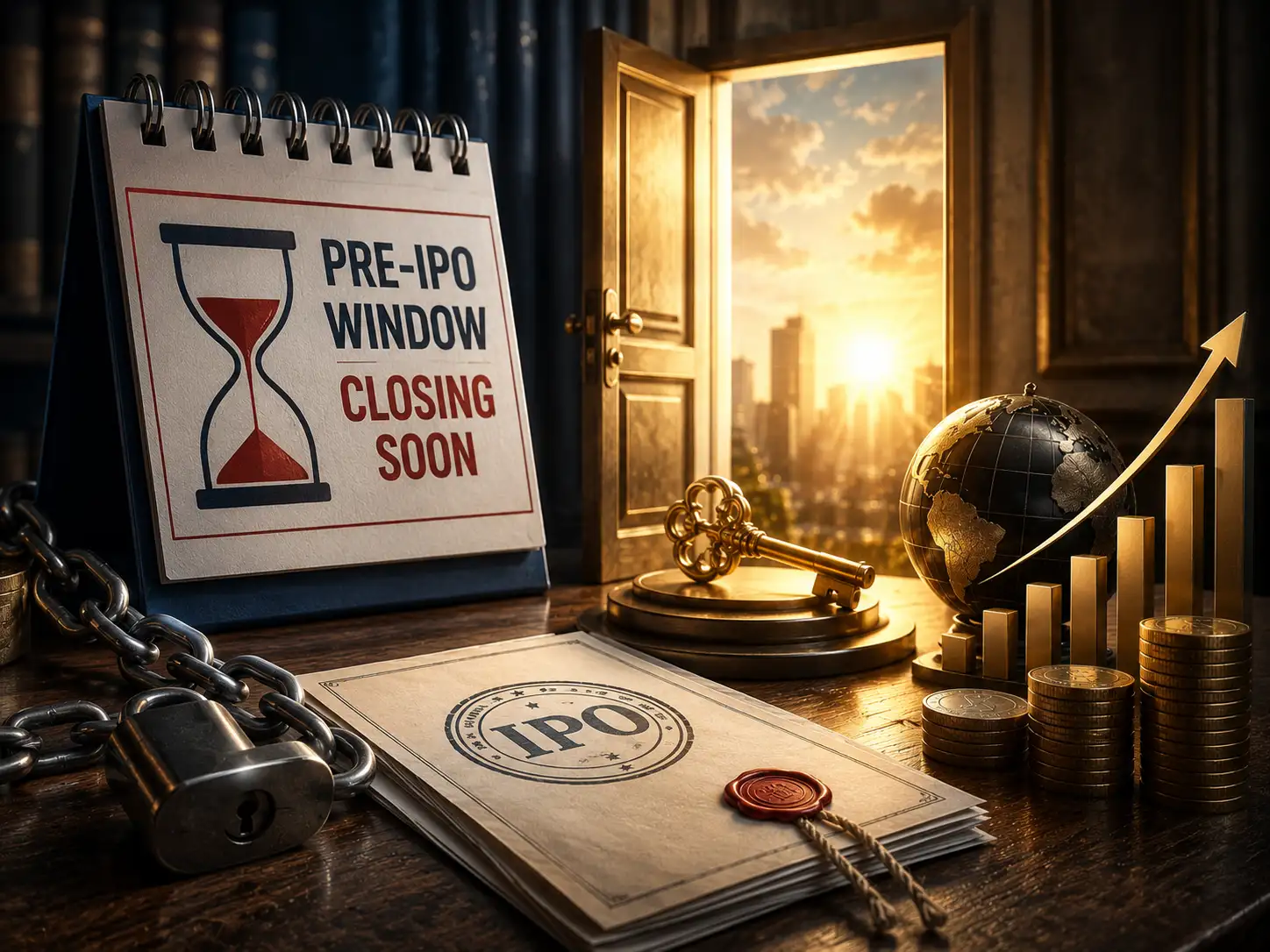
He also highlighted another practical consideration for investors. "The urgency is real. Post-DRHP, fresh unlisted purchases face a one-year lock-in. But valuation, not the calendar, should drive the decision."
That point is particularly important because many retail investors view the narrowing pre-IPO window as a reason to buy immediately.
Ishan Tanna, Senior Associate at Ashika Capital, said history suggests otherwise. "Historically, buying unlisted shares very close to the IPO stage has not always offered the best risk-reward for investors," he said.
"In many cases, the biggest gains are made when IPO visibility is low and uncertainty is high. Once the DRHP gets filed and listing draws closer, valuations often become expensive as the IPO excitement premium starts getting priced in."
Tanna said NSE remains a rare financial infrastructure asset with strong profitability and a dominant position in Indian capital markets, making it attractive for long-term investors.
However, investors chasing quick listing gains should recognise that late-stage entry into pre-IPO stories often carries greater risks than many assume.
For now, the consensus among market experts is that NSE remains one of India's highest-quality businesses and its IPO will likely attract enormous investor interest. But with the stock already trading at elevated valuations in the unlisted market, investors may need to focus less on the countdown to the DRHP and more on whether the current price adequately compensates them for the risks ahead.