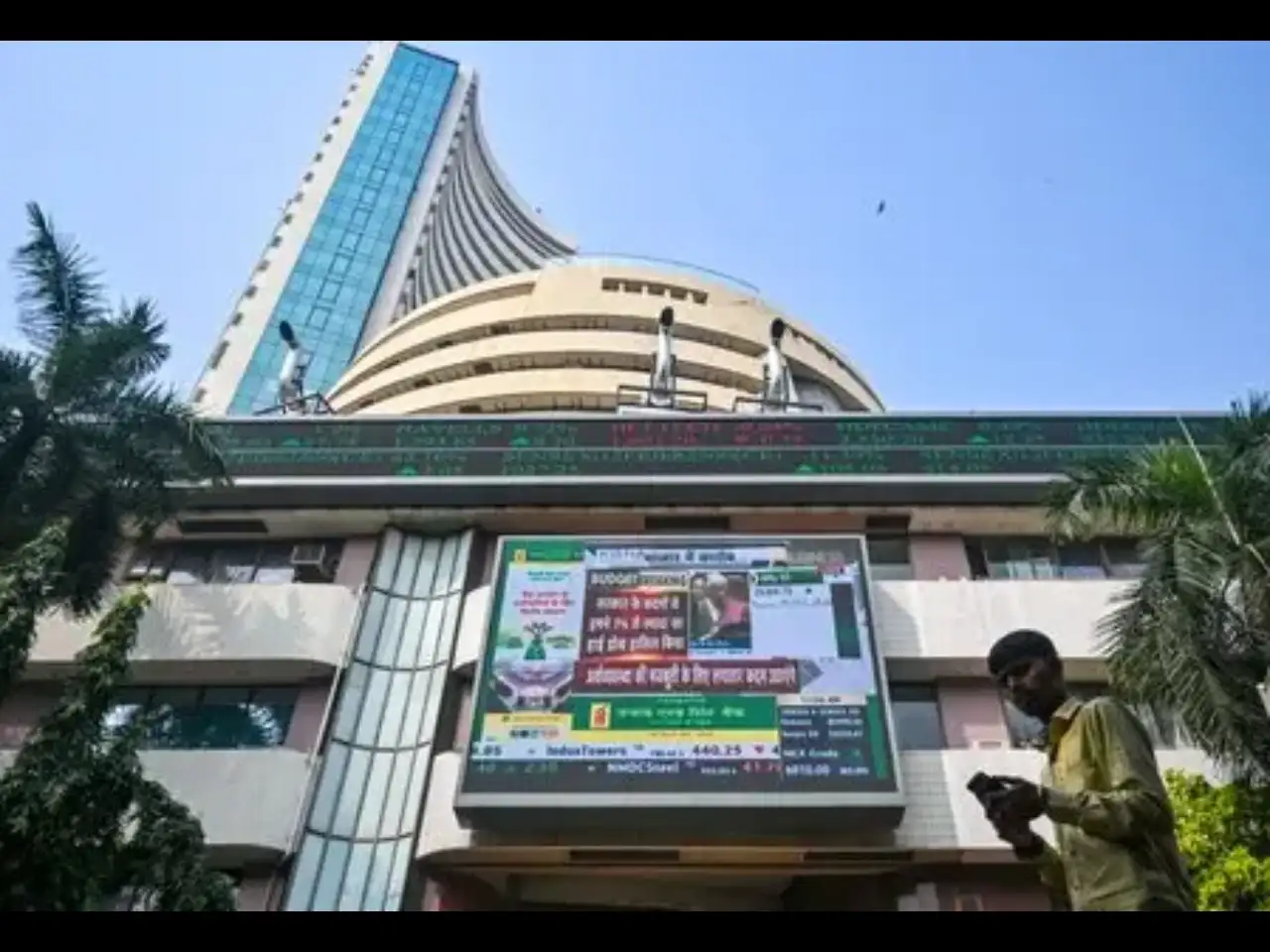
The National Stock Exchange (NSE) is inching closer to its much-awaited IPO, with SEBI chairman Tuhin Kanta Pandey saying on August 27 that the regulator was close to approving the exchange’s draft red herring prospectus (DRHP).
NSE filed its DRHP in June for an IPO comprising entirely an offer for sale (OFS), through which existing shareholders will sell their stakes.
As the exchange moves closer to its IPO, NSE’s unlisted shares remain broadly stable, although they continue to trade below their peak.
At around Rs 1,965 currently, the unlisted shares are about 17% below their all-time high of Rs 2,360, recorded on June 12, 2025, according to data from Unlisted Arena.
The stock was at Rs 1,940 on January 1, 2026, and is currently around Rs 1,965, translating into a gain of about 1.3% year-to-date. Over the past year, however, the unlisted share price is down around 4%, from Rs 2,050 on September 3, 2025.
"NSE’s unlisted shares have delivered stellar returns to unlisted-market investors, but with the IPO now seemingly on the horizon, market participants appear to be taking a more cautious approach," said Manan Doshi, co-founder of Unlisted Arena.
He added that the current unlisted valuation is also below that of BSE, while uncertainty around the eventual NSE IPO price band remains a key overhang. This, Doshi said, appears to be keeping the unlisted price in a wait-and-watch mode, with limited scope for sharp moves in either direction until greater clarity emerges on the IPO pricing.
NSE rival BSE, meanwhile, has seen a substantially sharper correction from its recent peak.
The stock's September 2 closing price of Rs 3,168 was around 28.75% below its 52-week high of Rs 4,446.80 recorded on May 27, 2026, while remaining about 56.72% above its 52-week low of Rs 2,021.50 recorded on September 26.
BSE shares, however, rose 4.68% on September 3 to hit an intraday high of Rs 3,316.50 on the NSE, compared with the previous close of Rs 3,168.
For investors comparing the two exchange stocks, valuation and the earnings trajectory could be more important than the headline correction from their respective highs, according to Harshal Dasani, business head at INVasset PMS.
"Start with the fact that decides most of this. NSE unlisted trades near Rs 1,970 against an expected issue band of roughly Rs 1,970 to Rs 2,100, so the unlisted buyer is paying approximately the IPO price without receiving what the IPO offers. There is no discount left to capture," Dasani said.
ALSO READ: Small investors, big money! 15 retail-heavy subscribed IPOs of 2026 deliver up to 76% returns
"Worse, SEBI's pre-IPO lock-in means shares bought in the private market cannot be sold for six months after listing, so a buyer today accepts market risk for eight to nine months with no exit, and an exit at that six-month mark falls into short-term capital gains at 20% plus surcharge and cess rather than the long-term rate," he added.
Dasani also noted that the issue is entirely an offer for sale of about 14.89 crore shares, roughly 6% of equity, which means no fresh capital enters the business and existing holders are the sellers.
"The business comparison is more interesting than the arbitrage. NSE's moat is close to absolute, with 92.99% of cash-market turnover and 99.79% of equity futures. But FY26 revenue fell 3% to Rs 16,601 crore, and profit fell 15% to Rs 10,302 crore, and options alone contribute 60.22% of operating revenue, so regulatory tightening in derivatives strikes the earnings engine directly," Dasani said.
"BSE moved the other way, with Q1 FY27 income up 63.4% to Rs 1,706.72 crore, profit up 62.2% to Rs 872.66 crore, and derivatives premium turnover up 96%. At roughly 49 times for NSE unlisted and 52.87 times for BSE, the two carry near-identical multiples on opposite earnings trajectories," he added.
"That is the framework. The larger, more dominant franchise is available at a similar multiple while shrinking; the smaller challenger is compounding by taking share in the exact segment NSE depends on. Neither is cheap," Dasani said.
"For patient capital, the honest answer is that the listed route preserves liquidity and optionality, and the disciplined approach to NSE is to evaluate it at the issue with the prospectus in hand rather than to pre-buy it at the same price minus the exit," he added.
That said, BSE's recent price swings add another dimension to the comparison.
Ratish Gupta, director of Wealth Wisdom India (WWIPL.com), said BSE corrected by more than 4% to close at around Rs 3,168 on September 2 before rebounding 4.68% on September 3 to hit an intraday high of Rs 3,316.50.
He attributed some of the current sentiment to the newly introduced Closing Auction Session (CAS), saying relatively thin liquidity has resulted in less than 1% of daily cash-market turnover being executed through the session.
"This has contributed to greater unpredictability in closing prices and appears to have affected participation from HFTs, proprietary desks and retail traders," Gupta said.
"At present, therefore, BSE is a stock that is moving sharply on sentiment, and investors should factor this volatility into both their entry point and risk appetite," he added.
Gupta sees NSE as a different proposition, given its scale and the potential IPO.
"NSE, on the other hand, has a different investment proposition. It is India's largest exchange by turnover and among the world's most active derivatives exchanges by volume. With its DRHP already filed and a large IPO potentially ahead, the unlisted NSE provides investors an opportunity to participate in the growth story of India's leading exchange before its public listing," he said.
"At an unlisted price of around ₹1,960, investors who are comfortable with the waiting period associated with a potential IPO can consider NSE as a longer-term opportunity," he added.
In Gupta's view, the choice ultimately comes down to liquidity, time horizon and risk appetite.
"BSE may appeal more to investors looking for liquidity and listed-market participation today, while NSE may suit investors who are willing to wait for the IPO timeline and take a longer-term view of the exchange's growth potential," Gupta said.
"Ultimately, the choice between the two depends on the investor's time horizon, liquidity requirements and risk appetite," he added.