

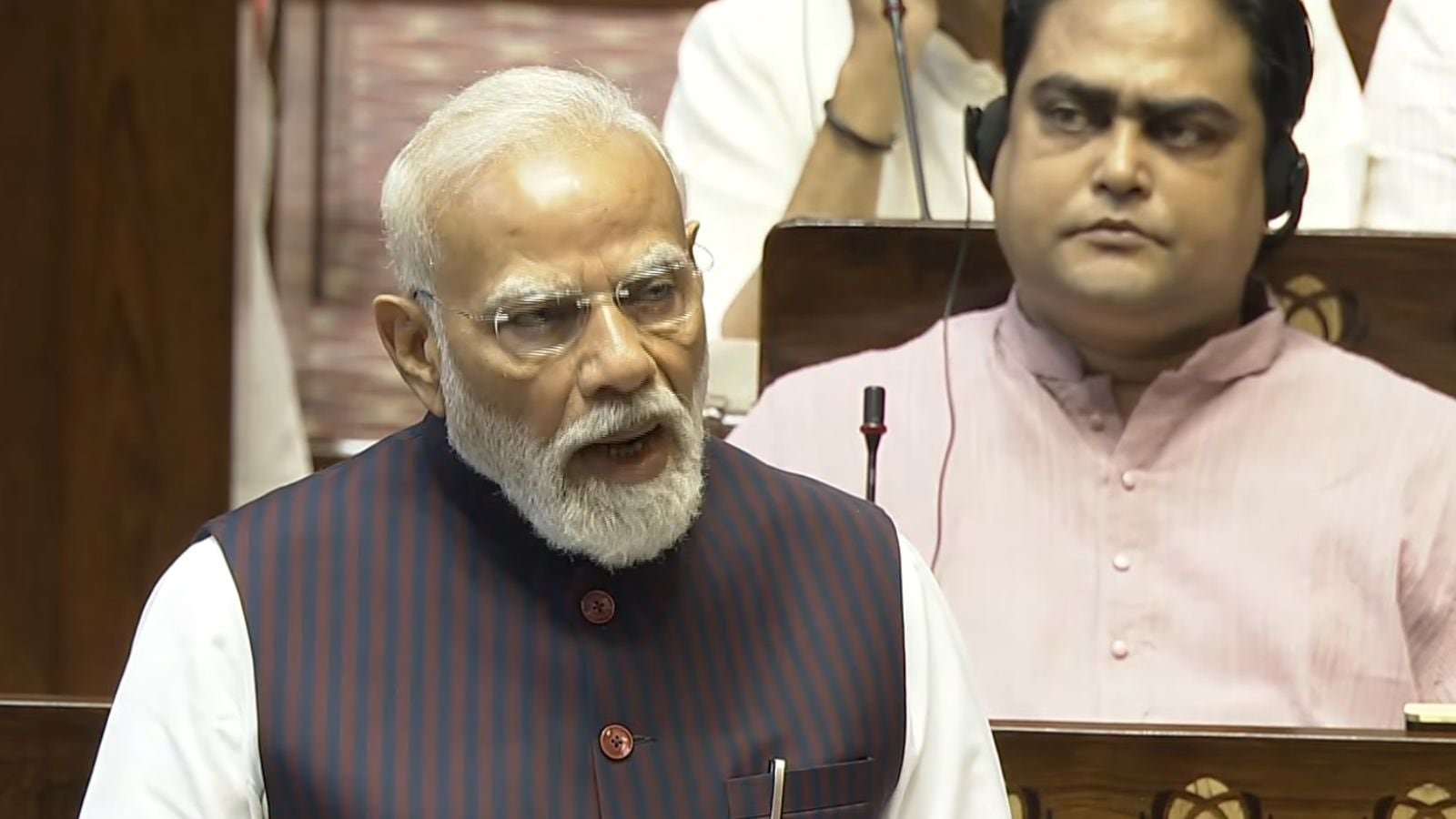
As the West Asia war enters its fourth week, the government has called for an all-party meeting on Wednesday evening to discuss the conflict’s impact and India’s preparedness, even as Prime Minister Narendra Modi on Tuesday assured the Rajya Sabha that the country has “adequate crude oil storage and arrangements for continuous supply”. The PM acknowledged that the war has created a “severe energy crisis” across the world and urged the states to work together with the Centre to deal with the situation.
According to sources, Wednesday’s meeting will be attended by Defence Minister Rajnath Singh, Finance Minister Nirmala Sitharaman, External Affairs Minister S Jaishankar, Union Petroleum Minister Hardeep Puri and Parliamentary Affairs Minister Kiren Rijiju among others. The meeting comes in the backdrop of the energy supply crisis and volatile market conditions triggered by the war and following demands from Opposition parties. Meanwhile, Defence Minister Rajnath Singh chaired a meeting on Tuesday with the heads of tri-services to review defence preparedness.
Congress sources said the government has agreed for the all-party meeting under pressure from the Opposition, which has repeatedly demanded a discussion on the LPG crisis, unstable market and the concerns of the Indian diaspora in the Gulf region, inside and outside Parliament.
Speaking in the Upper House a day after he made a statement in the Lok Sabha, PM Modi said in dire circumstances, it was essential that a united voice for peace and dialogue reached the entire world. In his opening remarks, Modi called the situation “worrisome” and said supplies of petrol, diesel, gas and fertilizers were disrupted.
He acknowledged a “strong possibility” that adverse effects of war will last for a long time, but sought to assure the citizens that the government is alert and working with full seriousness.
The PM said the ongoing conflict has shaken the global economy and to reduce its impact on India, the government has formed an inter-ministerial group to assess difficulties arising in imports and exports. Similar to the Covid-19 pandemic period, the government has also formed seven new empowered groups of experts and officers to tackle challenges in supply chains, petrol and diesel, fertilizers, gas and inflation, he said.
Expressing concern over the situation of one crore Indians living and working in Gulf countries, the PM said the government is giving highest priority to their safety and has so far ensured safe return of more than 3.75 lakh Indians.
Story continues below this ad
Outlining India’s diplomatic outreach, Modi said since the start of the war, he has spoken twice with the heads of state of most West Asian countries and has been in regular touch with them. “We are also in touch with Iran, Israel, and the US.”
Also Read | From Strait of Hormuz to dialogue and diplomacy: 5 takeaways from PM Modi’s Lok Sabha speech on West Asia conflict
He recorded India’s opposition to the attacks on commercial vessels and the blocking of the Strait of Hormuz, terming it “unacceptable”. “India has opposed attacks on civilians, civil infrastructure, and energy and transport-related infrastructure. Through diplomacy, India is making continuous efforts to ensure the safe passage of ships even in this war-like environment,” he said.
Modi said that despite adverse circumstances, his government has tried to create pathways through dialogue and diplomacy. “Our effort is to ensure that oil and gas supplies reach India from wherever possible… In recent days, ships carrying crude oil and LPG from many countries have arrived in India. Our efforts in this direction will continue in the coming days as well,” the PM said. Adding a note of caution, he said if the global circumstances created by the war persist, serious consequences will be inevitable.
Outlining his government’s efforts at developing oil reserves, he said, “In the last 11 years, we have developed over 53 lakh metric tonnes of strategic petroleum reserves, and we are working to arrange a reserve of more than 65 lakh metric tonnes. India has also increased its refining capacity in the last decade. I want to assure this House and the country that India has adequate crude oil storage and arrangements for continuous supplies,” he said.
Story continues below this ad
The PM also sought to assure farmers that they will receive adequate fertilizers in the upcoming sowing season. “The government’s constant effort is that farmers should not bear the burden of any crisis,” he said.
Invoking the cooperation between the Centre and states on testing, vaccination and supply of essential goods during the Covid pandemic, the PM urged states to continue to work in the same spirit. He also requested all state governments to ease difficulties of migrant workers, the poor and urged them to take action against black-marketers and hoarders.
In the Rajya Sabha on Tuesday, CPI-M MP John Brittas recalled Parliament’s 2003 unanimous resolution under then prime minister Atal Bihari Vajpayee condemning the Iraq war, and urged the government to move a similar motion on the Iran conflict. Brittas called for a “united and unanimous voice” of Parliament against what he described as unilateral and illegal wars by the US and Israel on Iran, saying India should not remain silent.
