
The Reserve Bank of India (RBI) kept policy rates unchanged and maintained its neutral stance, a move that was largely in line with market expectations. While there were no surprises on the interest rate front, the central bank's revised projections for growth and inflation, along with measures aimed at attracting foreign capital, drew significant attention from market participants.
Among the notable announcements was the exemption of capital gains tax for foreign portfolio investors (FPIs) investing in government securities (G-Secs), a step seen as part of broader efforts to encourage foreign currency inflows into the country.
Former RBI Deputy Governor R Gandhi described the policy outcome as largely expected and said the market was unlikely to be unsettled by the decisions.
"First of all, the policy stance and the absence of a rate cut are on expected lines, so the market should be comfortable with that. But there has been a change in the forecast for both GDP and inflation, which the market should also have been expecting given the international scenario, which continues to be disturbing. So, in that sense, the announcements are all on expected lines," Gandhi said.
He added that expectations had been building around measures to boost foreign exchange inflows and that the government and RBI had responded accordingly.
"Definitely, there was some expectation that there would be measures to increase foreign exchange inflows. That is what has been announced with reference to the G-Sec-related exemption being given to FPIs in terms of capital gains. So, all these are on expected lines. Yes, obviously, the market should be expecting much more on the forex front. Let us see what more is likely to come."
Inflation and Growth Outlook Reflect Global Headwinds
A key focus of the policy was the RBI's decision to raise its inflation guidance while trimming growth projections. The move comes amid a challenging global backdrop marked by geopolitical uncertainty, supply chain disruptions, and volatile commodity markets.
According to Gandhi, the central bank's revised forecasts reflect a realistic assessment of evolving economic conditions rather than a shift toward a dovish policy stance.
"Dovish, not yet. It is a neutral position because, given the international scenario, there is an impact on both inflation and growth, and that has been acknowledged by the Reserve Bank and the MPC."
He noted that despite the upward revision in inflation forecasts, the outlook remains within the central bank's comfort zone.
"The revised inflation forecast is 5.1%, which is well within the corridor of the MPC mandate. That is why I do not expect any immediate disturbance in terms of expecting a rate hike or anything. That is not there as of now."
However, Gandhi cautioned that policymakers remain alert to upside risks.
"The Governor has announced that the risks are on the upside for inflation. So, if further data affirm that there is going to be a disturbance, then there could be a change in the policy rate."
On growth, Gandhi said the downgrade was relatively modest and should not be interpreted as a major concern.
"There is moderation, and that moderation has also been on expected lines. It is about 0.3 percentage points, so that is manageable. India will still remain a fast-growing economy. So, it is not fully dovish; it is a neutral stance, ready to act in whichever way further data come in."
Rupee Stability May Improve in the Near Term
The outlook for the rupee remains a key area of interest for investors, especially amid ongoing global uncertainties and shifting capital flows.
Gandhi believes that recent policy measures aimed at attracting foreign investment could help stabilize the currency in the near term.
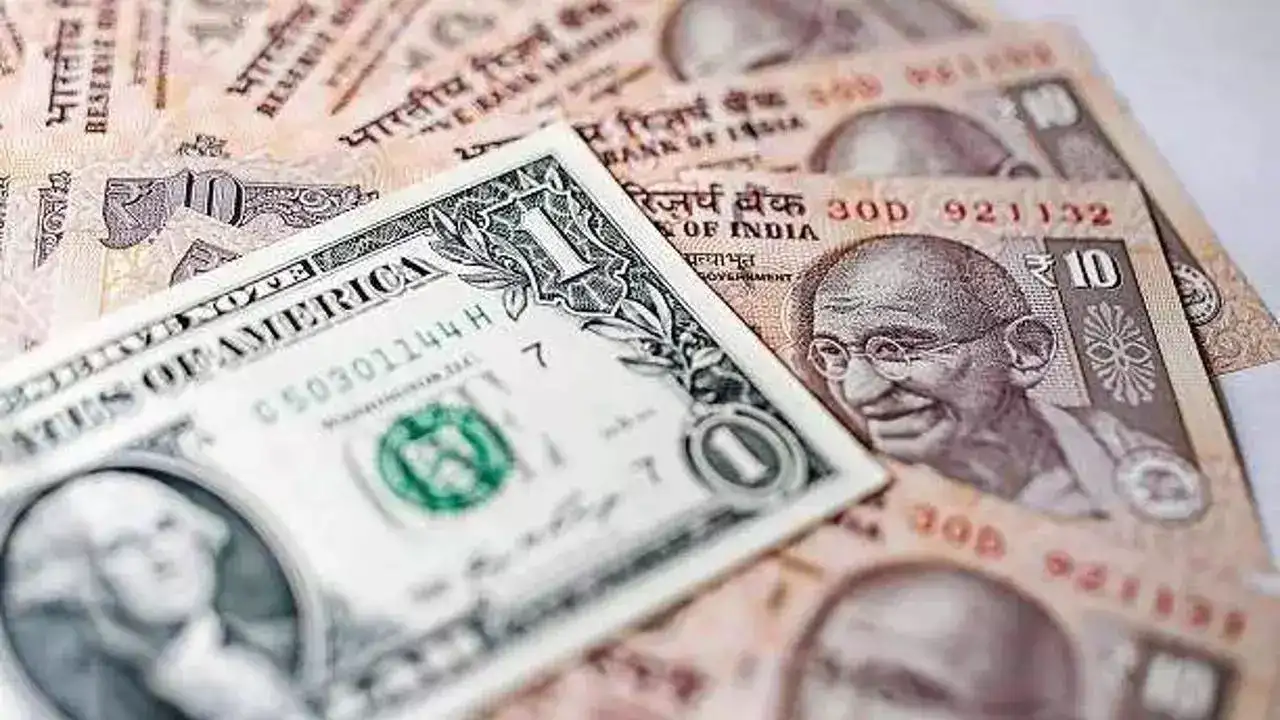
"With regard to INR-USD rates, the current uncertain situation continues. But both the policy measures by the government and the Reserve Bank targeting foreign currency inflows are going to help stabilize the rupee better."
He reiterated that the RBI does not target a specific exchange rate level and remains focused on managing volatility.
"There has been no target number by the Reserve Bank, as has always been the case. It is only to manage volatility. Therefore, the Reserve Bank will be acting on both sides depending upon the flows and the demand situation on particular days."
Looking ahead, Gandhi identified two developments that could provide additional support to the Indian currency.
"In the immediate short period, we should expect the rupee to stabilize better. Two features will help that stabilization. First, the recent announcement about the India-US treaty likely to be concluded and signed soon. When that happens, it will be positive for the INR."
He also pointed to easing geopolitical tensions as a favorable factor.
"Secondly, the Iran-US conflict and the uncertainties surrounding it—current short-term projections suggest there could be a rapprochement between the two countries. That would mean the related issues could come down, which would also be positive. So, in the immediate short period, we should expect the rupee to actually stabilize better."
Balanced Policy, Data-Driven Approach
The latest policy signals that the RBI remains focused on balancing inflation management with growth support at a time of heightened global uncertainty. While the central bank has refrained from altering rates, its revised projections and targeted measures to attract foreign capital indicate a willingness to respond proactively to evolving economic conditions.