
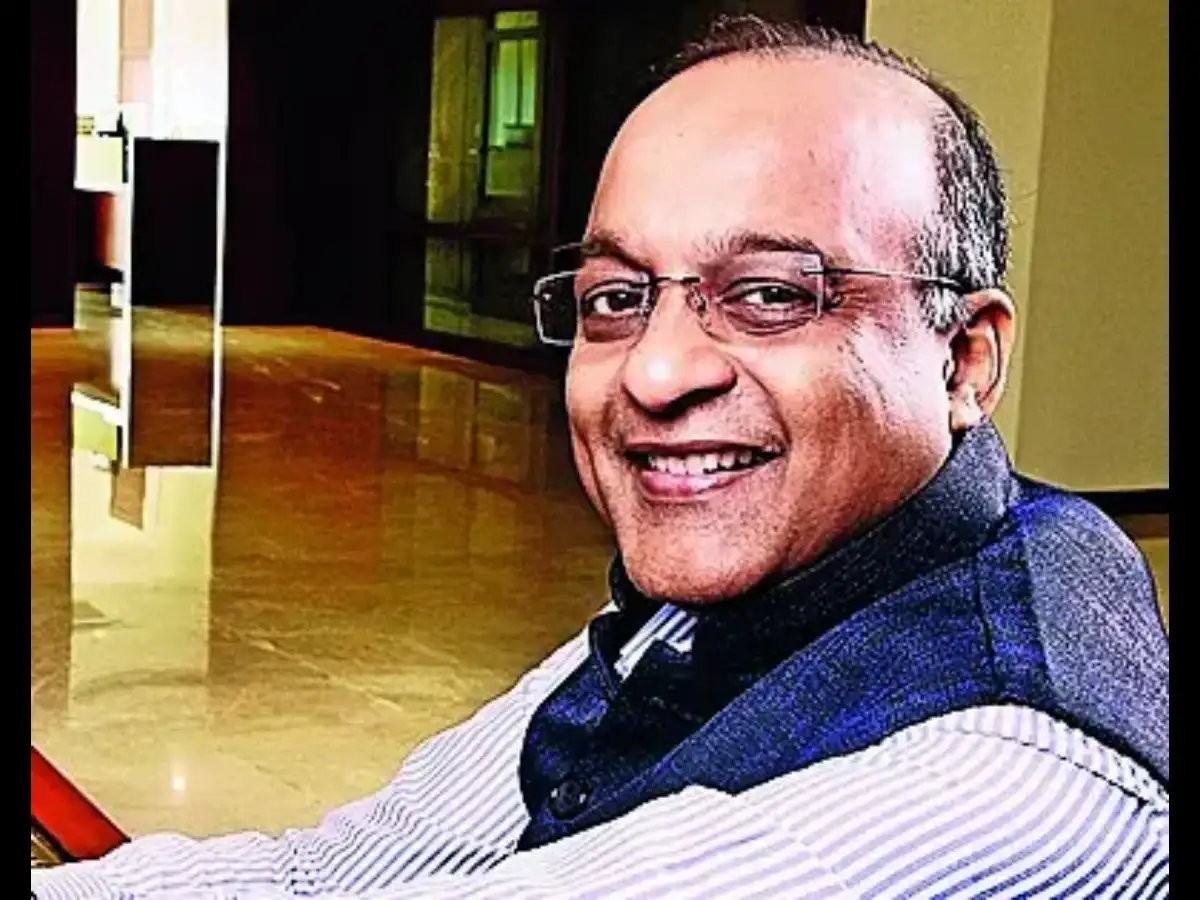
Mumbai: Expected inflows through the specialised FCNR(B) deposit programme should settle around $50-55 billion, lower than the $60-80 billion initially projected, as taxation complexities for nonresidents and tighter liquidity in West Asia weigh on mobilisation, HDFC Bank MD and CEO Sashidhar Jagdishan said. In an interaction with analysts and media after the lender’s June-quarter earnings, Jagdishan said early estimates had not fully factored in the tax impact on NRIs and overseas citizens of India.
Since interest on FCNR(B) deposits is taxed on a gross basis, leveraged investment makes little economic sense for depositors outside the Middle East and Singapore, effectively reducing the opportunity size among NRIs in the US, UK, Europe and Australia.
“That in itself reduces the opportunity size,” Jagdishan said. “The consensus — and I am not an expert, let me put in that caveat, I am just going by what some experts have said— is that what was expected to be $60-80 billion could now come in somewhere around $50-55 billion. Let’s hope it does.”
The special Reserve Bank of India (RBI) incentives on the deposit program will end on September 30. A July 16 Barclays report also said FCNR (B) inflows had started slowly, reportedly at around $5-6 billion, and that market expectations may have been too high.
‘TEETHING TROUBLES’
It said early uncertainty around leverage and whether banks could use GIFT City branches to mobilise deposits may have slowed flows. Achieving market expectations would require a “relatively high run rate” before the window closes at the end of September, said the Barclays report.
Jagdishan said West Asian central banks, including in Oman and the UAE, have tightened leverage rules or asked banks to hold higher domestic liquidity buffers amid the regional conflict. As a result, counterparty banks have reduced the country limits originally earmarked for FCNR(B)-linked flows into India.
HDFC Bank’s mobilisation from the UAE is also constrained by a client-onboarding ban at its Dubai International Financial Centre branch and tighter UAE central bank rules on representative offices, which restrict facilitative activities such as cross-selling.
“We do have a little bit of a handicap in that particular region,” Jagdishan said. “But we are not necessarily waiting for that.”
The bank is reaching out to customers directly from India through product specialists, a route that remains permitted as it does not rely on the constrained representative-office channel. “We may have other strategies as well to reach out to some of the customers within the realms of the regulations,” he said.
THREE-PRONGED APPROACH
HDFC Bank is targeting three streams for mobilisation: Non-leveraged deposits offering more than 6%, bank-funded leverage for top customers, and leverage accessed by customers from overseas partner banks. The bank has already raised about $750 million in overseas borrowings to support its FCNR(B) push and plans to raise more.
HDFC Bank was the first lender to raise $750 million in bonds from its GIFT City branch, giving it dollar resources to offer leverage of about nine times to top customers.
Barclays said comparisons with the 2013 FCNR(B) scheme may be misleading because US rates were near zero then and the India-US yield differential was wider, making FCNR(B) deposits more attractive. Today, elevated US cash and fixed-income yields reduce the scheme’s relative appeal, while leveraged structures appear more complex and available only to a limited set of clients.
Jagdishan said the bank has until September to build momentum and expects to mobilise a “very healthy number” relative to the banking system, though he declined to share an internal target.
In 2013, when the RBI opened a swap window during the taper tantrum, HDFC Bank mobilised $3.4 billion, the highest among participating banks and equivalent to about 7% of its deposits at the time.