After one of its most volatile weeks in years, South Korea’s stock market is approaching a milestone it has long been chasing: a potential path into MSCI Inc.’s developed-market status.
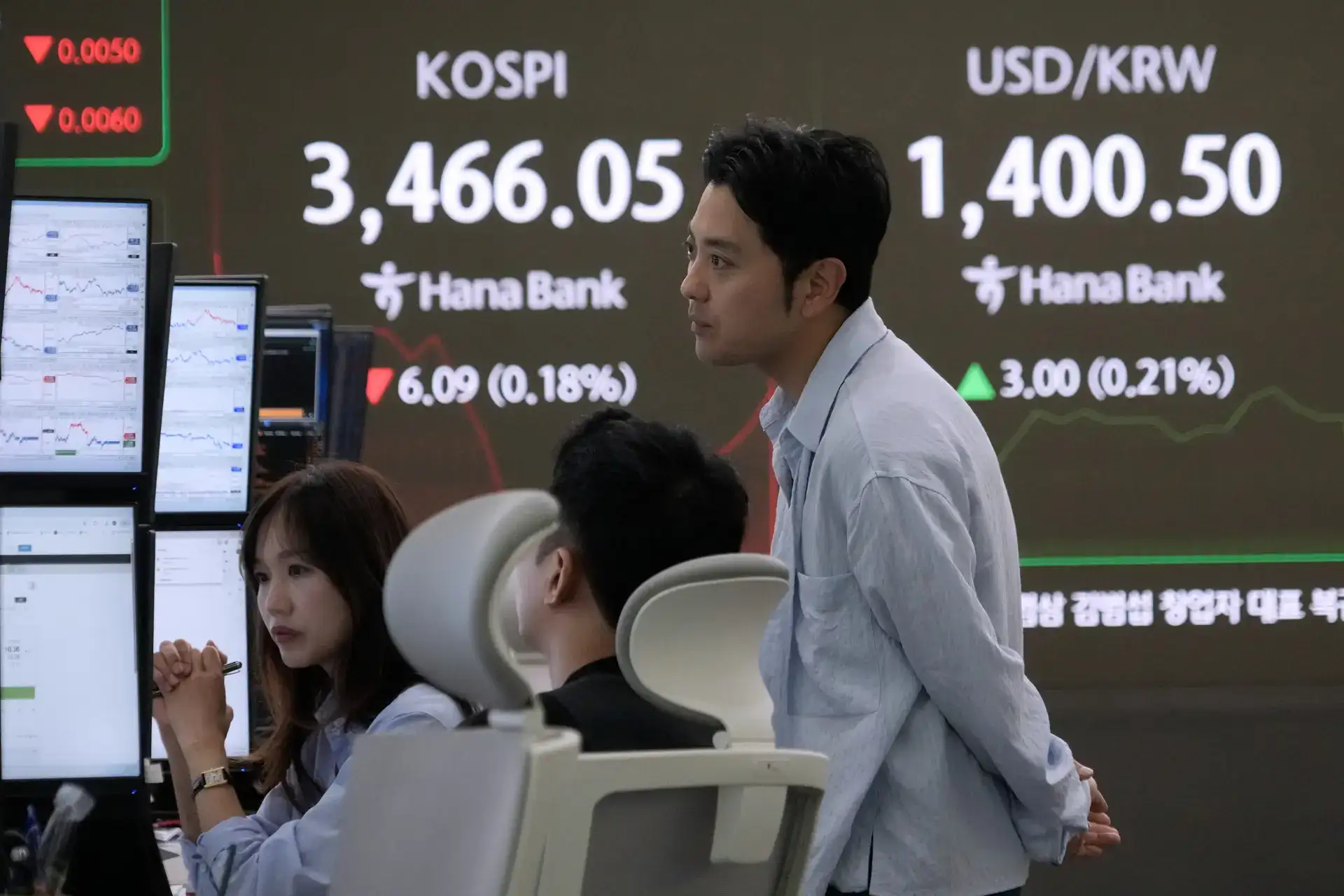
The Kospi has become the world’s best-performing major equity benchmark this year, surging more than 90% as investors piled into artificial-intelligence winners. Yet the rally has also turned Korea into one of the world’s most volatile stock markets. The benchmark has repeatedly triggered exchange safeguards in recent days, while swings have surged to levels rarely seen among major global indexes.
Now investors are awaiting MSCI Inc.’s annual market-classification review on June 23, when the index provider will decide whether Korea finally earns a place on the watchlist for developed-market status, the first step toward an eventual upgrade.
Most of the 15 investors and strategists interviewed by Bloomberg expect MSCI to keep Korea in the emerging-market camp for now, arguing that recent reforms need more time to prove their durability. But few doubt the direction of travel.
“It’s more of a matter-of-time issue,” said Young Jae Lee, senior investment manager at Pictet Asset Management. “Korea will become a developed market at least in the next couple of years. That’s my base case.”
The bigger question may be how much the label matters anymore.
Korea’s market has become increasingly synonymous with the global AI trade, with Samsung Electronics Co. and SK Hynix Inc. accounting for more than half of the Kospi’s weighting. As investors chase exposure to the semiconductor boom, some argue the forces driving Korean stocks are becoming larger than any benchmark classification.
“It doesn’t matter in a sense that Korea is now such a global play,” said Arjun Jayaraman, portfolio manager at Causeway Capital Management. “It’s not about investing in Korea. It’s about investing in AI plays.”
By most traditional measures, Korea already looks like a developed market. The nation’s equity market has nearly tripled in value over the past year to about $4.4 trillion, briefly overtaking India as the world’s sixth-largest. Its companies occupy critical positions in global semiconductor, battery and manufacturing supply chains.
A country with Korea’s massive footprint shifting classification is simply “unprecedented,” said Chetan Seth, Asia equity strategist at Nomura Holdings Inc. in Singapore. “No other country in recent times with Korea’s substantial weight in existing indices has moved from one market classification to another.”
South Korea currently commands a 23% weighting in the MSCI Emerging Markets index. By comparison, Greece and Israel, the two most recent nations to achieve developed-market status, boasted much smaller economies and index weights when they were promoted.
The sticking point has long been accessibility for foreign investors.
MSCI removed Korea from its developed-market watchlist in 2014, citing restrictions on currency trading and other market-access issues. Last year, the index provider again pointed to shortcomings in foreign-exchange reforms and compliance burdens.
Since then, Korea has resumed short selling and is preparing to launch extended won trading hours in July, two reforms long sought by global investors. President Lee Jae Myung has also made capital-market reform a key policy priority.
“There definitely is a higher chance of inclusion into the DM index, just because this administration has made it their policy to push for a shift from EM to DM,” said Yi Ping Liao, portfolio manager at Templeton Global Investments.
An MSCI promotion would carry tangible benefits. BNP Paribas Securities estimates it could attract roughly $30 billion of inflows as benchmark-tracking funds rebalance portfolios. It could also help narrow the so-called Korea Discount, the valuation gap that has long separated Korean stocks from developed-market peers.
“It shifts the narrative from ‘high-growth EM play’ to ‘core DM exposure to a strategic supply-chain pillar,’” said Wei Li, BNP’s head of multi-asset investments.
Such a broadening of the investor base would be a welcome catalyst during Korea’s current market volatility. The country has already seen record foreign outflows of more than $78 billion this year, driven largely by torrid rallies in Samsung Electronics and SK Hynix that forced funds to sell after hitting single‑stock allocation limits.
Those limits may rise if Korea joins the developed‑market league, according to Park Jinho, head of equity investment at NH-Amundi Asset Management in Seoul.
Just as importantly, a change in investor mindset would also help restore calm. Developed-market investors have longer horizons, focusing on company sustainability, governance and shareholder returns, rather than short-term growth, according to Kieron Poon, investment director of Asian equities at Aberdeen Investments.
“So, a reclassification could improve governance standards in Korea and reduce market volatility over time,” Poon added.