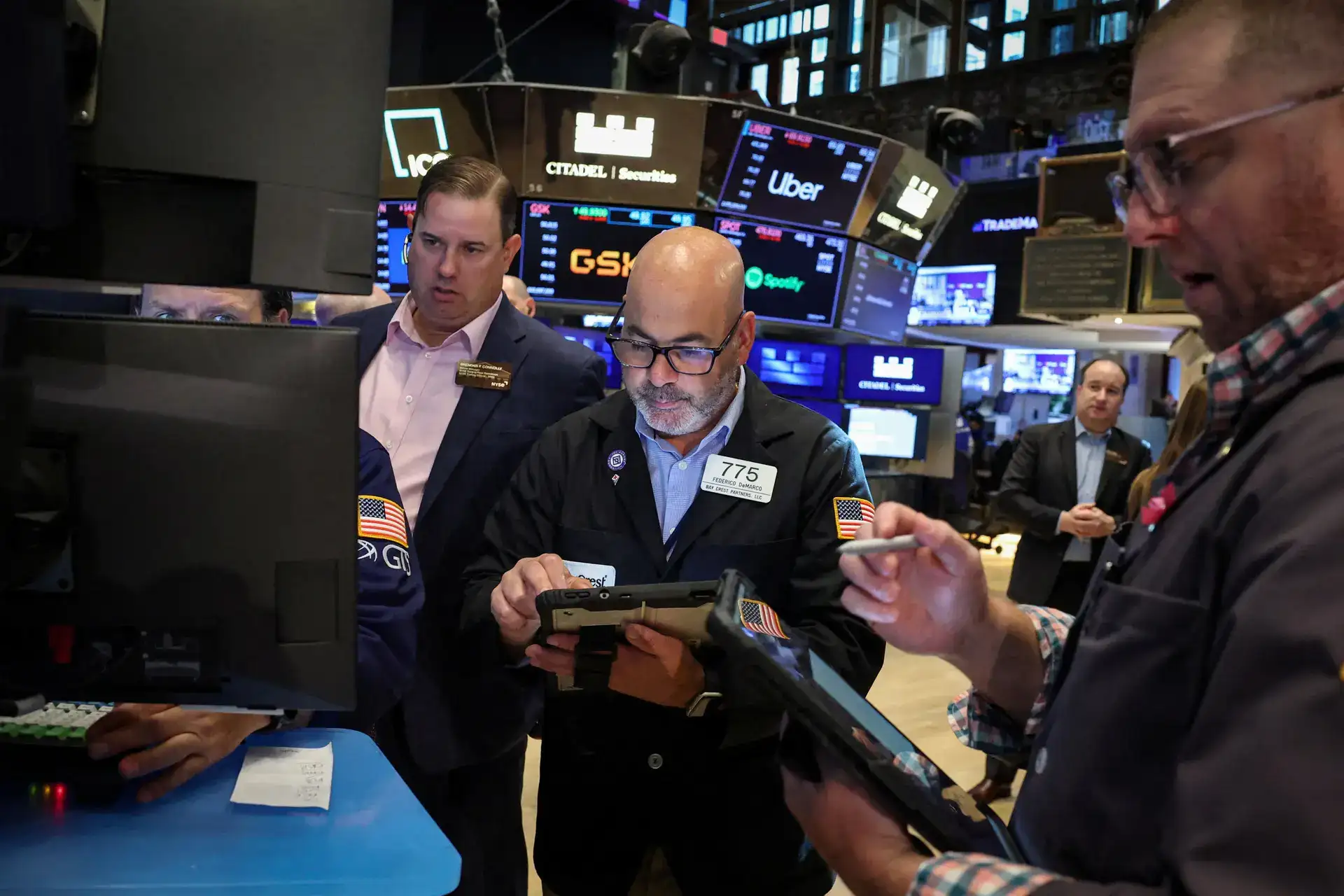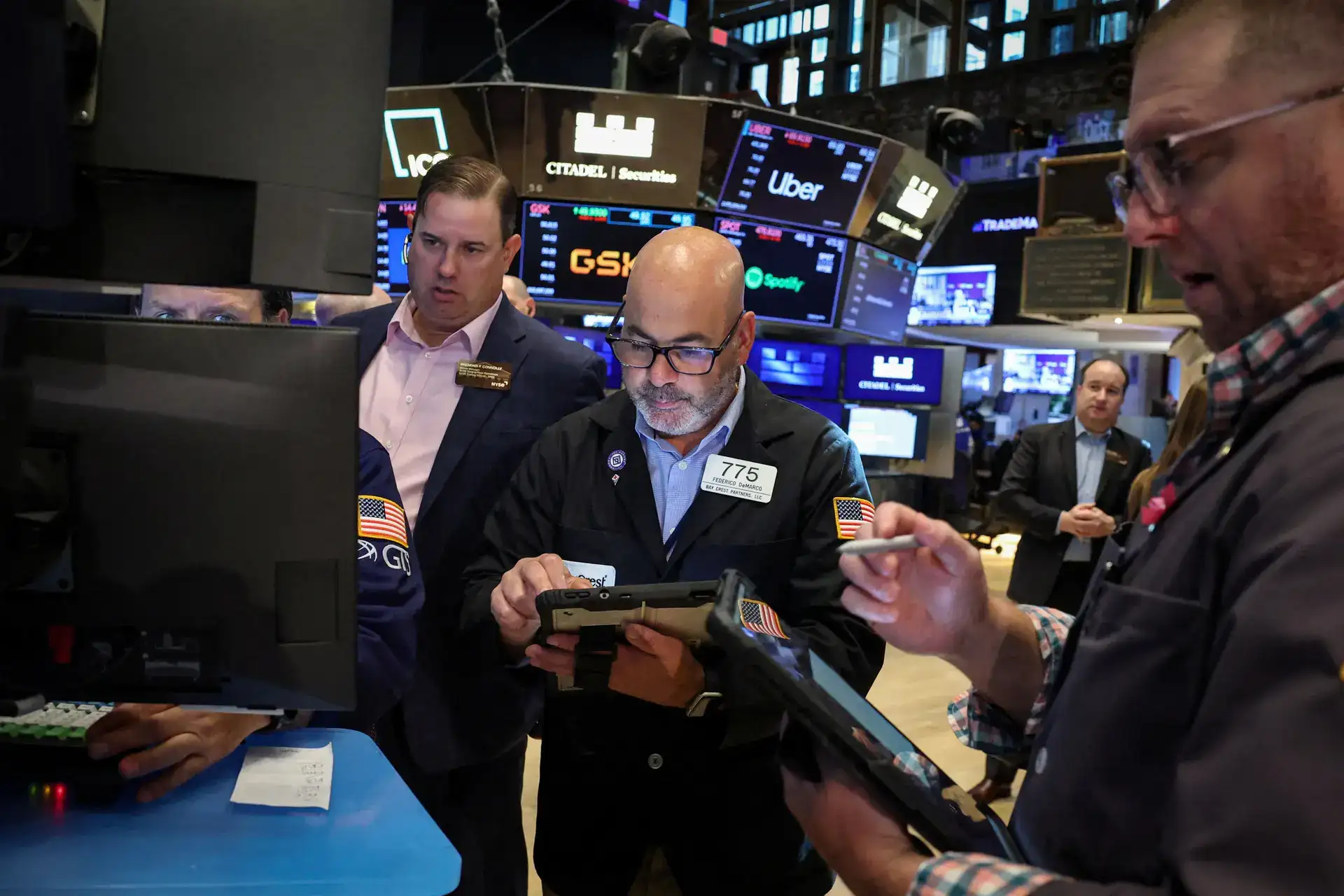

U.S. and European stock markets found only scattered relief from this week's lows as oil prices pulled back on Friday, but global bond yields stayed near multi-decade highs as concerns over inflation and rate hikes continued. News that U.S. President Donald Trump's administration will impose higher tariffs on goods from 60 trading partners did not help the inflation picture, with 30-year Treasury yields near their highest since 2007 and German 10-year Bund yields - the benchmark for the euro zone - holding close to their highest since 2011. Wall Street stocks were mixed, with the Dow Jones Industrial Average up 0.46%, the S&P 500 little changed and the Nasdaq Composite down 0.64%. Shares of chipmaker Intel fell about 8% despite strong results. Tech stocks have been under pressure this week as investors grow increasingly uneasy about multi-billion-dollar spending on AI that has yet to yield conclusive evidence of paying off. The pan-European STOXX 600 gained 0.8% after a more than 1% drop in the last session, rising for a second straight week. Brent crude settled at $96.78 a barrel, down $3.91, or 3.88%, having closed above $100 in the previous session for the first time since May. Attacks by Iran-aligned Houthis on Saudi tankers in the Red Sea risk choking off a second crucial Middle East artery for global oil supplies, alongside Iran's near-closure of the Strait of Hormuz. Trump threatened "major military punishment" for Iran and its Houthi allies, while the U.S. military conducted a 13th consecutive night of attacks.
BOND YIELDS NEAR HIGHS
Benchmark 10-year U.S. Treasury yields dipped from 18-month highs on Friday as oil prices eased, though investors remained cautious ahead of the Federal Reserve's policy meeting next week, which many believe could bring a hawkish surprise.
The benchmark 10-year U.S. Treasury yield ticked down to 4.679%, while the yield on 30-year Treasury bonds was steady at 5.163%, not far from a 19-year peak of 5.201%.
Markets show traders believe central banks are more likely to raise borrowing costs, with a one-in-three chance of a rate hike from the Fed as soon as next week - a sea change from merely a week ago - while a move in September is more than fully priced in.
"As for the Fed, uncertainty around the outlook for both the policy rate and the balance sheet could weigh on the UST market over the next few months," John Davies, U.S. rates strategist at Standard Chartered Bank, wrote in a note on Friday, referring to the Treasuries market.
"Our base case remains an on-hold Fed, but we see a risk that the long-end might start to question whether Chair Warsh is only ready to 'talk the talk' rather than 'walk the walk' on delivering price stability," Davies said. The European Central Bank left rates unchanged on Thursday, but a September rate hike is about 70% priced in. Data on Friday offered a more optimistic economic outlook after surveys of business activity showed Germany's private sector returned to growth in July for the first time in four months and contraction in France's private sector eased this month.
Most major currencies were steady against the dollar on Friday, though the dollar index was on pace for its biggest weekly jump in about a month. The yen was pinned near 40-year lows at 163.84 per dollar, drawing warnings from the U.S. Treasury about excess volatility in the currency and from Japan's finance minister.