

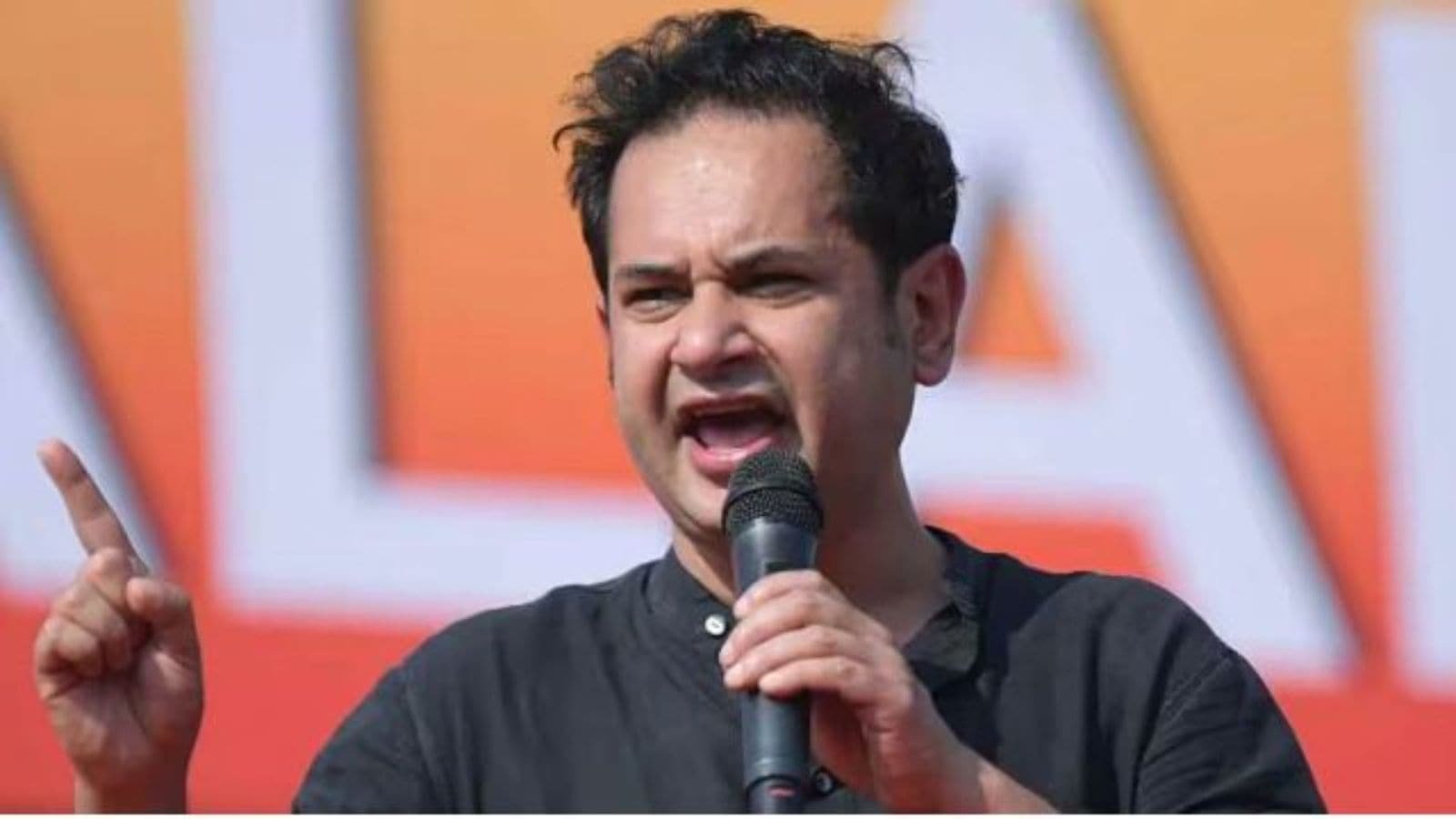
Two years ago, Pradyot Kishore Manikya Debbarma signed an accord with the BJP and joined the ruling coalition in Tripura, betting that a formal agreement — the Tiprasa Accord — would finally deliver on tribal rights the region had been promised for decades. Today, with elections to the Tripura Tribal Areas Autonomous District Council (TTAADC) scheduled for April 12, that bet has collapsed. His ally is now his opponent. His leaders are defecting. And the accord remains unimplemented.
This is not merely an electoral fallout. It is a reckoning over what tribal political power in Tripura actually means — and who gets to define it.
In a social media live session this week, Pradyot Kishore — Tipra Motha’s founder and supremo — alleged that he was approached with a proposition: agree to an unconditional alliance with BJP ahead of the ADC elections, and receive guaranteed funding and electoral victory in return. He said he refused, because the BJP offered no commitment to honour the Tiprasa Accord.
The allegation is significant not just for what it claims, but for the timing of what followed. Within days of alliance talks in Delhi ending without a resolution, two senior Motha leaders — Saudagar Kalai and Ananta Debbarma, the latter an Executive Member of the ADC (equivalent to a state cabinet minister) — crossed over to BJP, bringing supporters with them. A stream of Motha workers has followed since.
Pradyot has said he holds no personal bitterness toward those departing. He has also claimed the splits are a direct consequence of his refusal to fall in line. “People can’t be bought by money and posts,” he said, in an apparent reference to what he alleges is BJP’s strategy of inducements.
Senior Motha MLA Ranjit Debbarma echoed the concern internally, alleging that party minister Animesh Debbarma had been quietly backing BJP — something Animesh denied. Animesh, for his part, accused the Motha leadership of favouring family loyalists and relying on ethnic emotional appeals rather than a coherent political programme. Both Animesh Debbarma and MLA Chitta Ranjan Debbarma were seen attending BJP rallies in Dhalai and Khowai districts, even as their party officially condemned the appearances.
BJP’s response: ideology, not poaching
Tripura BJP spokesperson Nabendu Bhattacharya dismissed Pradyot’s allegations as political theatre. On the question of leaders joining BJP, he was careful — neither confirming organised recruitment nor denying active contact. “Lots of people who have good social and political presence in different parts of the state are keeping in touch with us,” he said. “The decision about when they will be taken will be decided organisationally.”
Story continues below this ad
On Tipra Motha as a political force, his assessment was blunter: “No party without an ideology can survive with instigation and hate politics alone.” BJP’s argument, consistently reiterated, is that Motha has governed the ADC for five years without results to show — and that its politics of ethnic polarisation and what they call “blackmail” is now collapsing under its own weight.
Bhattacharya specifically called out Pradyot’s framing that non-tribals are systematically oppressing tribals. “Narratives that non-tribals are torturing tribals is a deliberate tactic. Neither tribals nor non-tribals are taking this well,” he said.
Pradyot, meanwhile, has maintained that his dispute is with the Tripura state BJP leadership, not the central high command — a framing that may be strategic, preserving room for future realignment even as the two parties contest 28 seats each in the current election.
What observers are watching
Political analyst Sekhar Dutta, a veteran commentator on Tripura politics, sees the ADC elections as a potential inflection point. A BJP victory, he argues, could draw tribal areas further into the national political mainstream — eroding the space for ethnicity-based regional parties that have historically defined tribal political identity in the state.
Story continues below this ad
But tribal intellectual and linguistic ideologue Bikashrai Debbarma believes that framing misreads the ground reality. “BJP is largely seen as an outsider in the tribal areas of Tripura,” he said. He argues that Motha legislators who recently sided with BJP won their seats on Pradyot Kishore’s personal appeal — and that their defections should not be read as a broader tribal shift toward the saffron party.
The sharpest flashpoint, Bikashrai Debbarma contends, may be the Kokborok script controversy. Home Minister Amit Shah’s public endorsement of the Devanagari script for the state’s native Kokborok language — over the Roman script preferred by a large section of the tribal community — has generated sustained resentment. “The Kokborok language row could prove fatal for BJP, if Motha can play it right,” he said.
ALSO READ | ‘Days of Royalty are Over’: Behind the explosive fallout between Tripura CM and the royal scion ahead of April polls
His seat projection: Tipra Motha returns to power with 1-2 fewer seats than its 2021 sweep, when the party — barely two months old — won 18 of 28 contested seats. BJP, he believes, may win 8-9 seats, with some room for IPFT, BJP’s other tribal ally, which is also contesting independently.
Meanwhile, clashes have already been reported in South Tripura and Dhalai district since the election process began. Security has been tightened across the TTAADC area. The result, whichever way it falls, is likely to reshape the terms of tribal politics in Tripura for the assembly elections beyond.
Story continues below this ad
What is the TTAADC, and why does it matter?
The TTAADC is not an ordinary local body. Guaranteed its rights under the Sixth Schedule of the Constitution since 1982, the council governs nearly 70 percent of Tripura’s geographical territory. Twenty of the state assembly’s 60 seats are reserved for tribal communities. Whoever controls the council exercises significant influence over the assembly arithmetic — a fact that makes these elections consequential well beyond the tribal belt.
Tribals account for 30 percent of Tripura’s population. Their long-standing grievances are structural: restricted financial autonomy, absence of land title rights within ADC boundaries, inadequate healthcare and drinking water infrastructure, and underrepresentation in political institutions. The 2026-27 state budget allocated ₹7,542 crore to the Tribal Sub Plan — 39.39 percent of the total outlay — but the TTAADC’s direct administrative allocation was a fraction of that: ₹914.82 crore. Regional parties governing the council have persistently alleged “fund starvation.” The state government, in turn, points to administrative failures within the council itself.
The Tiprasa Accord, signed before Tipra Motha joined the BJP-led alliance in 2024, was meant to resolve these disputes through a tripartite agreement between the central government, the Tripura state government, and the party. It has not been implemented.
