

THE US on Thursday announced a 100% tariff on import of patented pharmaceuticals and associated ingredients starting July 31 on grounds that Washington is heavily reliant on imports, which threatens to limit access to life-saving medications in the event of “global supply chain disruption”.
US President Donald Trump said that new tariffs will not include generic drugs “at this time”. But a decision on adjusting imports of generic pharmaceuticals and their associated ingredients could be taken within one year. India is primarily an exporter of generic pharma products, but has introduced various schemes to boost production of patented drugs too.
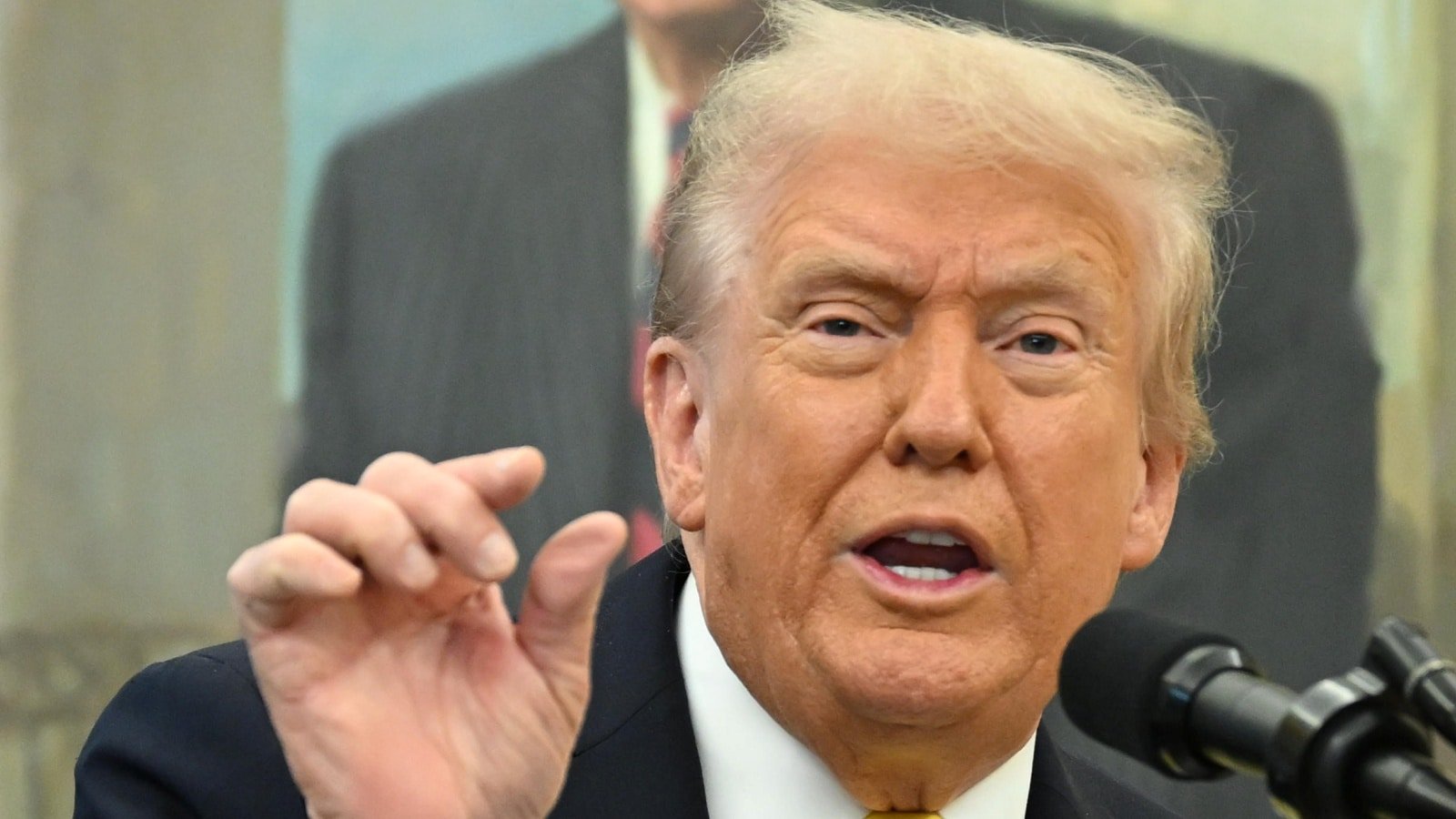
“I have determined that it is necessary and appropriate to impose a 100% ad valorem duty rate on the import of patented pharmaceuticals and associated pharmaceutical ingredients.. The Secretary [of Commerce] found that the present quantities and circumstances of imports of pharmaceuticals and pharmaceutical ingredients threaten to impair the national security and economy,” Trump said.
The US is India’s largest market for pharmaceutical exports, accounting for an almost 40% share. Pharma exports were also exempt from the 50% tariffs imposed by the Trump administration on most Indian goods. While India’s exports are primarily in the patented segment, Sun Pharma is the only Indian company with sizable sales from patented products in the US. According to HSBC analysts, it reported global sales of $1,217 million from patented products in FY25, of which the US market accounted for 85-90%.
However, India has been pushing for the manufacturing of patented medicines too under its flagship Production Linked Incentive Scheme (PLI). According to an official statement, the PLI focuses on biopharmaceuticals, complex generic drugs, “patented drugs or those nearing patent expiry”, gene therapy drugs, orphan drugs and complex excipients.
The PLI Scheme for Pharmaceuticals was approved by the Union Cabinet in 2021, with a financial outlay of Rs 15,000 crore and a production tenure running from FY 2022-23 to FY 2027-28.
Former trade officer and founder of think tank Global Trade Research Initiative, Ajay Srivastava, said that for India, the immediate impact is limited as around 90% of India’s pharmaceutical exports to the US are generics, which remain exempt. In 2025, India exported $9.7 billion worth of pharmaceuticals to the US, accounting for 38% of its global pharma exports of $25.8 billion, he said.
Story continues below this ad
“However, Indian firms producing branded or speciality drugs, or supplying inputs for patented medicines, could face tariff pressure. The larger concern is future uncertainty if tariffs are extended to generics,” Srivastava said.
Trade experts said the US could use tariffs mainly as a pressure tool, not to raise revenue but to push drugmakers to cut prices in the US, shift some manufacturing locally, and to gain greater control over critical pharmaceutical supply chains, treating the sector as strategically important like semiconductors. And this is the reason tariffs are designed to be avoidable; companies that lower prices or invest in US production can escape them.
© The Indian Express Pvt Ltd
