
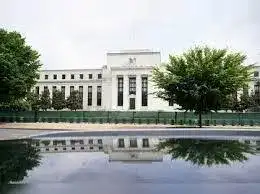
President Donald Trump’s financial regulators are pushing through the most sweeping overhaul of U.S. bank supervision since the 2008 global financial crisis, reshaping how examiners monitor lenders and redefining what regulators consider a meaningful risk to the banking system, Reuters reported.
Officials at the Federal Reserve, the Office of the Comptroller of the Currency (OCC), and the Federal Deposit Insurance Corporation (FDIC) argue that bank supervision has become overly focused on paperwork, procedural deficiencies, and minor operational issues rather than core financial threats that could undermine a bank’s safety and stability.
The regulatory revamp is aimed at narrowing examiners’ focus to what authorities describe as “material financial risks.” As part of the shift, regulators have moved away from supervising banks on the basis of reputational risk, a long-disputed metric that banks argued gave examiners broad discretion to penalize institutions on subjective grounds.
Trump and several Republican lawmakers have repeatedly accused banks of using reputational risk concerns to deny services to conservative individuals and businesses, allegations the banking industry has denied.
Critics of the regulatory changes, however, warn that the new framework could reduce supervisors’ ability to detect problems before they escalate into larger threats. Governance failures, weak controls, and operational lapses may not immediately pose financial risks but can evolve into significant vulnerabilities over time, analysts and former regulators told Reuters.
A major element of the overhaul involves limiting the use of “matters requiring attention,” or MRAs — confidential directives issued by regulators instructing banks to correct identified deficiencies. For years, MRAs have been one of the primary tools used by bank examiners to pressure institutions into resolving concerns before formal enforcement action becomes necessary.
Under the revised approach, MRAs may now only be issued for issues deemed to involve material financial risk. Less serious concerns will instead be categorized as nonbinding “observations.”
Regulators have also instructed examiners to avoid issuing MRAs when banks identify problems themselves and begin remediation efforts proactively. In such situations, agencies are expected to rely on observations rather than formal supervisory actions.
The OCC and FDIC have additionally proposed narrowing the definition of “unsafe and unsound” banking practices, another move critics say could weaken supervisory enforcement powers.
The reforms also seek to reduce duplication between agencies. The Federal Reserve has directed staff to rely as much as possible on examination work conducted by other regulators when another agency serves as a bank’s primary supervisor. Fed examiners are expected to conduct independent reviews only when reliance on another regulator’s findings is not feasible.
In another significant change, the Fed has advised supervisors to place greater reliance on banks’ own internal audit systems. If a bank’s internal audit framework is considered robust, examiners may accept its findings regarding remediation efforts instead of conducting separate analyses.
Regulators are also revising the confidential CAMELS ratings system used to evaluate banks’ financial health. The framework assesses lenders across areas such as capital adequacy, asset quality, management, earnings, liquidity, and sensitivity to market risk.
Banks have long argued that portions of the ratings system — particularly assessments related to management quality — are overly subjective. The proposed revisions would place greater emphasis on measurable financial risks while reducing the weight assigned to qualitative management-related evaluations.
The FDIC and OCC are simultaneously redesigning the bank appeals process for supervisory disputes involving MRAs, examination ratings, and other regulatory findings that banks have criticized the current system as opaque and too heavily influenced by the same examiners who issued the original decisions.
To address those concerns, both agencies have established new independent review bodies intended to make appeals more transparent and less tied to frontline examination teams. The Federal Reserve has also encouraged banks to escalate complaints if they believe examiners are failing to follow the updated supervisory standards.
Another supervisory practice being curtailed is the use of “horizontal reviews,” in which regulators simultaneously examine multiple banks over similar issues. Banks have long argued that such exercises often resemble open-ended investigations searching for problems without specific triggers.
The Federal Reserve’s updated principles direct staff to avoid launching horizontal reviews of large banks unless senior leadership determines they are critically necessary.
Supporters of the reforms argue the changes will make supervision more efficient, predictable, and focused on genuine systemic threats. Opponents counter that the measures risk weakening oversight safeguards built after the 2008 crisis and could leave regulators less equipped to catch emerging problems early.