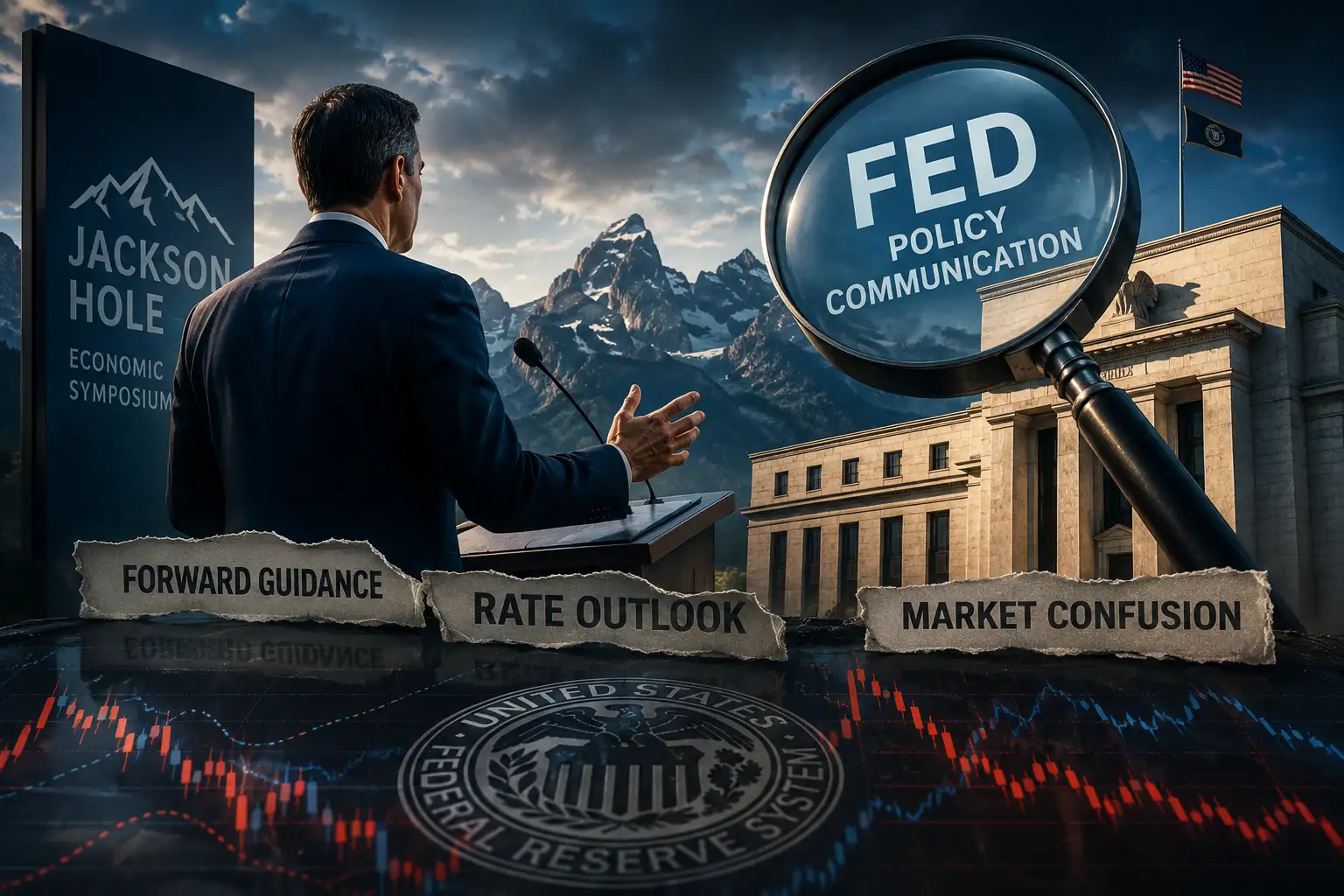
Federal Reserve Chair Kevin Warsh is set to address an audience of international economists and central bankers on Friday, with investors closely watching for signals on the U.S. economic outlook, recent bond-market volatility and the risks facing both the U.S. and global economies, according to Reuters.
Warsh’s speech at the Federal Reserve’s high-profile economic symposium in Jackson Hole, Wyoming, comes just three months into his tenure as Fed chief and has emerged as an important test of his approach to monetary policy communication.
The focus will be on whether Warsh maintains his preference for limited forward guidance or provides greater clarity on how he views elevated inflation and what conditions could lead him to support higher interest rates.
Inflation Remains Central to Policy Debate
The debate over the future path of interest rates has intensified as inflation remains significantly above the Fed’s 2% target.
The Personal Consumption Expenditures Price Index, the inflation gauge preferred by the Federal Reserve, remained at 3.7% in July, according to data cited by Reuters. The persistent price pressures have fueled concerns among several Fed policymakers that monetary policy may not be restrictive enough.
Kansas City Fed President Jeffrey Schmid, who is hosting the Jackson Hole gathering, indicated ahead of Warsh’s speech that the current federal funds target range of 3.50%-3.75%, where it has remained since December, may not be sufficiently restraining economic activity to bring inflation down.
Cleveland Fed President Beth Hammack has also argued that the time may have come for policymakers to act, while Boston Fed President Susan Collins has taken a more cautious position.
In an interview with Reuters, Collins said recent inflation data had been mixed, with headline inflation still too high but some underlying details showing signs of improvement. She indicated that the case for another rate increase remained unresolved.
Markets Await Warsh’s Policy Signal
The potential impact of another quarter-point rate increase may appear limited in the near term, particularly after recent economic data pointed to a more resilient U.S. economy.
Consumer spending and durable goods orders both showed strength in July, helping improve the growth outlook and reducing some immediate concerns about an economic slowdown.
However, policymakers remain divided over whether inflation will continue to run high or begin to ease as temporary pressures from tariffs and energy prices fade.
Adam Posen, president of the Peterson Institute for International Economics and a former Bank of England policymaker, has argued that Warsh needs to make clear that the Federal Reserve is prepared to respond if inflation remains persistently above target or begins accelerating again.
Such an approach would allow Warsh to emphasize the Fed’s willingness to raise rates when necessary while maintaining his broader view that stronger productivity and other structural factors could help contain inflation over time.
Warsh is scheduled to deliver his keynote address at 10 a.m. EDT on Friday, opening two days of discussions at the annual Jackson Hole gathering, which has become one of the most important forums for central bank policy debates and economic research, Reuters reported.
Bond Markets Add Another Layer of Complexity
Although this year’s symposium is formally focused on financial innovation, attention is expected to center heavily on monetary policy and the U.S. bond market.
One emerging issue is whether recent intervention by Treasury Secretary Scott Bessent in discussions surrounding the bond market could signal broader challenges for the Fed.
The issue highlights a potentially difficult balancing act for policymakers. The Federal Reserve may need to maintain or raise interest rates to contain inflation, while the U.S. government faces the challenge of managing roughly $40 trillion in outstanding public debt.
Higher borrowing costs could increase the government's financing burden and conflict with President Donald Trump’s preference for keeping borrowing costs as low as possible.
Global Markets Also Watching Closely
Warsh’s policy signals will be closely monitored beyond the United States.
Central banks around the world closely follow Federal Reserve decisions because changes in U.S. interest rates can influence currencies, inflation and borrowing costs globally.
Any indication that the Fed is preparing to tighten policy could therefore affect financial markets well beyond the United States, particularly through movements in the dollar and global bond yields.
Warsh’s limited use of forward guidance appears to be deliberate. Fed officials have increasingly cautioned against committing too strongly to a particular policy path because economic conditions can change rapidly, forcing central banks to adjust their decisions.
Recent inflation data have offered little evidence of a decisive return toward the Fed’s target. At the same time, uncertainty remains around the labor market, consumer spending and the durability of economic growth.
Some economists expect weaker consumer demand to eventually slow economic activity and ease inflationary pressure. Others believe tariff-related and energy-price pressures could diminish, allowing inflation to moderate without substantially tighter monetary policy.
International Monetary Fund Financial Counsellor Tobias Adrian has also warned that explicit forward guidance can become costly when economies are exposed to supply shocks that rapidly alter the policy outlook.
However, Adrian has distinguished between making firm commitments on future interest rates and explaining how policymakers assess risks and would respond to incoming economic data.
That distinction could prove important for Warsh. Rather than providing investors with a fixed roadmap for interest rates, he could use his Jackson Hole address to explain which economic indicators matter most and how changes in inflation, employment and growth could influence future decisions.
Investors will therefore be looking beyond any immediate signal on the next rate decision. The broader question is whether Warsh can provide greater clarity about the Federal Reserve’s reaction function while preserving the flexibility he sees as necessary in an uncertain economic environment.