

The Indian stock market rebounded on Thursday, with the Sensex and Nifty trading sharply higher, snapping a seven-day losing streak as falling US bond yields, short-covering and other factors boosted market sentiment.
Sensex jumped over 500 points to trade at 77,468, while Nifty 50 gained over 100 points to rise above 24,200. Broader markets also moved into the deep green, with Nifty Midcap 100 and Nifty Smallcap 100 rebounding over half a percent each.
Infosys, IndiGo, TCS, Bajaj Finance and Tech Mahindra shares were the top gainers on Sensex, rising 1-2% each. Power Grid, BEL, Eternal, SBI, Bharti Airtel, ITC, HDFC Bank, Reliance Industries, HCL Tech and others followed, rising nearly 1% each. All 30-constituents of Sensex were trading in the green.
Among the sectors, Nifty IT and Nifty Financial Services excluding banks gained more than 1% each to lead gains, while Nifry Oil & Gas slipped into the red. The overall market breadth turned sharply positive, with NSE seeing 1,965 advances against 518 declines, while 110 stocks remained unchanged.
Here are 5 key factors boosting market sentiment today.
1) US bond yields decline
The US Treasury said it would double buyback sizes for long-duration debt as it attempted to curb the sharp rise in yields that sent the 30-year Treasury yield to its highest level since 2007 earlier this week. As a result, US bond yields declined.
The yield on benchmark US 10-year notes decreased to 4.637% while the 30-year bond yield fell to 5.181%. The yield on 2-year notes, which typically moves in step with Fed interest rate move expectations, dropped to 4.162%. Falling bond yields typically make bonds less attractive to investors, which in turn can lead to some uptrend in markets.
Rupee rose 17 paise to 95.56 against US dollar in early trade after the US dollar slid to a three-month low following the Treasury's move to boost buybacks of longer-dated bonds. However, analysts cautioned that oil prices hovering above $92 per barrel will likely limit the rupee's upward trajectory.
“The rupee is expected to trade in the 95.40–95.90 range in the near term,” according to Jateen Trivedi, VP Research Analyst of Commodity and Currency at LKP Securities.
Today’s rise in the market comes after a long streak of the Indian benchmark indices recording losses. Nifty dropped more than 2% over seven sessions, marking its longest run of declines in 11 months. Sensex meanwhile snapped a four-session losing streak.
“The market, which has been steadily downtrending for the last 12 trading sessions, appears set for a short-term reversal now. The market is in oversold territory and a mild rally triggered by short-covering is likely,” said VK Vijayakumar, Chief Investment Strategist at Geojit Investments.
Foreign investors continued to remain net buyers on Dalal Street, net purchasing shares worth Rs 408 crore on Wednesday, according to provisional data on NSE. This comes after the foreign investors net bought shares worth Rs 2,573 crore in the previous session, despite markets remaining muted.
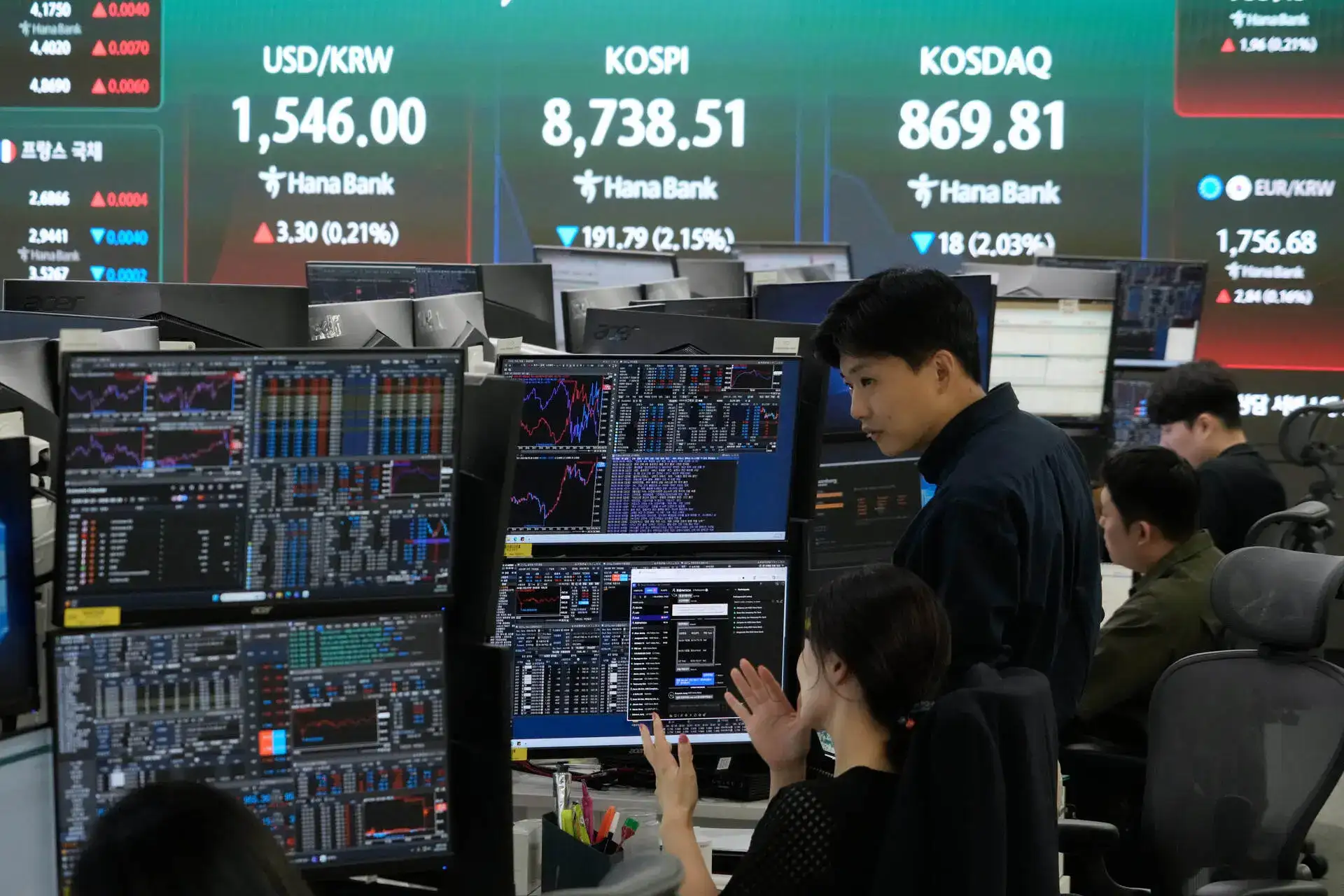
Dalal Street is accompanying its global peers today, which also traded in the green. South Korea’s Kospi surged more than 6% as the country’s volatile stock market continued to record explosive movements. Japan’s Nikkei and Hong Kong’s Hang Seng meanwhile gained over 1% each.
Wall Street had ended the previous session in the green, with the tech-heavy Nasdaq gaining around 0.16%.
What lies ahead for Dalal Street?
A significant trend in the market is that while largecaps are languishing, the mid-and small-caps are doing well, VK Vijayakumar from Geojit Investments noted. He added that this rally has fundamental support from revenue and earnings growth.
“Segments like CDMO, precision engineering and power infrastructure are doing very well and the management commentaries are very positive. Part of the good news in these segments are already in the price, but there is more room for price appreciation in these segments,” he further said.
While the short-term bias leans cautiously positive, Nifty’s undertone remains guarded below the crucial 24,300 mark, said Rajesh Palviya, Head of Research at Axis Direct. On the downside, he sees the benchmark index finding immediate support at 24,000, with a decisive breach exposing downside risks toward 23,800.
Meanwhile, the analyst said that a sustained breakout above 24,300 is needed to confirm a recovery toward the 24,450 zone, with any potential softening in crude prices likely serving as a key catalyst.