

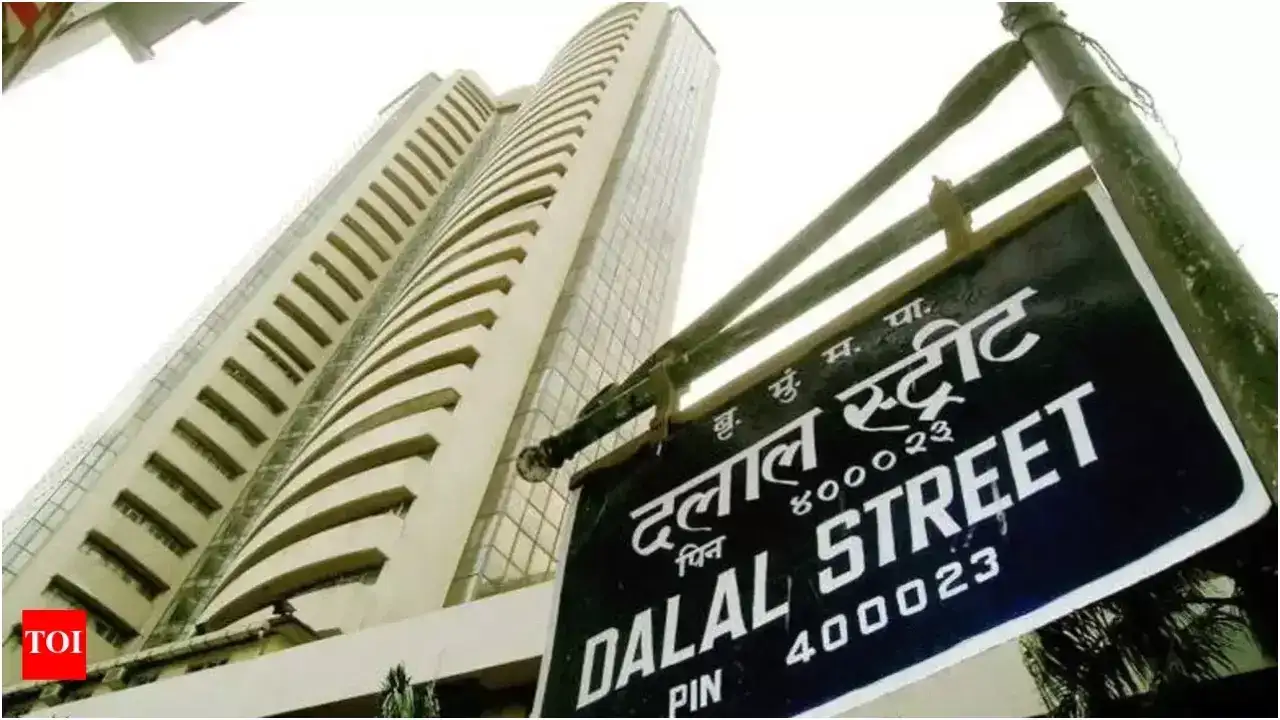
The Indian stock market remained range-bound in the last week, with Sensex losing around 500 points and Nifty falling 205 points to end in the red. Analysts now highlight four key factors that can influence Dalal Street’s action during the upcoming week between August 17 (Monday) to August 21 (Friday).
On Friday, Sensex and Nifty recorded slight losses even as oil prices stabilised around $87 per barrel. Sensex fell around 71 points to close at 78,009, while Nifty 50 lost 30 points to end the session at 24,366. Broader markets slipped into the deep red, with the Nifty Smallcap 100 and Nifty Midcap 100 indices falling around 0.7% each.
Markets remained range-bound through the week amid elevated crude and persistent global uncertainty, said Vinod Nair, Head of Research at Geojit Investments. He noted that while softer-than-expected US labour market data initially supported expectations of a patient Fed, the subsequent rebound in crude shifted focus back to inflation risks and evolving geopolitical developments.
Domestically, better-than-expected corporate earnings, stability in the rupee, moderation in the domestic 10-year bond yield and a gradual improvement in FII participation provided support to the domestic macro environment despite external headwinds, he further said.
“On the domestic front, the Nifty 50's strong Q1 FY27 earnings performance comfortably exceeded market expectations. Earnings breadth remained healthy, with 33 constituents outperforming estimates, underscoring the strength of corporate earnings despite a challenging external backdrop and continuing to create opportunities for a bottom-up stock selection approach,” Nair noted, adding that during the week, large-cap sentiments were largely capped by Middle East tensions. However, the mid-cap index demonstrated strength and outperformed the benchmark, aided by better earnings visibility.
Also read | Independence Day 2026: How Sensex skyrocketed 8,500% in less than 35 years since 1991 liberalisation reforms
Here are the four key factors that will likely determine market movement during the upcoming week between August 17 (Monday) to August 21 (Friday).
After Indian stock market remained range bound on Friday even as oil prices stabilised around $87 per barrel, the crude jumped over $1 per barrel following tanker attacks and a lack of progress on a peace agreement between the Trump administration and Iran's leadership. Brent futures settled at $88.52 a barrel, up nearly 2%. US West Texas Intermediate crude futures finished at $82.40, up over 1%.
The US meanwhile on Thursday said it could maintain a naval blockade of Iran indefinitely and increase economic pressure on the country in response to stalled ceasefire talks. Rising oil prices amid such developments in the Middle East will likely be among the key factors that could influence action on Dalal Street this week.
Iran said Qatar was holding three of its pilots who had been missing since March, which Qatar denied. The United Arab Emirates meanwhile accused Iran of again attacking one of its vessels in the Strait of Hormuz. The Iran-backed Houthis again struck a Red Sea port in Yemen.
In southern Lebanon, 11 people were killed in Israeli airstrikes, marking some of the deadliest since a shaky truce between Israel and Iran-backed Hezbollah went into effect on June 20. All of these developments may further spook investors about the tensions further escalating into the raging war which earlier this year rattled the stock markets.
Minutes to the recent Federal Reserve meeting, where US interest rates were left on hold, will be closely monitored for any clues on whether rates could rise next month. Meanwhile, a surprise drop in US retail sales has dented expectations for a Federal Reserve rate hike next month.
Also read | Oil prices rally, US data dents chances of Fed rate hike
Foreign investors remained net buyers of Indian equities on Friday, net purchasing shares worth Rs 508 crore. Overall, FIIs closed last week as modest net buyers of Rs 1,228.24 crore, opening with two sessions of buying, reversing into two of selling, and returning as buyers on the final day, Pabitro Mukherjee, Deputy Vice President-Research at Bajaj Broking said.
DIIs remained consistent buyers, with net purchases recorded in all sessions except the first, committing Rs 9,285.63 crore, he said, noting that Nifty still drifted lower through the week, from 24,584 to 24,366.
“Looking ahead, investors will closely track crude, geopolitical developments, U.S. retail sales, FOMC minutes and Chinese economic data for further cues on global growth and the Fed's policy outlook,” said Vinod Nair, Head of Research at Geojit Investments.
Also read | Independence Day 2026: 4 stocks that have been part of Sensex since inception. Do you own any?