

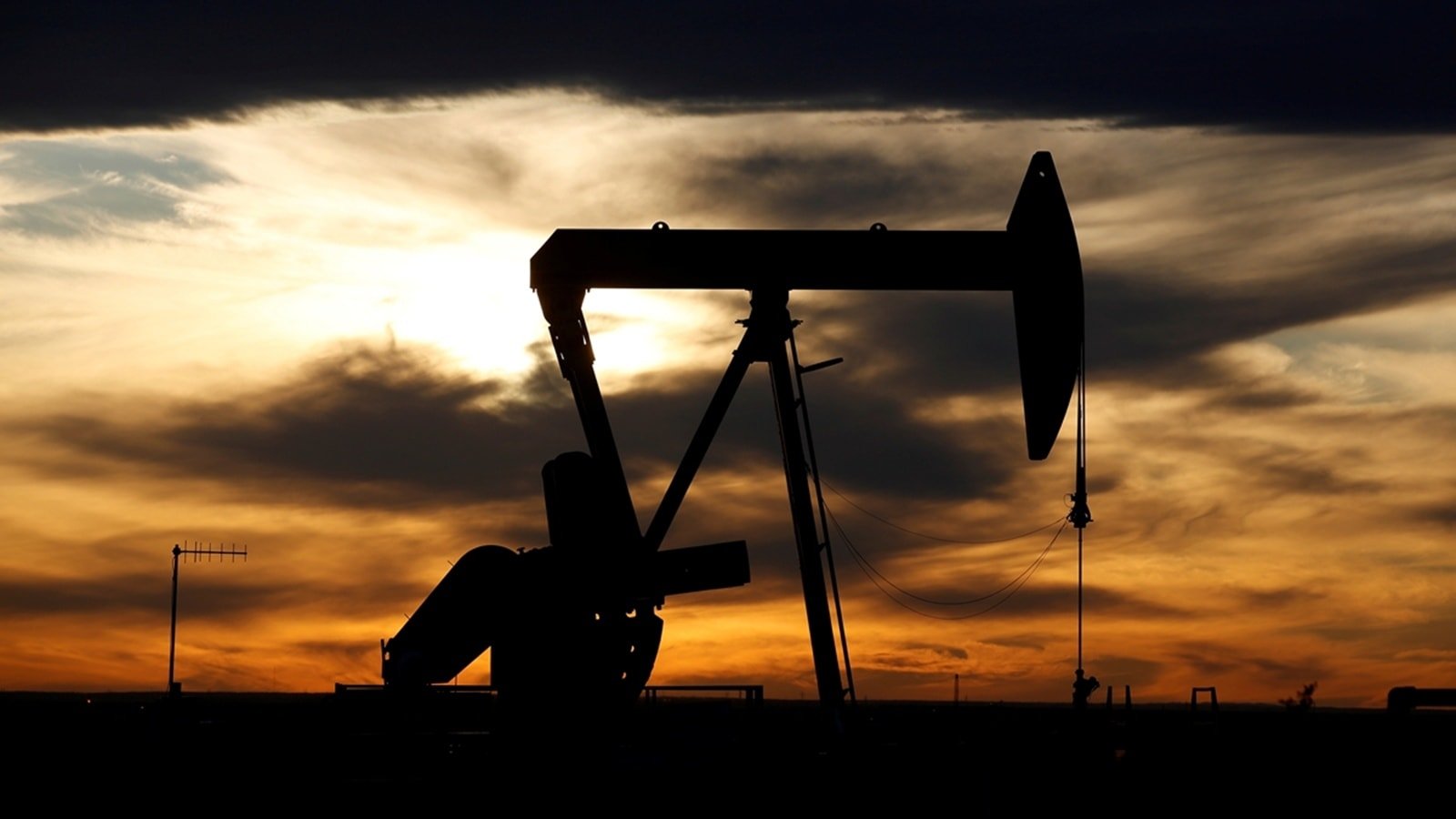
When similar duties, or windfall gains taxes, were imposed in the wake of Russia’s invasion of Ukraine, the government had explicitly exempted SEZ refineries from the levies. (Source: File)
The levies imposed last week on exports of diesel and aviation turbine fuel (ATF) will not be applicable to fuel exports from Reliance Industries’s (RIL) special economic zone (SEZ) refinery, a senior government official said Thursday. According to the Central Board of Indirect Taxes & Customs (CBIC) Joint Secretary Jainendra Singh Kandhari these levies are not applicable on SEZ refineries, which are export-oriented units. RIL’s Jamnagar mega refining complex—the largest single-location refining complex in world—has a 35.2-million-tonnes-per-annum (mtpa) SEZ refinery and a 33-mtpa domestic tariff area (DTA) refinery.
Amid the surge in international oil and fuel prices and tightening supply situation globally, the government on Friday imposed export duties of Rs 21.5 per litre on diesel exports and Rs 29.5 per litre on jet fuel exports with the objective of ensuring adequate availability of these fuels in the domestic market. However, the notifications announcing the levies didn’t specify whether or not RIL’s SEZ unit came under the purview of these duties.
When similar duties, or windfall gains taxes, were imposed in the wake of Russia’s invasion of Ukraine, the government had explicitly exempted SEZ refineries from the levies. With the clarification from Kandhari, it is now clear that for RIL—the country’s largest fuel exporter—the export levies will only be applicable to products from its DTA refinery, not its SEZ refinery.
“As per judicial pronouncements on this issue, the special additional excise duty (SAED) and additional excise duty (AED) are not applicable on SEZ refineries,” Kandhari said in response to a question from The Indian Express. The Rs 21.5-per-litre levy on diesel exports includes Rs 18.5 of SAED and Rs 3 as AED. As for ATF, the entire duty of Rs 29.5 per litre has been imposed as SAED.
“At a time when international diesel prices have surged sharply, the levy is designed to disincentivise exports and ensure that refinery output is directed first towards meeting domestic demand. Keeping Indian pumps fully supplied takes precedence over export opportunities, however commercially attractive those may be at current global prices,” the Petroleum Ministry had said on Friday.
With the surge in fuel prices in the international market, fuel exports would have been more lucrative for refiners as against selling products in the domestic market, where prices have been deliberately kept low to shield consumers from high prices. The export duties have been introduced by the government to deter refiners from exporting large volumes of critical fuels.
The government had announced that these duty rates will be reviewed on a fortnightly basis to align the duties with prevailing fuel prices in the international market. According to back-of-the-envelope calculations by the government, the revenue gain from imposing these export duties would be around Rs 1,500 crore in a CBIC Chairman Vivek Chaturvedi had said Friday. The gains would only be a fraction of the estimated Rs 7,000 crore per fortnight of revenue loss the government will bear due to the Rs 10-per-litre excise duty cut on petrol and diesel, that was announced simultaneously with the levy of the export duties on diesel and ATF.
Story continues below this ad
The excise duty cut on petrol and diesel was implemented with the objective of keeping the retail prices of the two fuels at existing levels, and give respite to public sector oil marketing companies (OMCs) who have refrained from hiking fuel prices despite the global price shock, and are absorbing much of the losses on sales of petrol and diesel.
“With global petroleum prices up by upto 100% in the last 1 month, PSU OMCs are incurring under-recoveries of Rs 24.40/litre on petrol and Rs 104.99/litre on diesel at RSP (retail selling price) level as on 01.04.2026,” the petroleum Ministry posted on social media platform X on Wednesday. The OMCs, Petroleum Ministry, and Civil Aviation Ministry have also decided to pass on only a fraction of actual ATF price increase to Indian airlines specifically for domestic flights, which means that the OMCs will now have heavy under-recoveries on jet fuel sales as well.
With the West Asia war effectively closing off the critical maritime chokepoint of the Strait of Hormuz, crude oil and fuel prices have surged globally. India depends heavily on oil and gas imports to meet its energy needs, and fuel prices in the country are linked to global oil and fuel price benchmarks. With the effective halt in vessel movements through the Strait of Hormuz—from where one-fifth of global oil and natural gas flows usually transited—global energy supplies have been hit and prices have skyrocketed. While India has been in a comfortable position with regard to crude oil, petrol, and diesel availability, it still has to bear the brunt of high prices.
