

Post Content
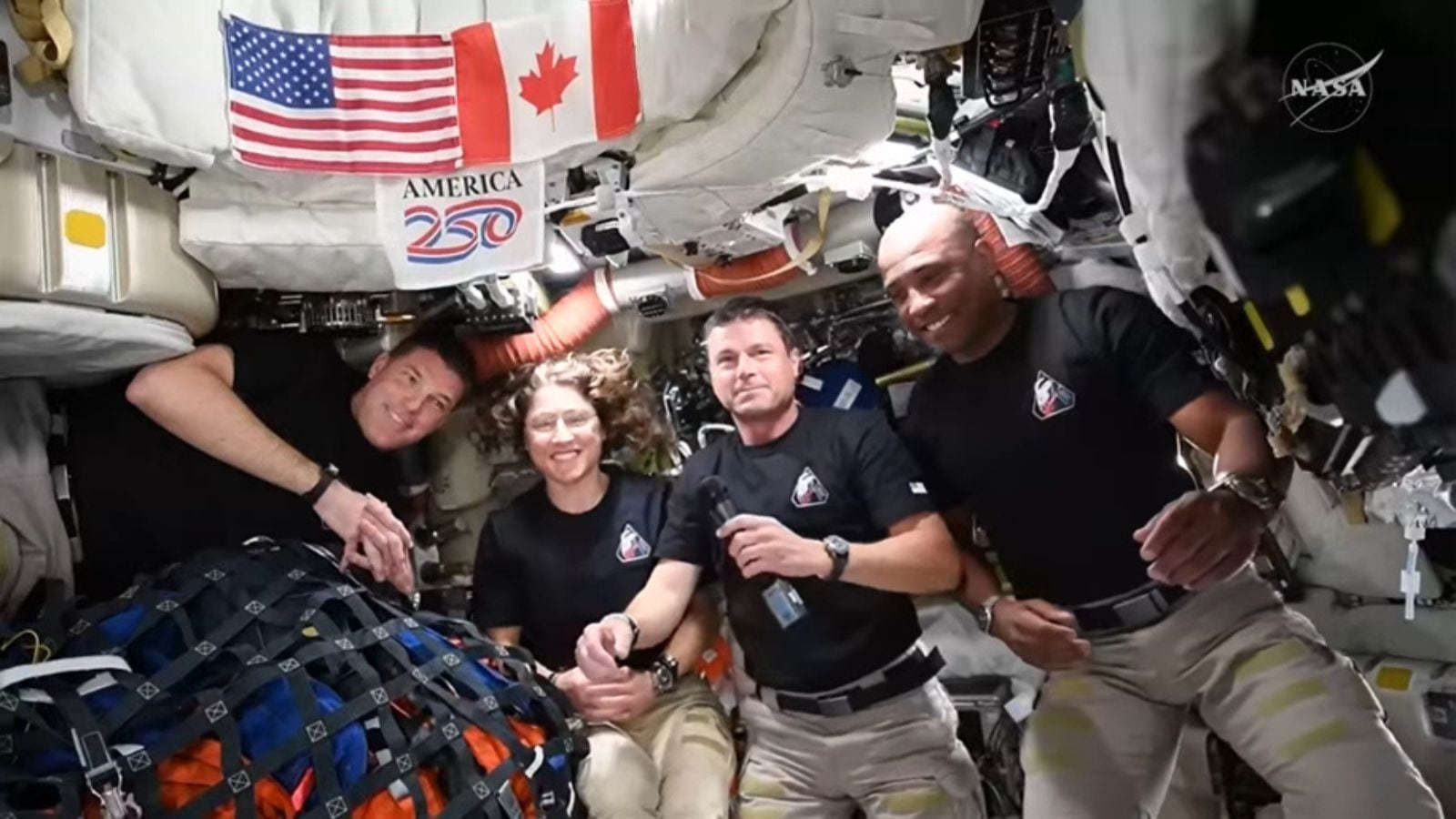
As their Orion spacecraft swung around the far side of the Moon and started heading back home, the astronauts of the Artemis II mission got a call from US President Donald Trump.
“Today, you’ve made history and made all America really proud, incredibly proud,” Trump said in a live call after the aired by Nasa. “You’ve really inspired the entire world. Really, everybody’s watching.”
The President told the four astronauts he would invite them to his Oval Office and take their autographs,.
Trump’s congratulatory call came after the mission wrapped up a historic seven-hour lunar flyby, in the process marking the farthest distance humans have travelled away from Earth.
Record-breaking journey
At 1.56 pm EST on Monday, astronauts Reid Wiseman, Victor Glover, Christina Koch, and Jeremy Hansen broke the record that was set way back in the Apollo 13 mission in 1970.
Later in the evening, at around 7.02 pm, their Orion spacecraft reached its closest point to the Moon — about 4,067 miles above the surface.
Just minutes after that, at 7:07 p.m., the crew reached their maximum distance from Earth at approximately 252,756 miles, officially making them the farthest-travelling humans in history.
Story continues below this ad
Also Read | ‘Amaze Amaze Amaze’: Nasa’s Artemis II crew brings Rocky from Project Hail Mary to life during Moon flyby
Earlier in the day, the astronauts woke to a message from Apollo veteran Jim Lovell, whose voice connected past and present missions. “Welcome to my old neighborhood,” said Lovell, who died last year at age 97.
“It’s a historic day, and I know how busy you’ll be, but don’t forget to enjoy the view… good luck and Godspeed.”
Exploring the Moon’s far side
The Artemis II crew experienced a planned 40-minute communications blackout as their spacecraft flew over the backside of the moon, which is never visible from Earth.
They took pictures of the many craters and old lava plains, as well as ridges and fissures that had formed over billions of years. They could also see differences in light reflection, colour, and texture.
Story continues below this ad
In a lighter moment, the crew even suggested names for previously unnamed lunar features. Hansen proposed naming one crater “Integrity,” after their spacecraft, and another in memory of Wiseman’s late wife.
“It’s a bright spot on the Moon, and we would like to call that Carroll,” he said, according to Nasa.
Rare celestial events
The flyby featured several striking visual moments. While going behind the Moon, the astronauts experienced an “Earthset” and observed their planet vanishing from view behind the Moon’s horizon. After coming out from the other side, they observed the rising Earth called an “Earthrise.”
The crew also observed a nearly hour-long solar eclipse, as the Moon blocked the Sun, allowing them to study the Sun’s outer atmosphere, known as the corona.
Story continues below this ad
Also Read | NASA’s Artemis II breaks Apollo 13’s distance record as humans travel farther from Earth than ever before
During this time, they reported seeing six flashes of light on the Moon’s dark surface — caused by meteoroids striking at extremely high speeds. These rare “impact flashes” are particularly interesting to scientists studying lunar activity.
Inside Nasa’s Johnson Space Center in Houston, a team of scientists closely followed the mission, recording observations in real time as the astronauts described what they saw.
The data collected, including images, audio, and visual recordings, will now be analysed more thoroughly to better understand the Moon’s surface and recent impacts.
Reflecting on the experience, Koch said one of the most memorable moments was “coming back from the far side of the moon and having the first glimpses of planet Earth again.”
Story continues below this ad
Glover added, “I said a little prayer, but then I had to keep rolling,” recalling the tense moments during the communication blackout.
