

Post Content
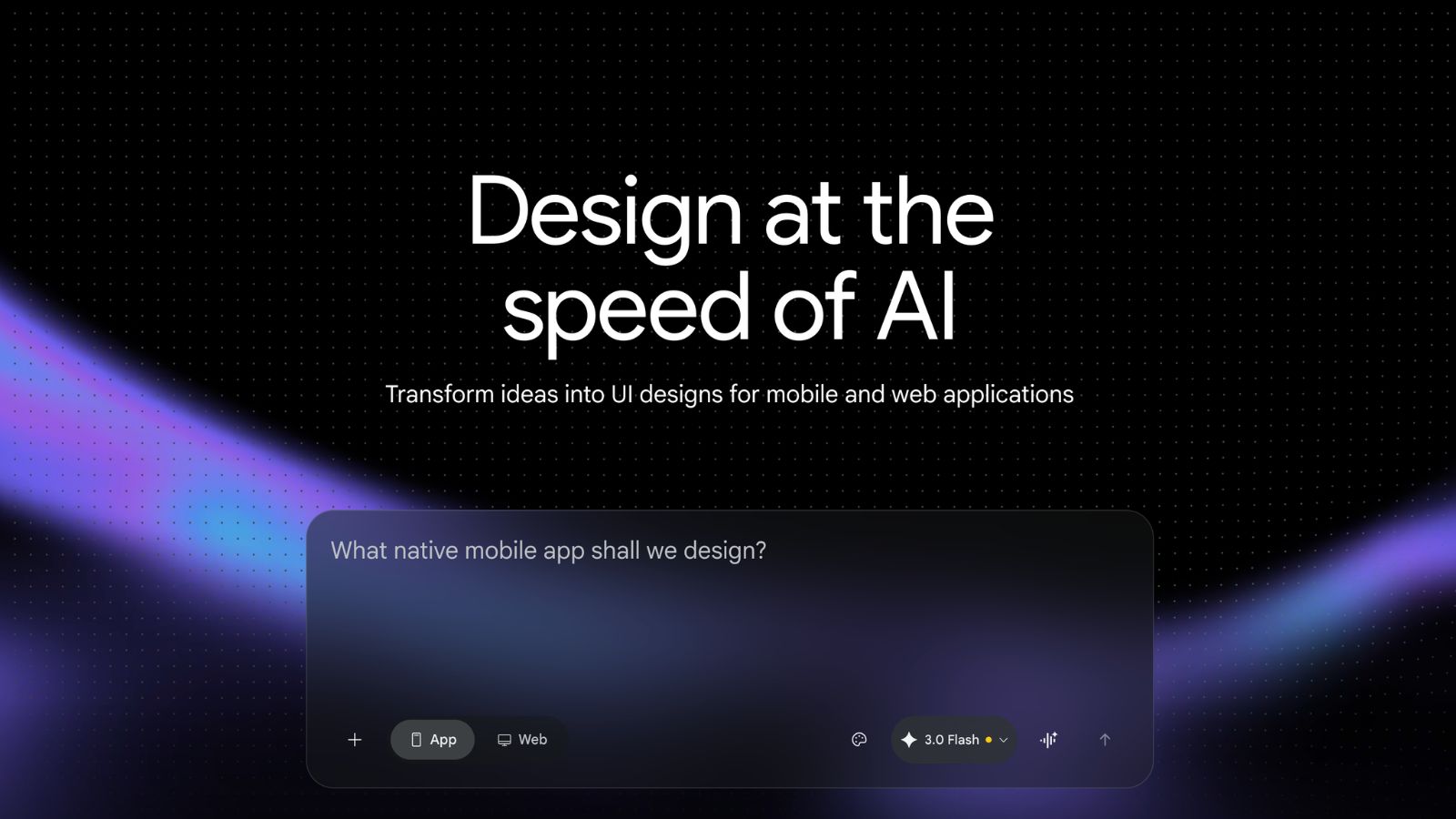
As AI tools begin to transform creative workflows, Google Labs has updated Stitch, its experimental design platform that can generate user interfaces from text prompts and images. The tool, described as a ‘vibe design partner’, signals a shift towards more automated, conversational ways of building apps.
The updates quickly drew attention across the design community. Figma, a popular collaborative design platform, reportedly saw its shares fall by 8.8 per cent on Wednesday, March 18, following the buzz around Stitch.
Google is positioning Stitch as a more autonomous design companion, with features aimed at helping users generate, refine, and prototype interfaces with minimal manual effort. Early demos and user impressions suggest capabilities such as AI-assisted canvases, prompt-driven design iterations, and faster prototyping workflows.
Also Read | Mistral targets enterprise market with new ‘Forge’ platform for custom AI models
While Stitch is still an experimental offering, its approach shows how AI-native tools could begin to overlap with platforms like Figma. To understand where it fits in the evolving design ecosystem, it’s worth taking a closer look at what Stitch actually does.
What is Stitch by Google?
Introduced in May 2025, Stitch has been dubbed by Google as a new way to design user interfaces (UIs). The platform aims to combine the ability of designers to craft intuitive interfaces with developers who bring them to life with functional code. In essence, Stitch connects design ideas to working code without the tedium of manual effort. Upon launch, Google described it as a new experiment from Google Labs that allows users to turn simple prompts and image inputs into complex UI designs.
Stitch is backed by the multimodal capabilities of Gemini 2.5 Pro which allows it to generate a more fluid and integrated experience between design and development. The platform enables users to refine their design with image inputs, and it comes with an interactive chat, theme selectors, and an option to paste to Figma. Simply put, Stitch allows users to describe an application they want to build in plain English with details like colour palettes and the desired user experience. In response, the platform outputs a visual interface that has been created to meet the description.
Stitch also allows users to generate UIs from images or wireframes, meaning if you have a design sketch, a screenshot of a UI or a rough wireframe, you can upload it and the platform will process the image and produce a digital UI. Besides, Stitch allows users to generate multiple variants of interfaces and experiment with layouts, components, and styles.
Story continues below this ad
Rivaling Figma
On the other hand, Figma is a professional-grade UI/UX design platform for high precision and collaborative design systems. Figma, founded in 2012 by billionaire Dylan Field, offers a collaborative web application for UI design. Its primary focus is on user interface and user experience (UX), along with real-time collaboration.
Stitch offers similar features to Figma, potentially competing with its core design platform offerings. With its new updates, Stitch accommodates various input types, including images, text, and code. Besides, a new design agent can analyse entire project histories and track numerous design directions at the same time. The platform now features prototyping capabilities that can turn static designs into clickable prototypes. The new voice capabilities allow users to speak commands to the canvas for real-time design modifications. Moreover, with the Model Context Protocol server, Stitch integrates external development tools.
Also Read | Adobe and NVIDIA partner to build AI tools for creators and marketers
The slew of new updates to Stitch reportedly triggering a drop in Figma stock signals the wave of AI companies taking over venues dominated by niche software firms. In the past few months, several companies, such as Salesforce, Intuit, and others, were significantly impacted after Anthropic introduced new capabilities in its Claude Cowork. The capabilities introduced by the Dario Amodei-led company reportedly made the key use cases offered by these software companies largely redundant.
What have others said?
Jonathan G Blanco, CEO and Founder of Niftmint, believes that the Google Labs’ update to Stitch is not just a minor patch. “It’s a shift toward what they’re calling ‘Vibe Design’.” The days of starting every project with a blank white box are ending. With the new AI-native infinite canvas, you aren’t just ‘building’ a UI; you’re describing the objective and letting Gemini 3.1 handle the heavy lifting,” he wrote in his LinkedIn post.
Story continues below this ad
Meanwhile, Rakshan Vaishnav, a product designer at Zoho, who tried his hands on Stitch, shared that it is a fun tool to experiment with UI. “It was fun to play around using prompts. Interestingly, it adopts the effects we mention and provides a stunning visual (of course, due to Gemini’s model). But one thing I feel about Stitch is that it is a fun tool to experiment with our UI and not a product-driven output that can be reached,” he shared on LinkedIn, adding that overall Stitch is a great visual enhancer.
Meanwhile, on X, Keshav Lohia, a venture capitalist, shared, “This is a death note for Figma in the long run. No way traditional tools compete with AI-native products as they become more competent and collaborative.”
However, some tech entrepreneurs continue to be optimistic about Figma. David Okeke, a US-based tech entrepreneur, feels that the time is right to double down on Figma. “I will argue Figma is way more valuable now because of AI. After all this noise and AI influencers’ clout chasing, Figma will come out on top,” Okeke shared on his X account.
