

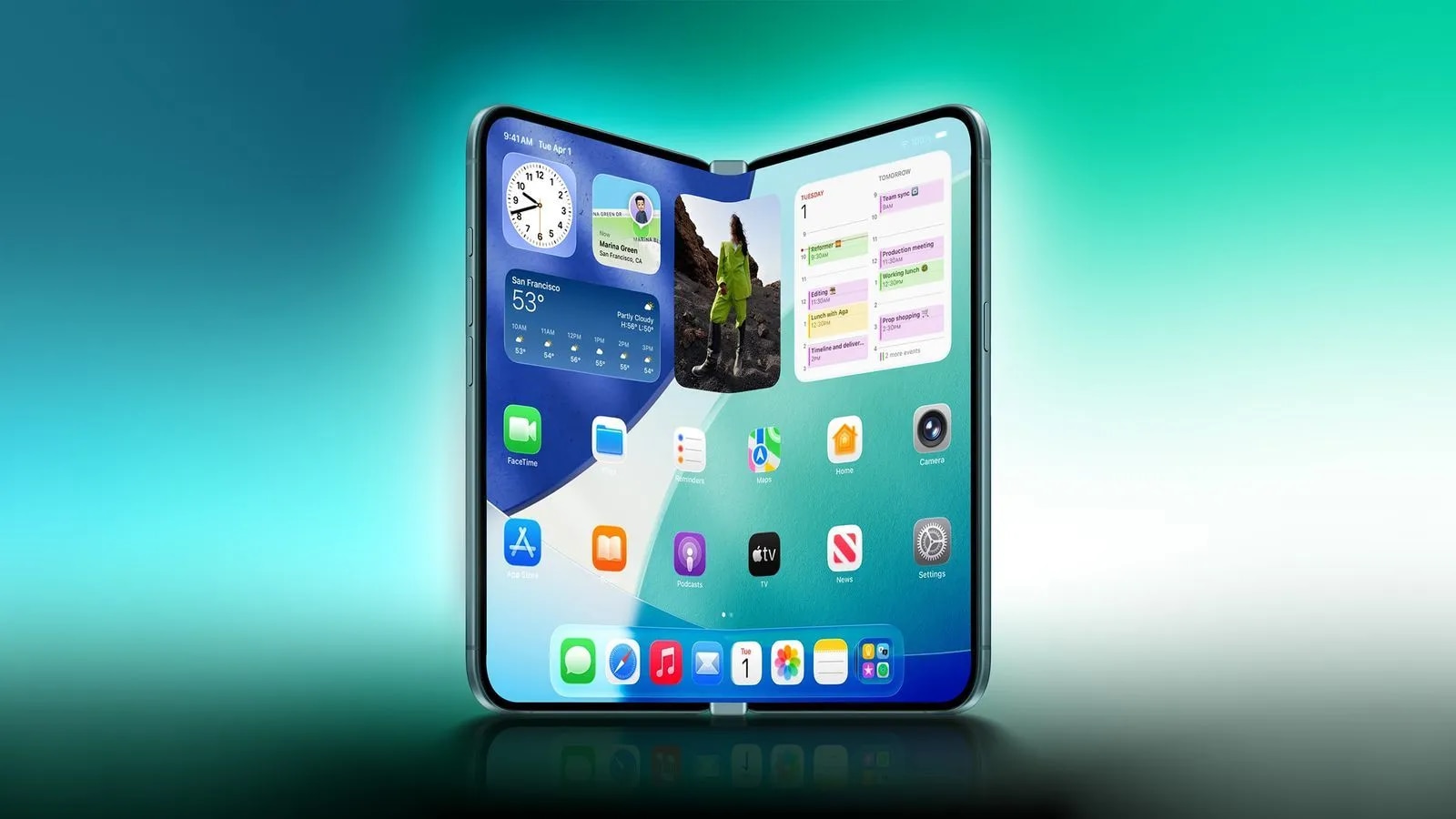
Post Content
Picture this: a smartphone that can be folded in half to become as compact as a passport. It may sound like something straight out of a concept, but it could undoubtedly give the soon-to-launch iPhone Fold a unique selling point, with Apple throwing away the rulebook when it comes to designing foldable phones. And the best part? The passport-sized iPhone Fold could arrive as early as this year, as Apple may launch the device alongside the iPhone 18 series in September.
By now, if the internet is to be believed, the iPhone Fold is no longer a mystery. Apple is set to begin production in the next two months, which means the launch could happen on schedule – and, if one were to guess, it may arrive before Christmas (so keep some cash aside for the iPhone Fold).
Perhaps the biggest chatter around the iPhone Fold isn’t the price or the name, but its shape, which isn’t traditional compared to how foldable phones currently look. The iPhone Fold and its unique form remind many of the BlackBerry Passport, a smartphone once aimed at business users that differed significantly from most handsets on the market at the time. Its 12 cm x 9 cm square screen was very different, and the design of the Passport had indeed caused much debate among BlackBerry fans. It was an odd-looking phone, much thicker than usual, but because of its square display, it made it much easier to read.
The iPhone Fold will be launched alongside the iPhone 18 Pro and iPhone 18 Pro Max. (Image: X/ AppleHub)
Coming to the iPhone Fold, Apple isn’t going to invent a passport or square shape for foldable phones. Google and Microsoft tried similar approaches with the original Pixel Fold and Surface Duo. However, the iPhone Fold could standardise a widescreen foldable phone, something earlier devices couldn’t do it.
Why a widescreen foldable phone?
Samsung and other manufacturers have released several generations of foldable phones, but most still follow a tall, narrow design. Apple’s upcoming iPhone Fold is expected to break from this trend with a wider, shorter 4:3 aspect ratio, improving video viewing by reducing black bars and making better use of the screen. A widescreen inner display makes a lot of sense, as watching videos on the narrow screens of current foldable phones is a clear weakness.
iPad-like interface expected
Having a widescreen display could also help app developers, who may redesign their iPhone apps to be closer to what appears on an iPad. To be clear, the device will still run iOS and not iPadOS.
Huawei has partially announced the Pura X Max last week. (Image: X/Huawei Mobile Mx)
Apparently, Apple will introduce an iPad-like interface, featuring new layouts and core iPhone apps with sidebars on the left side of the screen, similar to iPad apps, while retaining the iPhone’s multitasking system. The interface will not be able to run multiple windows simultaneously like an iPad, but it will be able to display two apps side by side, similar to folding Samsung and Google devices.
Story continues below this ad
The iPhone Fold could make widescreen foldables mainstream
The thing with Apple that one shouldn’t ignore is that the company is a master of reinvention. Its rivals are already taking note. Huawei has partially announced the Pura X Max last week, which also features a widescreen display and a square design, and Samsung is planning to launch its own widescreen foldable in July this year. The Google Pixel 11 Pro is also expected to adopt a wider design. It is coincidental that just as Apple is about to release a widescreen foldable (its first foldable phone), other companies are also introducing foldables with widescreen displays, despite users having requested such designs for years.
Also Read | iPhone 18 Pro: What we know so far about Apple’s next flagship
For an industry that is expecting slower smartphone sales in the coming quarters, the timing of the iPhone Fold launch can’t be ignored. Foldables have generated excitement for years, yet the category is still struggling to gain mainstream attention. Although global shipments grew 14 per cent year over year in Q3 2025 to reach an all-time quarterly record, foldable phones still haven’t made it into everyday conversations the way the iPhone once did.
The Samsung Galaxy Z Fold 7 comes with a thinner and lighter Armor FlexHinge. (Express Photo)
That being said, despite smartphone designs reaching maturity, there is still scope for innovation both in design and software experience. Existing book-style foldable phones are better at multitasking, and Apple’s entry into the market will likely boost the popularity of the category and drive sales of such devices. The question that still needs to be asked, though, is whether consumers will be willing to pay $2,000 for an iPhone Fold. While Apple has had a strong track record of hit devices in the past, in recent years consumers haven’t been as loyal to Apple as they were before. Apple too has a string of hit and miss products in recent years, though not much has been discussed.
To convince someone to pay $2,000 for a folding phone, Apple, like any other brand, has to offer a better device than the competition, with clear differentiation. However, the first-generation iPhone Fold is unlikely to be perfect in every way; it will likely lag in battery life and may still have a crease in the middle of the display, although Apple is expected to adopt technology that reduces the visibility of the crease.
