

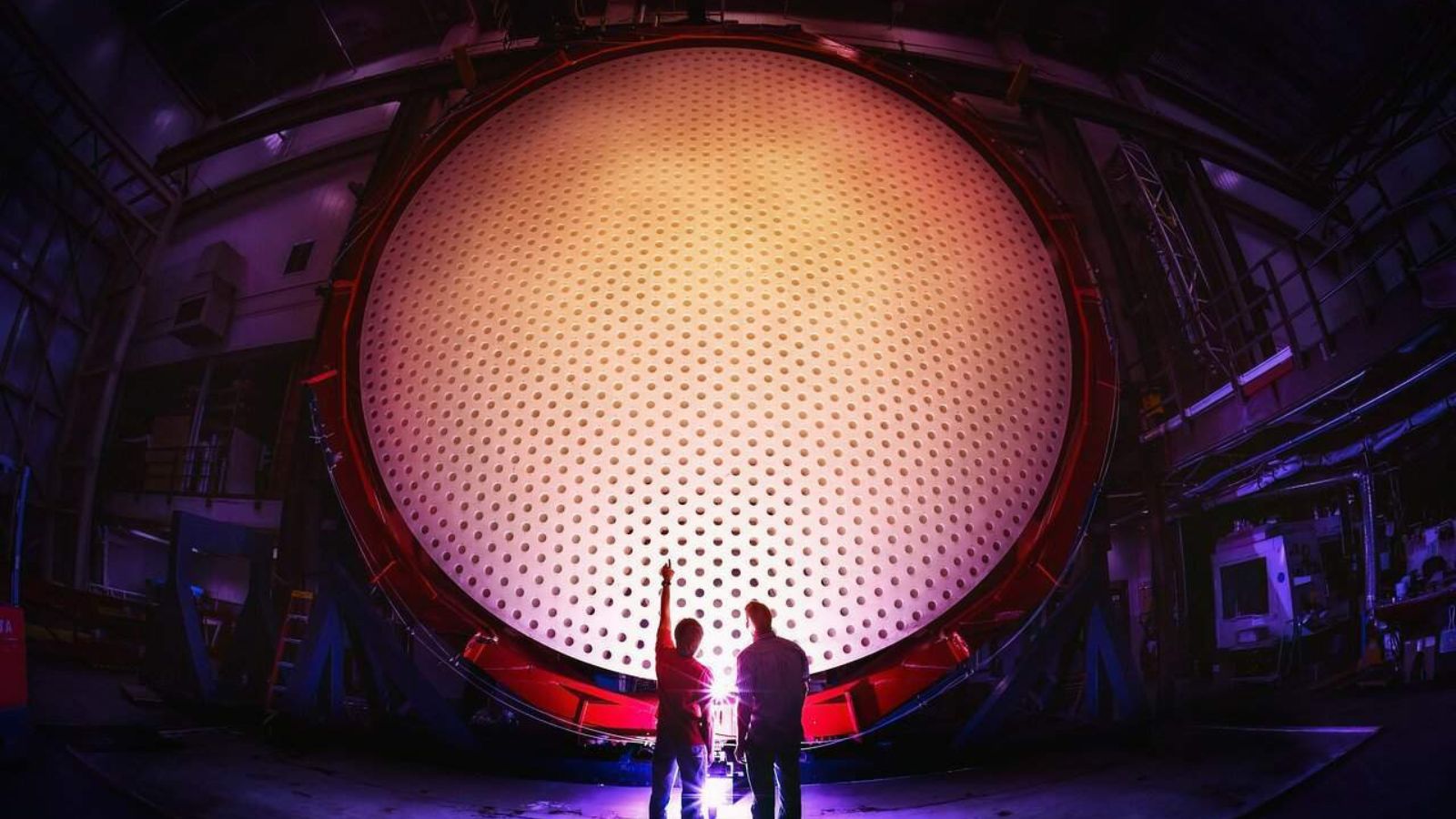
Post Content The GMT is expected to have a significant impact on the studies of exoplanets, especially those located within habitable zones of stars. (Image: X/ University of arizona research)
The effort to build one of the most powerful ground-based telescopes ever conceived is entering a decisive phase, but its future still depends heavily on funding. The Giant Magellan Telescope Consortium is advancing plans for the Giant Magellan Telescope (GMT), a next-generation observatory that could reshape how scientists study planets, stars, and galaxies.
A crucial phase for a giant telescope
The GMT project, backed by a consortium of 16 universities and research institutions, is currently in its final design phase – a necessary step before it can be considered for major federal funding. Project leaders say the next 12 to 24 months will be critical in determining the telescope’s path forward.
If approvals are secured, full-scale construction could begin as early as 2028. The project has already passed multiple independent technical reviews, and more than $1 billion has been invested so far. Around 40 per cent of its components are now in various stages of fabrication.
One of Earth’s best observing sites
The telescope is planned for Las Campanas Observatory in Chile’s Atacama Desert, a location known for its exceptionally dark, dry, and stable skies – ideal conditions for astronomy. Preparatory work at the site is already underway, including roads, utilities, and support infrastructure.
Also read | Are we close to finding life beyond Earth? 45 planets show potential, say scientists
At the same time, engineers in the United States are constructing the massive mount that will support the telescope’s mirrors and instruments. Once complete, the structure will stand nearly 39 metres tall and weigh about 2,600 tonnes.
What sets GMT apart is its optical design. Rather than using hundreds of smaller mirror segments, it will combine seven of the largest monolithic mirrors ever produced, each measuring 8.4 metres across. These two segments will function as one mirror, accompanied by an advanced system of adaptive optics. The telescope’s mirrors are expected to change their configuration thousands of times a second to reduce the effects of atmospheric distortions.
Exploring the mysteries of planets and galaxies
The GMT is expected to have a significant impact on the studies of exoplanets, especially those located within habitable zones of stars. Scientists would observe light from the planets to detect signs of life-supporting atmospheres.
Story continues below this ad
Also Read: Moon’s oldest craters hiding 3-billion-year-old secret that could fuel future expeditions
Apart from planets, the telescope will allow scientists to peer deep into the universe’s history to observe the development of galaxies several billion years ago. In particular, the telescope will make it easier to explore the flow of gas to and from galaxies, which is critical to the process of star creation.
Funding remains the biggest hurdle
The projected total costs of developing and maintaining the GMT are anticipated to surpass two billion dollars. If funding does not materialise, delays or slower development cycles may result.
Upon completion, the GMT would become one of many next-generation telescopes scheduled to go operational in the coming decades, providing scientists with a much clearer picture of outer space. This collection of instruments could lead to breakthroughs regarding galaxy formation as well as the prevalence of life-supporting planets throughout the cosmos.
© IE Online Media Services Pvt Ltd
