

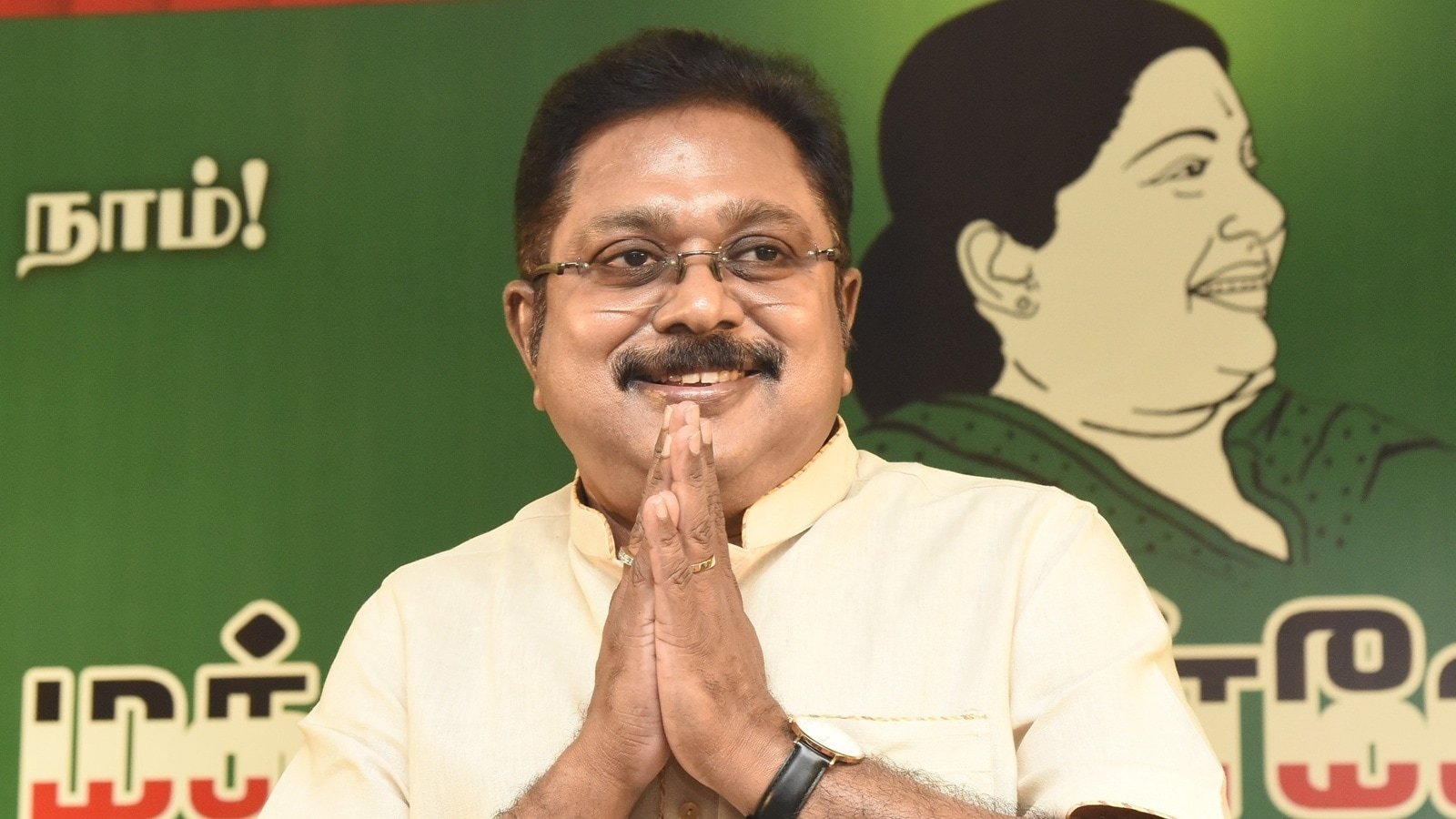
TTV Dhinakaran sought to counter that narrative recently, arguing that logistical constraints made it impractical for central leaders to travel frequently to Chennai. (Source: FB)
The BJP will contest 27 seats in Tamil Nadu’s upcoming Assembly election, seven more than it contested in 2021, as part of a broader seat-sharing arrangement within the AIADMK-led NDA in the state.
Under the agreement announced on Monday at the AIADMK headquarters in Chennai, the PMK has been allocated 18 seats, five fewer than in the last Assembly election, while the AMMK, led by TTV Dhinakaran, will contest from 11 constituencies. The AIADMK itself is expected to contest about 170 seats, a senior party functionary said.
Flanked by Union minister Piyush Goyal, PMK leader Anbumani Ramadoss and Dhinakaran, AIADMK general secretary Edappadi K Palaniswami said talks were ongoing with smaller allies, including the Tamil Maanila Congress, and that additional allocations would be announced soon. Though Tamizhaga Makkal Munnetra Kazhagam founder John Pandian was present at the briefing, no clarity was offered on his party’s share.
The distribution reflects shifting political calculations. The PMK’s reduced allocation, party insiders say, stems from a perception that it no longer commands the electoral strength it once did, with rival factions led by Ramadoss and his father, S Ramadoss, pulling in different directions. The BJP’s expanded share, meanwhile, underscores its growing assertion within the alliance.
In the 2021 Assembly election, the BJP won four seats with a vote share of 2.62%, while the PMK secured five seats with 3.8%. The AMMK, then contesting separately, polled 2.35% across 165 constituencies. In the 2024 Lok Sabha election, however, the NDA failed to win any seat in Tamil Nadu despite a combined vote share that suggested pockets of strength — 11.26% for the BJP, 4.3% for the PMK and 0.9% for the AMMK.
For the AIADMK, the stakes are unusually high.
The party, now 53 years old, is struggling to recover its electoral dominance following a humiliating performance in the 2024 parliamentary polls, when it failed to win any of the 34 seats it contested and even forfeited deposits in seven.
Over the past year, Palaniswami has intensified organisational activity, holding frequent district-level meetings and focusing on electoral roll updates and booth-level preparedness. Yet questions persist about whether he has been able to translate organisational work into political momentum.
Story continues below this ad
Unlike Jayalalithaa, who consolidated her leadership quickly after taking charge, Palaniswami has struggled to project himself as a dominant Opposition figure. While he has been accessible to the media and active in Assembly debates, he has had to compete with other voices in the anti-DMK space — first with the BJP’s former state president, K Annamalai, and more recently with actor Vijay, whose TVK has sought to position itself as a sharper critic of the ruling party.
The AIADMK-led alliance itself carries both promise and risk. On paper, the inclusion of the PMK and the AMMK strengthens the NDA’s social base in certain regions. The AIADMK also believes the AMMK’s presence could help recover lost ground in select pockets, particularly after the expulsion of former coordinator O Panneerselvam and his supporters in 2022 weakened the party’s organisational reach.
But the BJP’s visible role in seat-sharing negotiations — led by senior leaders like Amit Shah and Goyal — has reinforced a perception among political opponents that the national party is calling the shots in Tamil Nadu.
Dhinakaran sought to counter that narrative recently, arguing that logistical constraints made it impractical for central leaders to travel frequently to Chennai. Palaniswami, for his part, has described the alliance as one built on “mutual friendship”.
Story continues below this ad
Yet the arrangement raises strategic concerns. Some AIADMK leaders privately worry that an expanded BJP presence could complicate electoral arithmetic by consolidating minority votes behind the DMK-led alliance.
Complicating the political landscape further is the uncertainty surrounding Vijay’s TVK. While the actor entered politics, positioning himself as an alternative to both Dravidian parties and the BJP, recent internal discussions within his party have revealed organisational and financial constraints.
