

The ongoing conflict in West Asia and its ripple effects on oil prices, inflation and fiscal stability dominated the Lok Sabha debate on the Finance Bill on Monday, with Opposition members warning of economic stress on households and the exchequer and the government defending its policy choices as essential for sustaining growth.
Several MPs linked the global turmoil to domestic economic pressures, raising concerns over rising fuel costs, currency depreciation and the government’s ability to shield citizens from external shocks.
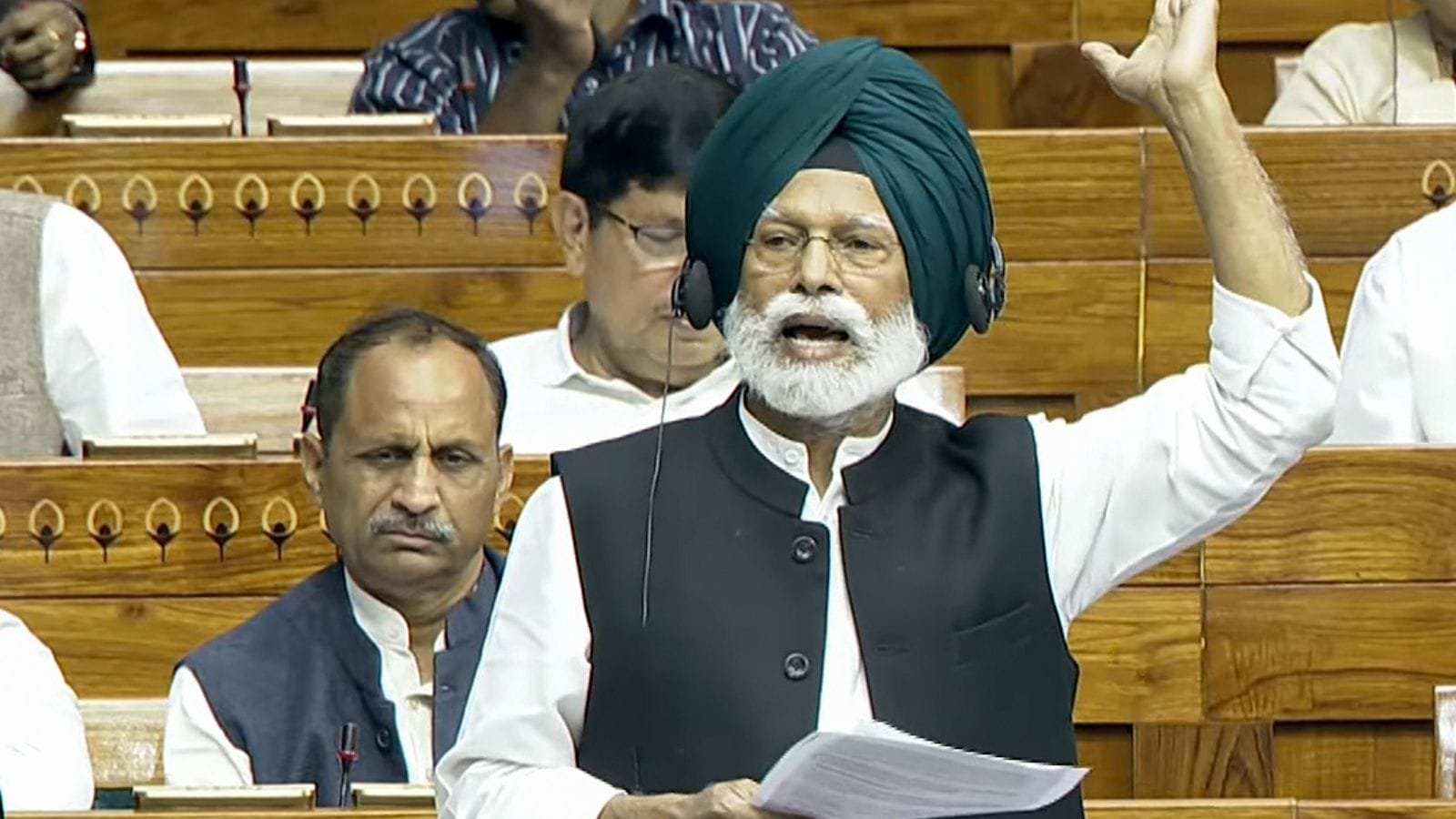
Congress MP Amar Singh said the shifting away from discounted crude imports from countries such as Russia and Iran towards spot market purchases would increase the import bill and fuel inflation. “Who will be responsible for this loss? Why should the country pay for your political decisions,” he asked, warning that higher fuel prices would have a cascading impact on the economy.
Echoing similar concerns, Shiv Sena (UBT) MP Anil Desai cautioned that the government’s fiscal calculations could be undermined by the evolving situation in West Asia. “Whatever calculations have been made are collapsing because of the situation in West Asia,” he said, urging that resource mobilisation be handled in a way that protects the common man.
NCP (SP) leader Supriya Sule described the situation as an “extraordinary crisis”, pointing to global instability, stock market volatility and rising debt levels. She asked whether the government had a clear plan to insulate the economy from the fallout of the conflict.
Leading the Opposition’s critique, Amar Singh alleged that the government’s tax regime disproportionately favoured corporates and high-income groups. “Today, income tax collection is greater than corporate tax. So ordinary people are being taxed more than companies,” he said, arguing that tax cuts since 2019 have shifted the burden onto the middle class.
He also criticised incentives extended to entities such as GIFT City and data centres, questioning the lack of obligations on job creation or technology transfer. Singh flagged unemployment among graduates, declining foreign investment and capital outflows, asking what tangible benefits these tax concessions had delivered.
Story continues below this ad
On trade policy, he warned that zero-duty imports on products like soybean oil and dried distillers grains could hurt domestic farmers and MSMEs. He also raised concerns over retrospective taxation measures and amendments overturning court rulings, saying these would increase litigation and hurt investor confidence.
From the treasury benches, BJP MP Nishikant Dubey defended the government’s record, highlighting growth in GST collections and tax rationalisation measures. “Many thought our revenue would decrease because of GST. There has been an increment of 8% in GST revenue,” he said, adding that reductions in minimum alternate tax were steps in the right direction.
Dubey also contrasted the current regime with the previous UPA government, accusing it of introducing retrospective taxation that deterred investment. “Prime Minister Narendra Modi brought in prospective tax,” he said.
Samajwadi Party MP Ramashankar Rajbhar questioned the disconnect between economic growth and employment. “If the GDP is increasing, why are youth unemployed,” he asked, pointing to outsourcing of jobs, declining government recruitment and rising migration. He also criticised changes in LPG distribution norms, calling them disruptive for consumers.
Story continues below this ad
Trinamool Congress leader Saugata Roy dismissed the Finance Bill as lacking substantive reform. “There is no change in tax structure, just tinkering,” he said, accusing the government of favouring large corporates and failing to provide relief to the middle class.
Roy also raised concerns over retrospective taxation and the depreciation of the rupee, while criticising the Centre’s reliance on cesses that are not shared with states, thereby constraining fiscal federalism.
DMK MP Arun Nehru pointed to structural imbalances in the tax system, noting that personal income tax collections now exceed corporate tax revenues. He argued that a small fraction of companies contributed the bulk of corporate taxes, while a majority paid none, reflecting limited growth opportunities for smaller firms.
He also questioned the effectiveness of production-linked incentive (PLI) schemes, particularly in the semiconductor sector, saying reliance on imported inputs undermined strategic autonomy. On the digital economy, he raised concerns about India providing resources for AI data centres without adequate returns, calling for monetisation of domestic data.
Story continues below this ad
YSRCP MP P V Midhun Reddy flagged state-specific concerns, urging the Centre to support Andhra Pradesh amid slowing GST growth and rising unemployment.
RJD MP Abhay Kumar Sinha highlighted high unemployment and regional disparities in industrial development. He alleged that states like Bihar were being overlooked in policy support and investment.
Congress MP Varsha Gaekwad accused the government of “tax terrorism” and failing to address unemployment and inflation. She demanded higher tax devolution to states and increased spending on education, sports and welfare, citing data on rising joblessness among youth.
From the ruling alliance, LJP MP Shambhavi defended the government, citing global confidence in India’s economy. “IMF and OECD (Organisation for Economic Co-operation and Development) are looking at India with hope,” she said, adding that India’s rise to the world’s fifth-largest economy reflected “bold reforms” and strong governance.
Story continues below this ad
BJP leader Basavaraj Bommai emphasised gains in agriculture and welfare, pointing to subsidies and income support schemes for farmers. He urged the Opposition not to politicise external factors such as the West Asia conflict.
CPI(M) MP Sachchidanand R argued that the Finance Bill failed to address structural issues such as inequality, stagnant wages and weak demand. He called for increased public spending in health, education and rural development to revive growth.
