

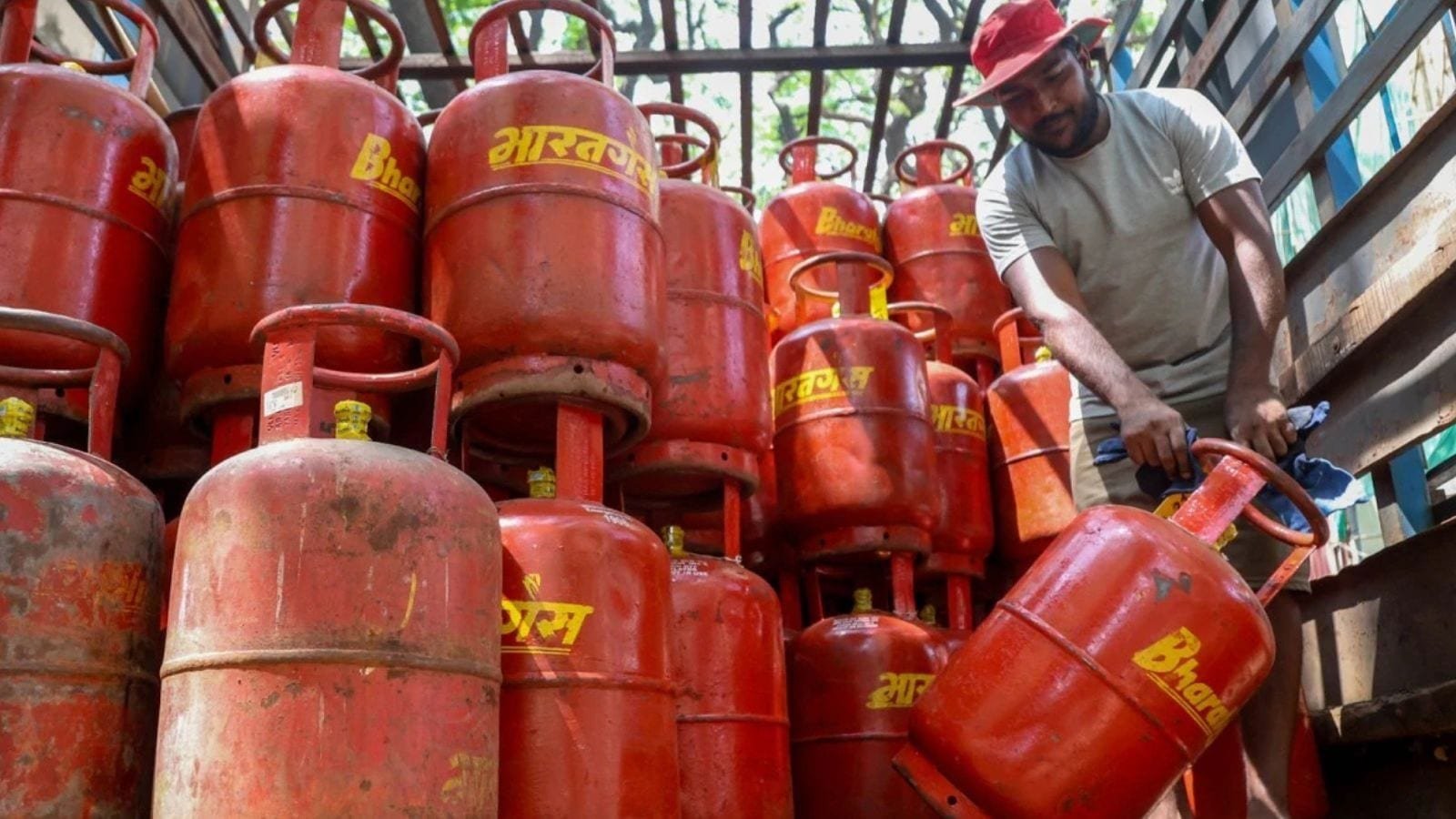
The MHA has directed to monitor local LPG supplies daily and take strict action against hoarding, black marketing or any disruptions in the supply network. (File Photo)
As tensions in West Asia disrupt vital energy routes through the Strait of Hormuz, the Home ministry is learnt to have directed all states and Union Territories to strengthen security and monitoring over the country’s domestic LPG supply chain. The move comes amid concerns that the ongoing regional crisis could impact fuel and gas shipments, including liquefied petroleum gas (LPG), which forms a lifeline for Indian households, The Indian Express has learnt.
In an advisory issued on March 18 to all Chief Secretaries of state governments, authorities have been asked to ramp up security for LPG infrastructure and personnel, ensuring uninterrupted distribution to priority sectors such as households, hospitals and educational institutions.
The MHA has directed to monitor local LPG supplies daily and take strict action against hoarding, black marketing or any disruptions in the supply network. “Law enforcement agencies have been instructed to maintain law and order around distribution points and refilling centres,” a source said, citing the advisory.
The advisory calls for an extensive public awareness campaign – both directly and through oil marketing companies – to reassure citizens that the Centre is taking proactive measures to secure LPG availability for ‘households’.
“States have also been directed to curb fearmongering and misinformation on social media by promptly removing fake news or misleading posts related to alleged LPG shortages, that only spread rumours or create false narratives by circulating old or unrelated material,” the source added.
In their communication, the Centre has asked to take adequate measures, including security arrangements at the required places and other vulnerable locations to prevent any untoward incident. “Control rooms, helpline numbers and call centres of all stakeholders should be geared to address the issues raised by the people,” the source said.
Meanwhile, the Petroleum ministry, in a recent communication to state administrations, advised District Magistrates, Collectors, and enforcement agencies such as Civil Supplies, Police, and Legal Metrology departments to conduct surprise checks at fuel outlets, LPG distributorships, and suspected illegal storage points. The directive aims to curb malpractices that undermine fuel availability and consumer confidence.
Story continues below this ad
Petroleum products like Motor Spirit (MS), High Speed Diesel (HSD), Liquefied Petroleum Gas (LPG), and Superior Kerosene Oil (SKO) are categorised as essential commodities under the Essential Commodities Act, 1955. Their supply and distribution are governed by specific control orders, including the Motor Spirit and High-Speed Diesel (Regulation of Supply, Distribution and Prevention of Malpractices) Order, 2005, the Liquefied Petroleum Gas (Regulation of Supply and Distribution) Order, 2000, and the Kerosene (Restriction on Use and Fixation of Ceiling Price) Order, 1993.
“Keeping in view the prevailing geo-political situation affecting energy supplies worldwide, we are taking various mitigating measures to ensure uninterrupted supply of MS, HSD, LPG and SKO. However, there have been instances of hoarding, diversion, adulteration and black marketing … which adversely affect the confidence and availability of these essential fuels to genuine consumers, compromise safety and public interest,” it said.
The MoPNG has also asked the three Oil marketing companies — Indian Oil Corporation (IOCL), Bharat Petroleum Corporation Limited (BPCL), and Hindustan Petroleum Corporation Limited (HPCL) — to fully assist state enforcement authorities during these inspection drives.
