

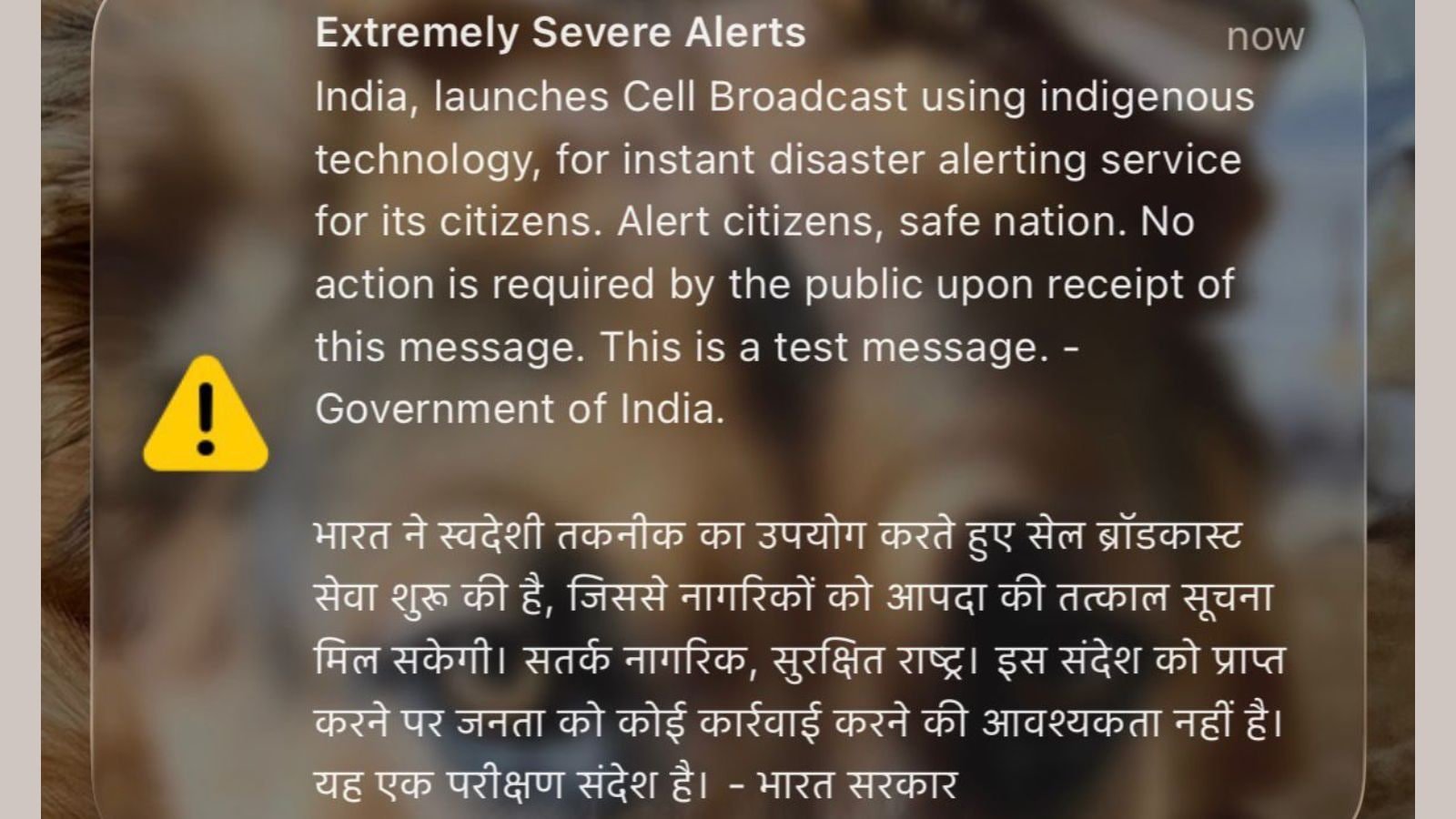
India tested its indigenous alert system on Saturday with this message.
SACHET emergency alert system: India has launched its Cell Broadcast messaging system using indigenous technology, for instant disaster alerting service for its citizens. The Centre on Saturday sent a notification with a siren alert to almost all citizens around 11:42 test the system.
“India, launches Cell Broadcast using indigenous technology, for instant disaster alerting service for its citizens. Alert citizens, safe nation. No action is required by the public upon receipt of this message. This is a test message. – Government of India,” the message read.
The system is to be used during times of crises or emergency situations, such as natural disasters, wars etc.
Soon after the alert, the Department of Telecommunication posted on X: “A step forward in strengthening how we communicate during critical situations. The Department of Telecommunications, in coordination with key national agencies, is set to launch an advanced public alerting framework aimed at enabling timely communication during critical situations. This initiative reflects a continued commitment to building a more responsive and resilient communication ecosystem for citizens across the country.”
SACHET: The test alert system that DoT is using
The Department of Telecommunications (DoT), under the Ministry of Communications, is working with the National Disaster Management Authority (NDMA) to strengthen mobile-based disaster communication systems across India, aimed at ensuring citizens receive timely alerts during emergencies.
Saturday’s test alert was part of this effort.
For this, NDMA deployed the Integrated Alert System, aka SACHET, developed by the Centre for Development of Telematics (C-DOT), the telecom department’s research and development arm. Literally, the word ‘Sachet’ means ‘alert’.
How does SACHET work?
Built on the Common Alerting Protocol (CAP) recommended by the International Telecommunication Union, the system is now active across all 36 states and Union Territories, sending disaster and emergency alerts through geo-targeted notifications.
Story continues below this ad
The platform has already been widely used by disaster management agencies, with more than 134 billion SMS alerts issued so far in over 19 Indian languages during natural disasters, cyclones and severe weather events, the Centre said in a statement.
To improve response times in high-priority emergencies such as earthquakes, tsunamis, lightning strikes, gas leaks and chemical hazards, authorities have now introduced Cell Broadcast (CB) technology alongside the existing SMS-based system, the government said.
Unlike SMS alerts, cell broadcast messages are delivered simultaneously to all mobile devices within a specified area, allowing near real-time dissemination.
C-DOT has been tasked with developing this indigenous cell broadcast-based public emergency alert system.
Story continues below this ad
Didn’t receive the alert? Here’s how to be prepared in future
Saturday’s test alerts reached devices where customers have enabled Cell Broadcast test channels. Users can turn these alerts on or off through the settings path: Settings -> Safety and emergency -> Wireless emergency alerts -> Test alerts. Multiple messages may be received during the trial period to verify seamless functioning across the telecom network.
Once the system becomes fully operational, Cell Broadcast alerts will be delivered in multiple Indian languages to all mobile handsets, irrespective of test channel settings, ensuring wider public outreach during emergencies.
