

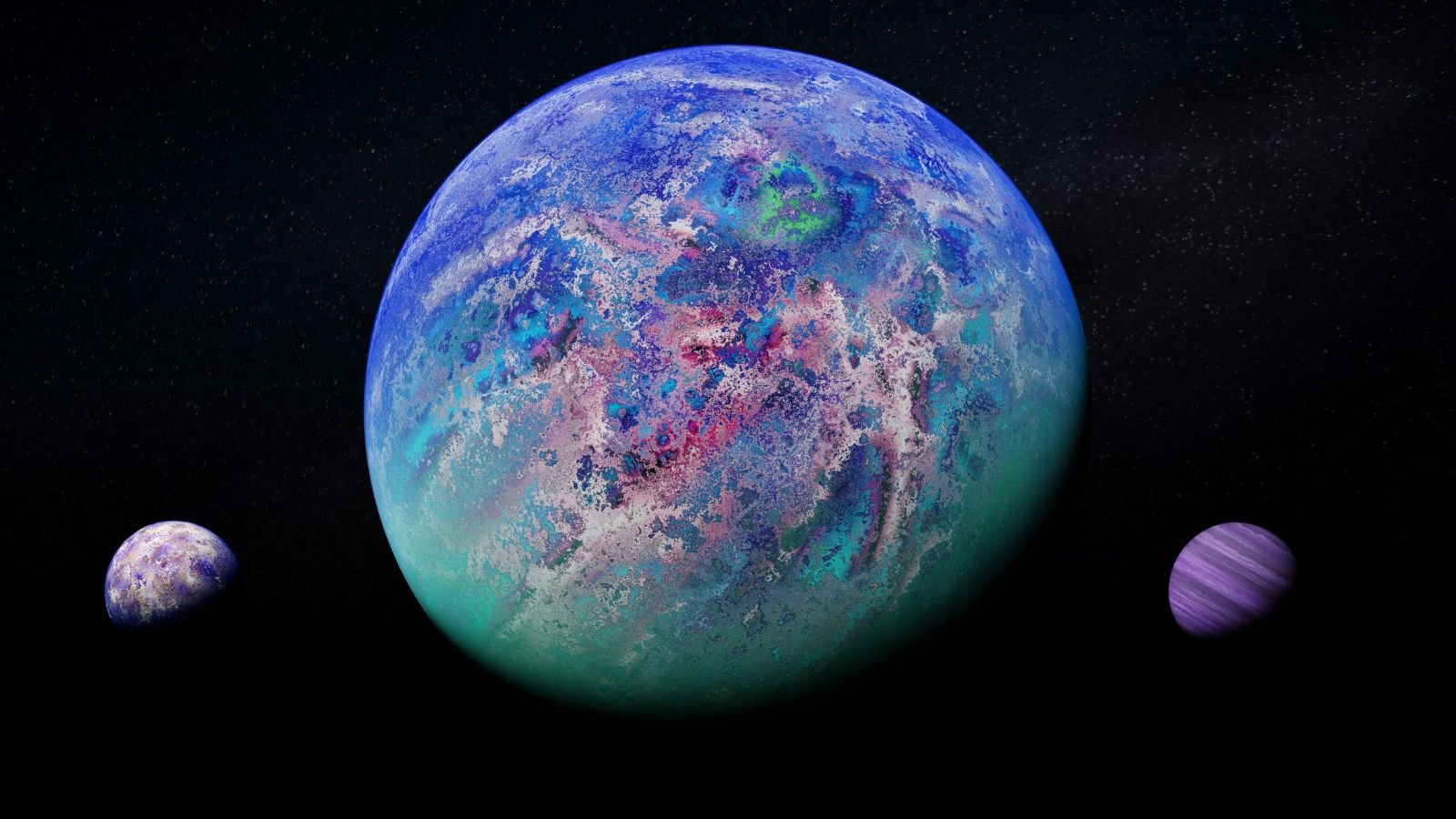
Post Content The study also examined planets with unusual orbits, including those that move in elongated paths around their stars. (Image for representation: unplash)
Astronomers have taken a major step in the search for life beyond Earth by narrowing down thousands of distant planets to just 45 promising candidates. These worlds, scientists say, may offer the best chances of finding signs of life, or at least understanding where life could exist.
The research was led by Lisa Kaltenegger of the Carl Sagan Institute at Cornell University in the United States. Her team focused on rocky planets that orbit within what is known as the habitable zone — the region around a star where conditions may allow liquid water to exist.
Out of more than 6,000 known exoplanets, these 45 stood out as the most promising targets.
To build this shortlist, researchers analysed data from the Gaia mission and the Nasa Exoplanet Archive. They refined estimates of how much energy each planet receives from its star, which plays a key role in determining whether a planet is too hot, too cold, or just right for life.
Also Read | AI helps astronomers spot 100 unseen planets beyond our solar system
But the team did not just look for Earth-like conditions. They also included planets that sit at the edges of habitability to better understand where life might begin or disappear.
“We know Earth is habitable, while Venus and Mars are not. We can use our solar system as a reference to search for exoplanets that receive stellar energy between what Venus and Mars get,” study co-author Abigail Bohl said in a statement.
The study also examined planets with unusual orbits, including those that move in elongated paths around their stars. They might help scientists understand how much variation a planet can sustain before it becomes uninhabitable.
Story continues below this ad
Among the notable ones is TRAPPIST-1. This is about 40 light-years away. It has a number of Earth-sized planets. TRAPPIST-1 e is considered one of the strongest candidates for life because it has water.
Also Read | Nasa plans nuclear-powered mission to send Skyfall helicopters to Mars by 2028
Another notable planet is LHS 1140 b. This is a dense “super-Earth” that could have a deep ocean. On the other hand, Proxima Centauri b orbits the nearest star to our solar system. Although this planet is suspected to have strong stellar radiation, it is a key target.
Rather than offering a final answer, the new catalogue is meant to guide future research. Scientists say these 45 planets can help direct powerful telescopes like the James Webb Space Telescope toward the most promising targets.
“While it is hard to say what makes something more likely to have life, identifying where to look is the first key step — so the goal of our project was to say, ‘Here are the best targets for observation’,” said co-author Gillis Lowry in a statement in the Royal Astronomical Society.
Story continues below this ad
With more advanced telescopes now coming online, researchers hope that studying these worlds could finally bring us closer to answering one of humanity’s biggest questions: Are we alone?
© IE Online Media Services Pvt Ltd
