

Post Content
Nasa has begun assembling the massive Space Launch System (SLS) rocket that will power the Artemis 3 mission, marking another major milestone in the American space agency’s plan to return astronauts to the Moon later this decade.
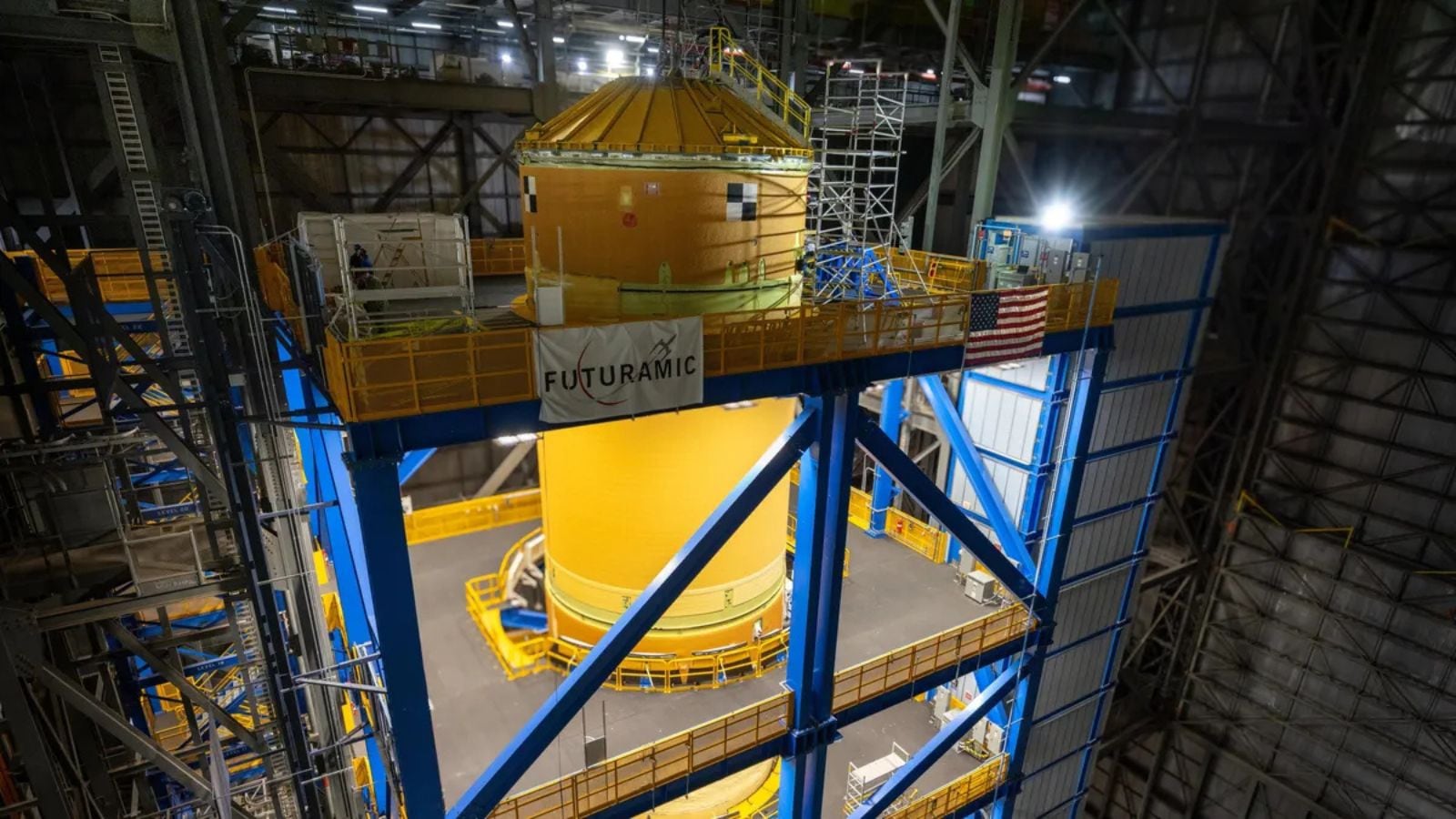
The core stage of the Artemis 3 rocket has now been lifted into a vertical position inside the Vehicle Assembly Building (VAB) at Nasa’s Kennedy Space Centre in Florida. The stage is currently stationed inside High Bay 2, where engineers will continue preparing it for integration with the rocket’s engine section and other components ahead of launch.
The Artemis 3 mission is currently targeted for launch in late 2027 and is expected to play a crucial role in testing Nasa’s next-generation lunar landing systems before astronauts attempt to land on the moon again.
Nasa confirmed the milestone in a recent update, stating that technicians at Kennedy Space Centre had successfully completed the operation to position the largest section of the Artemis 3 SLS rocket inside the VAB. Once the rocket’s four RS-25 engines are attached, the stage will be moved to the taller High Bay 3 for final assembly.
Also Read | Can SpaceX and Blue Origin get their moon landers ready for Nasa’s 2028 Artemis mission?
The SLS core stage itself is enormous, standing about 212 feet tall and housing the rocket’s four main engines. When fully assembled with the Orion spacecraft, upper stage, and twin solid rocket boosters, the complete launch vehicle will stand approximately 322 feet tall and weigh nearly 5.75 million pounds when fueled.
Nasa’s Artemis programme is designed to establish a long-term human presence on the moon, beginning with regular astronaut missions and eventually supporting a permanent base near the moon’s south pole in the early 2030s.
The progress on Artemis 3 comes just weeks after the successful completion of the Artemis 2 mission, which carried astronauts around the moon and back to Earth. That mission was the first crewed test flight of the Orion spacecraft and helped validate the systems needed for future lunar missions.
Story continues below this ad
Unlike earlier plans, Artemis 3 will no longer attempt a crewed moon landing. Nasa recently revised the mission profile after delays in the development of the lunar landing systems being built by SpaceX and Blue Origin under the Human Landing System programme.
Also Read | Blue Origin’s cargo Moon lander moves closer to launch after Nasa testing
Instead of travelling directly to lunar orbit, Artemis 3 astronauts will remain in Earth orbit and perform docking and rendezvous tests with one or both lunar landers. Nasa says the mission will help verify that the landing systems are ready and safe before astronauts attempt to descend to the moon’s surface.
The mission could involve SpaceX’s Starship Human Landing System, Blue Origin’s Blue Origin lander, or both, depending on which vehicles complete testing and qualification milestones in time.
Nasa currently hopes Artemis 4, planned for 2028, will become the programme’s first crewed lunar landing mission. The agency has indicated that whichever lander proves ready first could ultimately be selected for that historic mission.
