

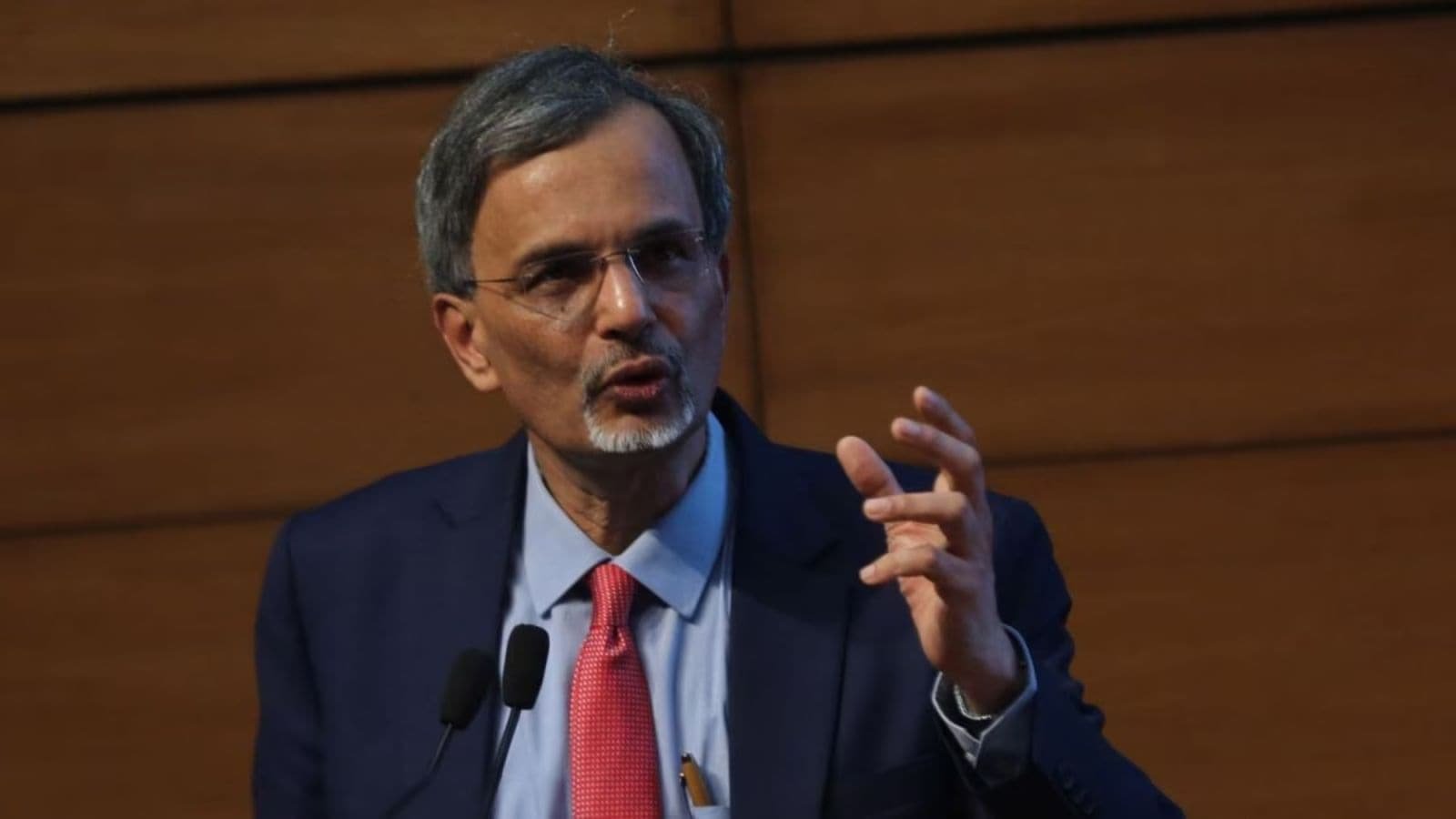
Calling it “prudent” to assume normality will be restored in the Gulf region only gradually from a planning perspective, Chief Economic Advisor V Anantha Nageswaran has warned there is a “considerable downside” risk to his GDP growth forecast of 7-7.4% for 2026-27 and that spending will have to be re-prioritised so that relief is targeted at those who have been hit hardest by the conflict in West Asia.
“On the 27th February, we upgraded India’s growth estimate (at constant prices) for FY27 to a range of 7.0 per cent to 7.4 per cent. Clearly, there is considerable downside to this number,” Nageswaran wrote in the preface to the finance ministry’s Monthly Economic Review report for March, released on Saturday.
“Data for March will not reveal much, since businesses are trying to meet full-year targets for FY26. High-frequency data for April and possibly May may give us a better handle on the likely growth rate for the new financial year. Similarly, the current account deficit too will widen significantly in FY27,” the government’s top economist added.
A day after the statistics ministry released the new GDP series, based on 2022-23 as the base year, which showed that GDP growth in 2025-26 is seen rising to 7.6%, the US and Israel attacked Iran, leading to a shape rise in global energy prices as supplies took a hit from Iran’s retaliation that came in the form of bombing of energy infrastructure of American allies in the Gulf and the closure of the key waterway of Strait of Hormuz. As such, economists have already announced cuts to their growth forecasts for India, with Goldman Sachs last week lowering its projection for the calendar year 2026 by 110 basis points (bps) to 5.9%.
Earlier this month on March 2, Nageswaran told the Parliament’s Standing Committee on Finance that while the macroeconomic impact on the Indian economy of global crude oil prices of up to $90 per barrel is “almost insignificant or not relevant”, prices staying elevated at $130/bbl for 2-3 quarters could push up headline retail inflation in 2026-27 to 5.5% and reduce GDP growth to 6.4%.
The average price of India’s crude oil basket jumped to $111.93/bbl in March from $69.01/bbl in February.
The sharp rise in energy prices and lack of clarity on when the war will end have sparked a record exit of foreign capital from Indian financial markets – $13.3 billion so far in March – which has pushed the rupee to new lows every other day. The Indian currency has weakened by more than 4% against the US dollar since the war began. On Friday, the rupee closed at 94.81 per dollar. Bond yields have surged amid inflation fears and stock markets have slumped.
Story continues below this ad
Nageswaran also warned that the combined effect on domestic growth, inflation, and fiscal and external balances from the conflict is “likely to be significant” due to the four channels at play: i) supply disruptions to oil, gas, fertilisers, and exports, ii) higherimport prices, iii) higher logistics costs, and iv) a possible decline in remittances by Indians in Gulf countries.
While he said that an end to hostilities and a peace deal that reopened the Strait of Hormuz would be a “profoundly positive development”, Nageswaran said the critical question was how damaged the energy sites were and what it would take to restore normal supplies.
“For forecasting and planning purposes, therefore, it is prudent to assume a slow, gradual restoration of ‘business as usual’ in the Gulf rather than an accelerated one. It is always easier to call off preparations than to make them at the eleventh hour,” he said.
The war in West Asia has gone on for one month and shows no sign of ending, with Iran rejecting a 15-point proposal from the US and instead demanding reparations. The closure of the Strait of Hormuz has pushed up crude oil and natural gas prices sharply higher and sparked inflationary as well as recession concerns around the world, with governments scrambling to protect households. For instance, the Indian government on Friday announced a cut in the Special Additional Excise Duty (SAED) on petrol and diesel by Rs 10 per litre each to ease the strain on oil marketing companies’ (OMCs) finances due to the surge in global crude oil prices. The cut in the duty will help ensure the pump price of petrol and diesel is not increased, although the Centre will face a loss of Rs 7,000 crore in tax revenue every fortnight from the duty cut.
Story continues below this ad
Nageswaran’s preface, written on March 25 – two days before the fuel excise duty cut – seemingly alluded to it and other measures that have been taken, saying India will need to provide “immediate relief to the most affected and vulnerable businesses and households”. At the same time. He said fiscal space will have to be generated to meet “strategic and long-term needs that this conflict has underscored”, including the need to build long-term buffers in several commodities and materials, not just energy-related ones.
“Given the considerable impact of the conflict on India’s economy, we should leverage the fallout to redouble our recent reform efforts to enhance India’s competitiveness and preparedness. The ‘entrepreneurial mindset’ in bureaucracy (not making the ‘best’ the enemy of the ‘good’), accompanied by enhanced speed of decision-making, discussed in Chapter 16 of the Economic Survey, is precisely what is called for if India is to emerge from this episode stronger, more resilient and more competitive,” he said.
