

Even as Islamabad tries to pitch itself to the world as the mediator towards peace efforts in the ongoing US-Iran war, New Delhi has planned an initiative to remind the world about terror emanating from Pakistan and how it has led to human tragedy over and over again.
To mark the first anniversary of the April 22 Pahalgam terror attack, in which 26 people lost their lives, the Indian Embassy in Washington will organise an exhibition centred around the theme of “Human Cost of Terrorism”, The Indian Express has learnt.
The exhibition begins next week and is likely to be held at a public venue near Capitol Hill, according to sources.
Even as details about the exhibition are yet to emerge, it is learnt that it will focus on the 26 people who lost their lives on April 22 last year — 25 Indian nationals and one Nepali citizen — and also talk about the perpetrators of the heinous attack.
The Resistance Front (TRF), a proxy of the Pakistan-based Islamist UN-designated terrorist group Lashkar-e-Toiba (LeT), initially claimed responsibility for the attack, though the group later retracted its statement.
Pahalgam terror attack, its aftermath
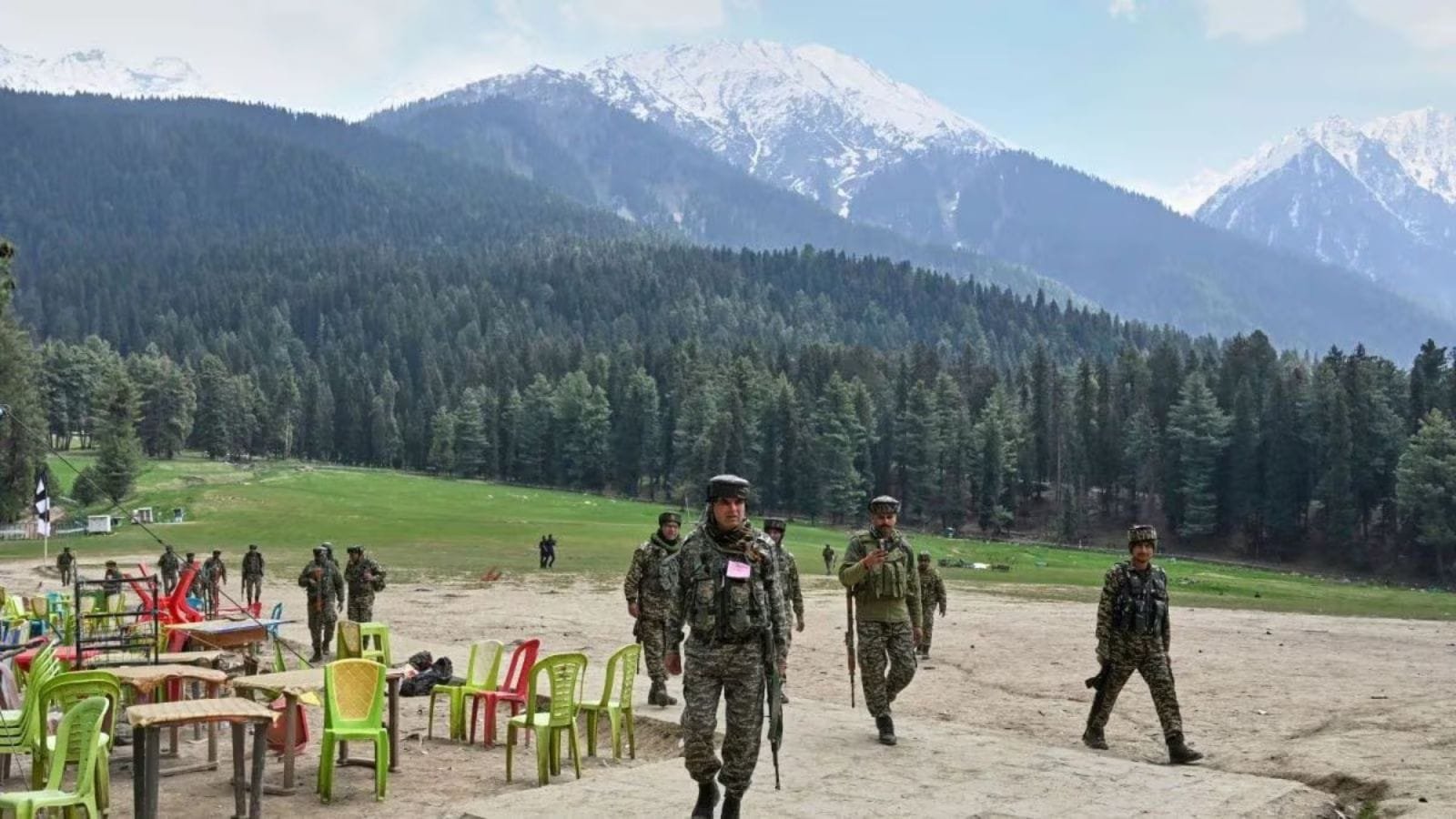
The terrorists, armed with guns, entered the Baisaran Valley, a popular tourist spot, through the surrounding forests. The attack is considered the deadliest attack on civilians in India since the 2008 Mumbai attacks, in which 175 people — including many foreigners — had lost their lives.
The attack intensified tensions between India and Pakistan as New Delhi lashed out at Islamabad for supporting cross-border terrorism, and among a slew of diplomatic measures in the wake of the attacks, put the Indus Waters Treaty in abeyance, restricted trade and visas. India had presented multiple instances to support its claims.
Story continues below this ad
In retaliation, India launched Operation Sindoor on May 7, targeting terrorist infrastructure on Pakistani territory. A military escalation ensued, but a ceasefire was announced three days later – on May 10 – after the Pakistani Director General of Military Operations (DGMO) called on the Indian side to stop military action. During the military action, India launched strikes on nine terror launchpads in Pakistan and caused major damage, evidence of which was shown through satellite pictures.
While External Affairs Minister S Jaishankar, Foreign Secretary Vikram Misri, and other senior officials from the Ministry of External Affairs (MEA) remained engaged with the diplomatic corps in Delhi and their counterparts across the world, talking about Pakistan’s role in fanning cross-border terrorism and attacks on Indian soil, New Delhi also dispatched multi-party parliamentary delegations abroad to talk about India’s viewpoint.
In fact, this is something, as per those putting together the upcoming exhibit, India aims to remind the world of Pakistan’s role in fanning and spreading terror, and how not only India, but the whole world has been at the receiving end of such actions. Not only the Pahalgam attack, but also other terror attacks on India emanating from Pakistan will also find space at the display.
On June 30 last year, just two months after Pahalgam, Jaishankar inaugurated an exhibition titled “The Human Cost of Terrorism” at the United Nations Headquarters in New York. Organised by India’s Permanent Mission to the UN, the exhibition showcased the devastating impact of terrorism through visual and textual displays. It featured major attacks such as the 1993 and 2008 Mumbai bombings, the Pulwama and Uri attacks, and the Kanishka Air India bombing, among others.
Story continues below this ad
The exhibition explicitly named terror groups, including those based in Pakistan and listed by the UN Security Council, and emphasised the need for global accountability, especially in cases of state-sponsored terrorism. Jaishankar called for a united international response, stressing that terrorism anywhere threatens peace everywhere.
