

On March 24, residents of a village in Jharkhand’s Hazaribagh district woke up to a cloudy Tuesday morning. It was Shashti (sixth day) of Ram Navami. Soon, the sky cleared, giving way to a warmer afternoon. By sundown, the weather had turned pleasant: a light breeze rustled through the village.
While Hazaribagh town, almost 50 km away from this village, boasts of the state’s largest Ram Navami celebration — the International Ramnavami procession — the village buzzed with its own festive fervour. Since the Ram Mandir was inaugurated in Ayodhya in 2024, it had embraced a “Mangala” procession, named for Mangalwar (Tuesday).
Women woke up early that Tuesday, smearing the earthen floors of their homes with fresh cow dung, scrubbing courtyards, and invoking blessings. By late afternoon, crowds had swelled near the village temple dedicated to Shiva and Hanuman. The procession began here, winding just 400 metres to the open compound of the government middle school.
Youngsters from the area and adjoining villages swayed to thumping DJ beats — defying the Jharkhand government’s ban. Scores of little children darted ahead while the village elders walked slowly behind.
A 12-year-old girl from the village had also joined the procession, accompanied by her elder sister. Around 6-6.30 pm, as dusk deepened, the elder girl told the younger one that it was time to return home. She refused because she wanted to continue dancing with her friends. The elder sister left.
At home, their mother asked about the whereabouts of the younger daughter. The elder one said she was still with the procession. Soon, night covered the village but there was no sign of the child. At first, the family waited. When she didn’t return, anxiety gripped them.
The mother went looking for her daughter; neighbours from nearby clusters joined in the frantic search, scouring the procession route, the temple grounds and schoolyard.
Story continues below this ad
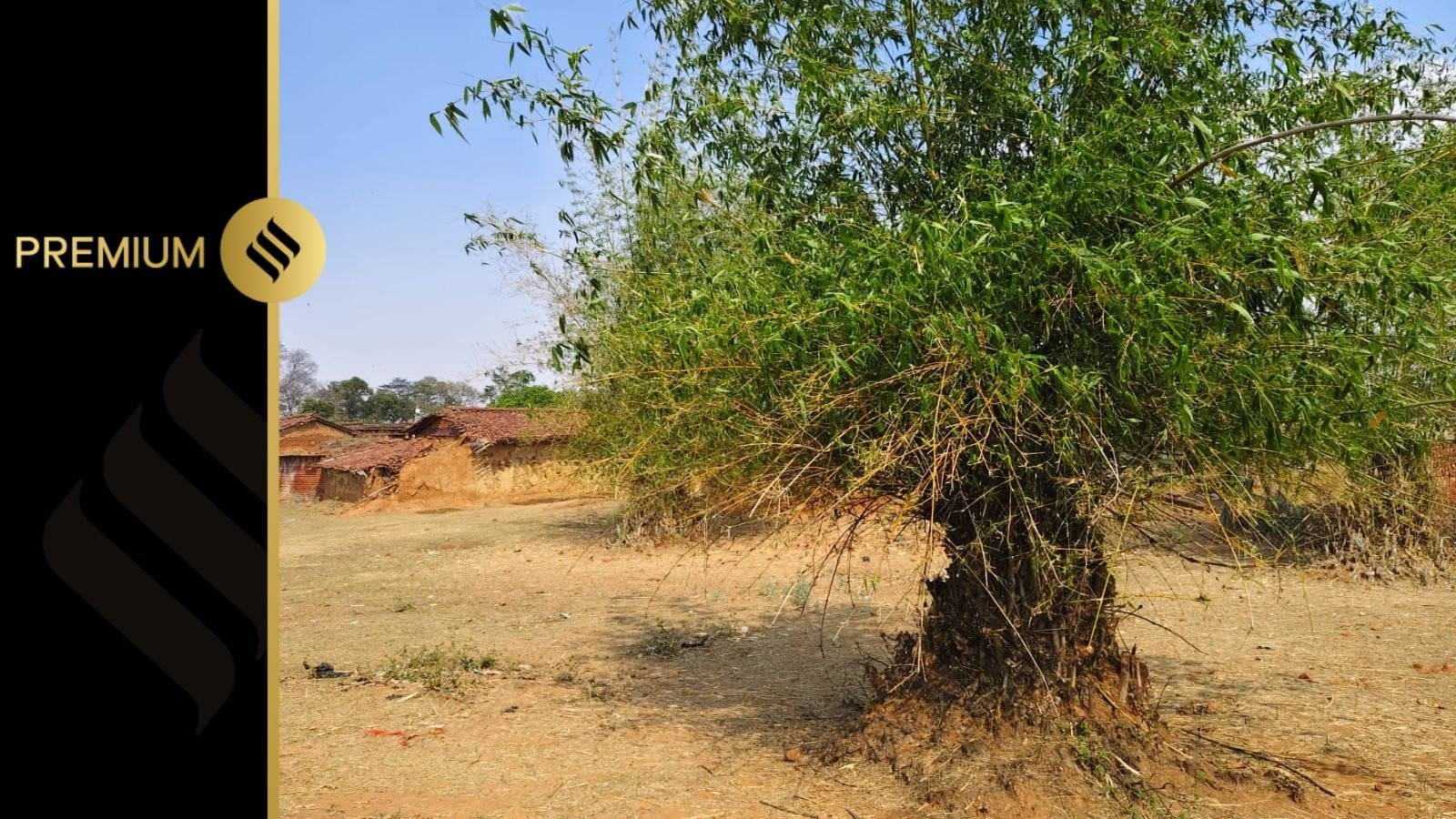
On March 25, as day broke, the village was gripped in horror. A villager had spotted the motionless body of the young girl, hidden under bamboo shrubs in an open patch less than a kilometre from her home. Villagers approached the village head. He informed the police station. A police party arrived at the spot and took the body for a post-mortem examination.
While police were yet to begin their probe, rumours ignited like dry tinder, traveling from the village to Hazaribagh and to Jharkhand’s capital Ranchi. Soon, contingents of local media and government officials arrived in the village while social media amplified fractured tales about the motive behind this gruesome crime.
The road going from the victim’s home to the house of one of the accused. (Express Photo)
The mother filed a complaint naming a fellow villager, accusing him of allegedly kidnapping and murdering her daughter. Everyone in the village knew the family had been engaged in a bitter land dispute with the man, and the local panchayat had intervened twice to settle the issue.
Police probed the mother’s allegations. On March 26, the man, who works as a lineman in a private transmission company in Rajasthan, was detained and questioned for several hours.
Story continues below this ad
Simultaneously, police formed a Special Investigation Team led by N S Bhausaheb, a 2021-batch IPS officer, to probe this crime.
But the man they detained was soon released. He had denied any involvement, and police said they’d found no evidence to connect him to the crime. He was asked to stay available in the village during the investigation.
By then, the post-mortem report came out — it ruled out sexual assault, and the cause of death was strangulation. Police refused to share further details citing the probe, but said the child may have been killed between 9 and 9.45 pm on March 24.
Police started afresh, tracing the girl’s movements from the time she left home to join the Ram Navami procession. They also plastered village walls with reward notices: “Informants on… heinous crime… will get suitable rewards — confidentiality assured. WhatsApp…”
Story continues below this ad
However, the narrative built around suspicion, fear and the mother’s claims remained. Police’s decision to let the local man go sparked political ire, with right-wing groups and opposition parties targeting the Mukti Morcha (JMM) government.
In Ranchi, the BJP accused the government of failing to ensure justice while right-wing groups warned of state-wide protests. The state government refrained from immediate public comments.
Meanwhile, the Jharkhand High Court took suo motu cognizance on March 30, expressing deep concern over the “lethargic attitude” of the police. In response, Superintendent of Police, Hazaribagh, Anjani Anjan, told the court that the technical team was trying to “connect the culpability of the criminals” using mobile location data. However, he admitted that no suspects have been apprehended till then. The court warned that the SP will be held “personally accountable” for the safety of the victim’s family.
A twist in the tale
The SIT started summoning villagers who had participated in the procession, including a fruit seller after investigators found traces in the autopsy report suggesting the girl had eaten watermelon that evening.
Story continues below this ad
On March 31, police made three arrests: the mother, and two locals — a man and a woman.Around 11 pm, SP Anjan and DIG Anjani Kumar Jha called a hurried press briefing — and dropped a bombshell.
It is a case of “narbali (human sacrifice)” committed by the victim’s own family, they said, carried out under the influence of superstition and occult practices.
“We’ve uncovered evidence pointing to a case of human sacrifice of a daughter carried out for the perceived betterment of the victim’s brother and to address other family problems,” SP Anjan said.
Here is what the police said happened.
Around 2002-2003, the victim’s parents got married. The father belongs to a community classified as OBC in the state. The mother was from another village, 120 km away.
Story continues below this ad
They had four children: a 21-year-old daughter, an 18-year-old son, a 15-year-old daughter and the 12-year-old victim.
SP Anjan said 10 years ago, the woman began an affair with a man from the village — among those arrested.
Around 2021, the husband left to work for a family in Ratnagiri district. “The husband visited home occasionally and the children reportedly viewed the (arrested man) as a father,” the SP said.
Anjan said the mother had been deeply worried about her son, whom she believed was physically and mentally weak. Police said she regularly visited a local woman — among the arrested — for remedies related to her son’s health, employment concerns, household issues, land disputes.
Story continues below this ad
Police said this woman was a ‘bhagatni’; she would allegedly perform rituals in exchange for money and had built a strong influence over the mother.
On the day of the incident, police said, the mother went to the local woman’s house along with her youngest daughter.
Police said the woman told them that the child was under the influence of a “spirit” or “deity” and performed rituals. The girl was then allowed to return to the procession, with instructions to come back at a specific “auspicious time… around 9-9.45 pm”.
When they returned later that night, the woman allegedly told the mother that a ritual required a “male participant”. The accused man joined them.
Story continues below this ad
According to police, the girl was made to sit inside a small temple-like structure, locally known as “Dharti Mata” or “Mansa Devi” temple. “She was given a prasad of cardamom and grains and told that she had a “defect” that needed to be cured. She was reassured that the ritual would free her from it,” SP Anjan said.
Police said the woman then took the child to a nearby grove. There, the girl was made to lie down. “The accused man then strangled her to death with the help of her mother. Her body was mutilated, and her blood collected as part of the ritual,” the SP said.
As per the police station’s records, the accused man has a criminal record. He was jailed in 1999-2000 in a case related to the murder of his brother’s wife, and faced an attempt to murder case in Hazaribagh in 2016. Police said he was acquitted in both cases but declined to share further details.
The arrested woman, who belongs to the Ghatwar community, lost her husband five years ago. He was a bhagat or ojha (one who performs rituals) in the village. After his death, she took over the job.
A village speaks
The village head who is in his late 30s and is linked to the JMM, said the area is broadly divided into two hamlets — Upri Tola and Nicha Tola.
Upri Tola is largely inhabited by families from the Ghatwar, Yadav and Mahato communities who belong to the OBC category. Nicha Tola has a higher concentration of Bhuiyan and Paswan families, who are from the Scheduled Caste community.
When The Indian Express visited the village, the local woman’s family — her three grandchildren — were ‘mourning’. She was the only earning member of the household.
Villagers said her son died in 2018 and her daughter-in-law ran away with another man, leaving her to care for the children, aged 18, 17, and 13. The youngest grandchild, who studied in the same class as the victim, said she knew her. “On that night [of the murder], around 9 pm, her [the victim’s] mother came to our house asking if her daughter was there. I said no. She never used to come and play here. My grandmother was also sleeping at that time,” she claimed.
Her home — 500 metres from the victim’s — is a one-storey, brick and cement structure that’s still under construction. There is a small enclosed space on the premises, which the family said was the Mansa Devi temple. Inside, there are images of deities and a trishul. Police claimed occult rituals were being performed there.
The spot where the girl’s body was found, hidden under bamboo shrubs, is around 100 metres from the house.
A narrow road in front of the mother’s house leads to the arrested man’s home, a distance of a mere 400 metres. The man, who belongs to the Bhuiya caste, is married and has children. His house is a relatively large single-storey brick structure with a terrace. His family left the village after his name surfaced in the case.
After his arrest, purported photos and videos circulating on social media showed him with BJP leaders during their visits — from local MP (Hazaribagh) Manish Jaiswal to state BJP president Aditya Sahu.
In the village, he is known for his association with the BJP and the Bajrang Dal — a claim that sparked protests by the JMM in several places. The two organisations, however, denied any links to him.
BJP president Aditya Sahu held a press conference and rejected the police’s human sacrifice motive. He also distanced the party from the accused, calling it a false narrative and a political conspiracy by the JMM.
Bajrang Dal district head, Vishnu Kumar, denied that the man was part of the organisation.The village head described the arrested man as someone who often projected influence through political connections. “He would frequently intervene in villagers’ issues, particularly those related to government schemes,” he claimed.
He also pointed to the man’s conduct after the incident, claiming it was “unusual” and “hyperactive”. “He was everywhere: speaking to the media, appearing in videos…,” he said.
Hazaribagh Sadar SDPO, Amit Anand, said the arrested man had his own reasons to get involved in the plan. “… He was a so-called local leader of the village, that’s it… And he was involved with the victim’s mother,” he said.
The victim’s family, meanwhile, is trying to come to terms with the shocking revelations.The father, who returned home, said he had no idea about his wife’s affair. “I have lost all trust in my wife. She should be hanged,” he said.
He was sitting inside his unplastered brick house, in a roughly 10×10-foot space hall, with a small temple in one corner and a narrow staircase leading upstairs. Above, a small square opening in the ceiling, roughly 2×2 feet, let in a shaft of sunlight that fell across his face.Visibly shaken, the father described his daughter as “very beautiful, studious and playful”. “I shared a very close bond with her. I loved her a lot.”
According to police, the mother claimed the act was carried out to find a cure for her son. The son strongly refuted this claim. “I am physically and mentally fine. There was no such issue,” he insisted, saying he was deeply affected by his younger sister’s death.
The father also said he was never informed of any health concerns. “My son is completely fine. My wife never told me anything about such a problem.”
The village head, meanwhile, said the fruit seller had seen someone giving the girl watermelon. “Had the fruit seller named him [the suspect], we’d have cracked it in two days,” he sighed.
A reckoning
Even as the police probe continues and more details are expected to emerge, a quieter detail stood out on the ground. The administration has woken up to the harsh reality that human sacrifices and other superstitious practices are still prevalent in this region and neighbouring Palamu.
Palamu’s Haidernagar Devi Dham is locally known for the ‘Bhut Bhagao Mandir’, where rituals are performed to “free” individuals from ‘spirit possession’. The site also hosts an annual ‘Bhut Mela’, drawing lakhs of people from across regions seeking relief from such afflictions. The mela is held each year during Mahashivratri and Durga Puja. This isn’t the first time that faith in the occult has taken a dark turn.
In November 2025, The Indian Express reported on a suspected case of human sacrifice from Palamu’s Hanuman Nagar, where the severed head of an infant was found in a forested area. Police had then indicated that it could possibly be a case linked to ritual practices. In 2024, a 35-year-old woman was arrested in Palamu’s Hussainabad for allegedly strangling her 18-month-old daughter, with police citing evidence of occult practices prior to the killing.
For the village in Hazaribagh, it is a harsh reckoning. Posters calling for an end to witch-hunting and promoting awareness have appeared here and the adjoining hamlet — as it mourns a young life cut short.
