

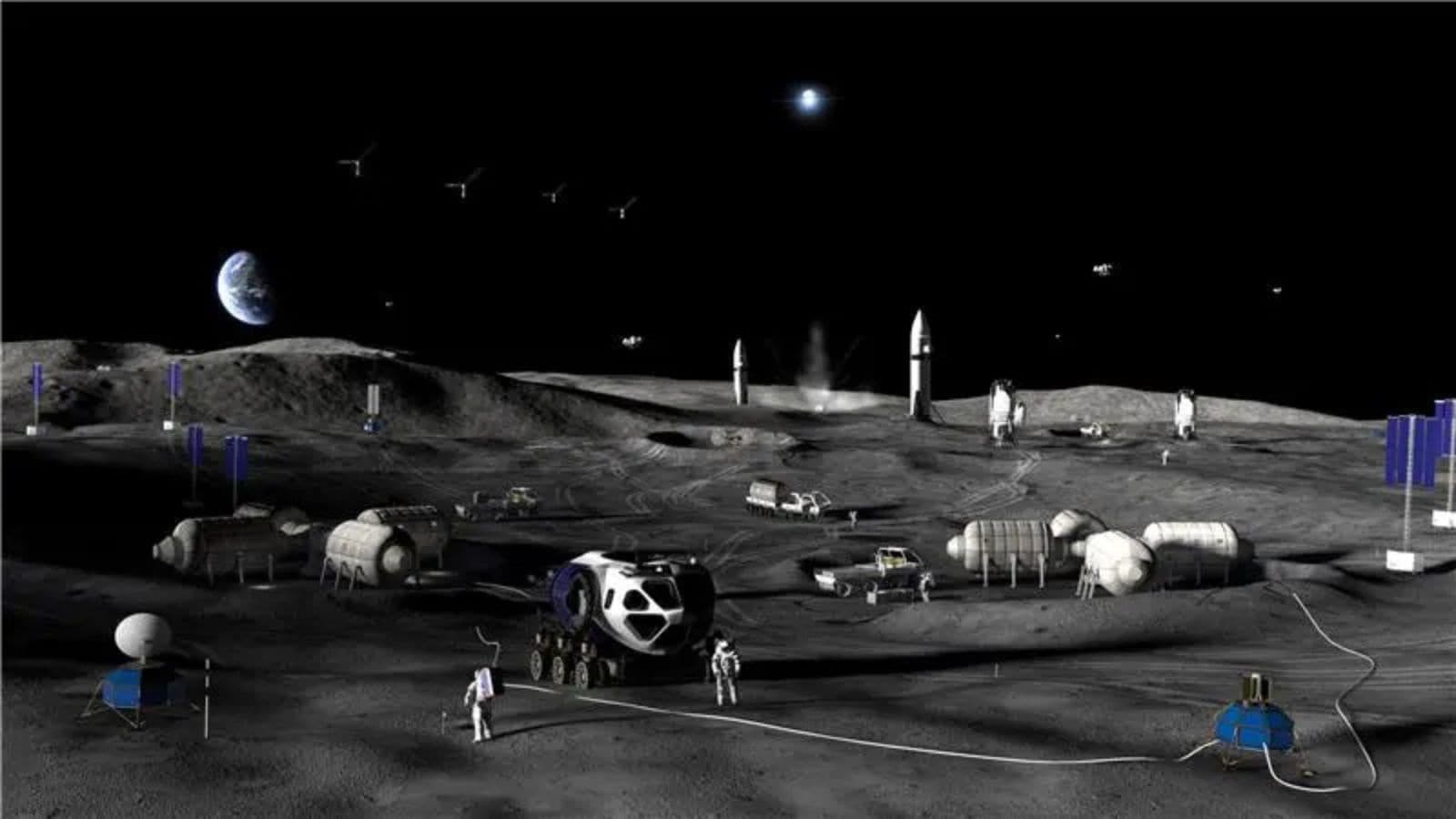
Post Content The agency is planning a rapid increase in lunar missions, starting with a surge of robotic and uncrewed landings. Over the next three years alone, Nasa intends to attempt 21 landings to prepare the lunar surface for future human activity.. (Image: Nasa)
Nasa has formulated what could be one of its most daring space missions ever, involving 73 landings on the moon, in an attempt to establish a sustained human presence there as part of a broader strategy to construct a moon base. The plan, which is described in depth in Nasa’s recently published ‘Moon Base User’s Guide’, showcases not only the scope of the plan but also the challenges involved in accomplishing it.
Published on April 6, the nine-page document outlines the technical and operational gaps Nasa must address to turn its vision into reality.
The agency is planning a rapid increase in lunar missions, starting with a surge of robotic and uncrewed landings. Over the next three years alone, Nasa intends to attempt 21 landings to prepare the lunar surface for future human activity.
The broader goal is to support a $20 billion moon base and enable the first crewed missions by 2028. The effort also ties into longer-term ambitions, including the development of a nuclear-powered spacecraft for Mars missions.
Despite recent progress, including the successful crewed flyby of the moon under the Artemis II mission, the agency acknowledges that many critical systems are still under development.
3 phases to build a lunar base
Nasa’s plan is divided into three phases, each increasing in complexity.
Phase 1, expected to run through 2029, will include 25 launches and 21 landings. The objective is to ensure dependable access to the Moon and test out the various systems.
Story continues below this ad
During Phase 2, which will run from 2029 to 2032, there will be 27 launches and 24 landings. For this phase, Nasa will initiate occasional crew missions.
Also read | Artemis II astronauts complete milestone voyage around the moon
Phase 3 will concentrate on maintaining a permanent human presence. This phase will require more launches and landings, along with the development of cargo-return systems.
The proposed base will be situated close to the Moon’s south pole, an area that is unlike the regions visited during the Apollo program. The site poses some difficulties, especially concerning lighting and temperatures.
First, the Sun will be perpetually low on the horizon in this location, casting long shadows that may restrict the production of power through solar means. Second, there will be cold spots and long periods of darkness.
Story continues below this ad
These factors mean that Nasa needs to develop new systems for generating electricity, such as improved solar panels or nuclear sources of energy.
Technology gaps and unknown risks
According to the guide, many important technologies are still missing to make a permanent base possible. Systems for precise landing, for instance, as well as for hazard detection and avoiding damage, have not been sufficiently developed. Moreover, there are questions about how people would survive living long-term on the moon. Lunar dust, low gravity, and cosmic radiation can create many risks. Therefore, life support systems, as well as food and physical training, must be considered beforehand.
Race against time and competition
There are several factors putting additional pressure on Nasa to achieve its objectives. Namely, there are other countries with ambitious space programs. For example, China aims to send astronauts to the moon and create a base by 2030.
Also Read | What does the ocean floor look like from space? NASA has the answer
Apart from this, the cost of Artemis missions has already reached $100 billion, while deadlines keep slipping, missing original target dates for a human crew landing.
Story continues below this ad
Finally, budget issues may arise since there are proposals for drastic reductions in funding for Nasa.
© IE Online Media Services Pvt Ltd
