

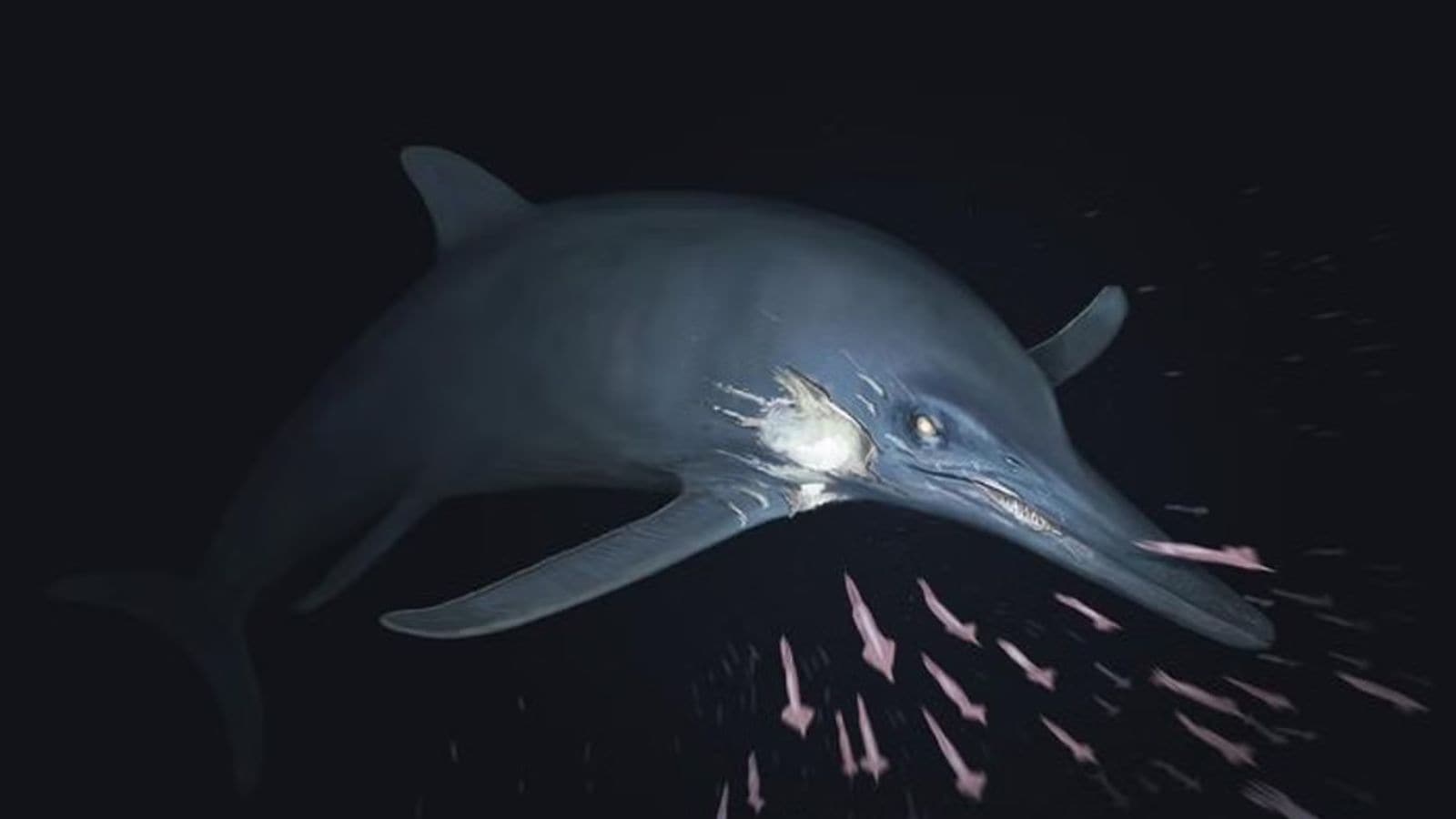
Post Content Researchers have not assigned the fossil to a specific species, as the remains are not complete enough to make a definite identification.(Image: Joschua Knüppe)
A remarkable fossil discovery in Germany has shed light on a giant sea creature that lived more than 180 million years ago—and managed to survive despite serious injuries that likely made everyday life a struggle. The fossil belongs to an ichthyosaur, an extinct marine reptile that looked strikingly similar to modern dolphins.
This particular specimen is part of the Temnodontosaurus genus, known for its size and strength in ancient oceans. Scientists estimate the animal grew up to over 20 feet (around 6.5 metres) long, making it one of the top predators of its time.
Unearthed in a fossil-rich site
The remains were found at the Mistelgau clay pit near Bayreuth in Germany, a site already known for its well-preserved marine fossils. During recent excavations, researchers uncovered several important parts of the skeleton. These included fragments of the skull and lower jaw, parts of the shoulder girdle, forefins, sections of the spine, and more than 100 teeth.
Together, these pieces have given scientists a clearer picture of the animal’s physical structure and how it may have lived.
“Our Temnodontosaurus fossil is one of the youngest finds of this ichthyosaur genus to date. Until now, representatives of this genus have mainly been known from older geological layers,” Ulrike Albert, author of the study published in the journal Zitteliana, told the Independent.
Also Read | ‘Ice Age casino’: New study identifies 12,900-year-old Native American dice
“The discovery from Mistelgau now shows that these large marine reptiles survived longer in the Southwest German Basin than previously documented,” said Dr Albert, who is also a palaeontologist from the Bavarian State Collections of Natural History.
Even so, researchers have not assigned the fossil to a specific species, as the remains are not complete enough to make a definite identification.
Story continues below this ad
Evidence of injuries on the bones
What makes this fossil especially interesting is the evidence of injuries found in the bones. Scientists noticed changes in the skeleton that point to damage in key areas, particularly around the shoulder and jaw joints.
These injuries may have made hunting and feeding far more difficult for the animal.
“Pathologies primarily affecting the pectoral girdle and mandibular joint likely influenced the animal’s hunting and feeding behaviour, resulting in abraded teeth and the presence of gastroliths,” researchers wrote in the study.
Reportedly, gastroliths, small stones swallowed by some prehistoric animals, were also found in the fossil’s abdominal area. These stones helped in grinding and digesting food. While common in some ancient reptiles, they are extremely rare in ichthyosaurs like Temnodontosaurus.
Story continues below this ad
The presence of worn-down teeth and gastroliths suggests the animal may have had to change how it fed. Instead of actively hunting fast-moving prey, it may have relied on easier-to-catch food or used stones to help process meals.
Also Read: Ancient ape fossils in Egypt desert may rewrite history of human ancestors
“The injuries likely significantly limited the animal’s ability to catch prey,” said Stefan Eggmaier, another author of the study.
“The fact that it nevertheless survived is evidenced, among other things, by its heavily worn teeth and gastroliths, which we were able to identify in the abdominal region,” Dr Eggmaier said.
This ability to adapt despite physical challenges highlights how resilient some prehistoric animals could be, even in harsh environments.
Story continues below this ad
Ongoing research into ancient seas
The excavation at Mistelgau is part of a larger effort to better understand the ecosystem of the Jurassic Sea. Scientists are continuing to study the fossils found at the site, especially teeth and bone structures, to learn more about how these ancient creatures lived and interacted.
Each new find adds another piece to the puzzle, offering a glimpse into a world that existed millions of years before humans—and the creatures that managed to survive against the odds.
© IE Online Media Services Pvt Ltd
