

Post Content
High inflation and a weakening rupee against the US dollar have already increased the cost of essentials such as groceries and fuel. Adding to the burden, consumers now face further pressure as the prices of smartphones and laptops – such as the Apple iPhone, Samsung Galaxy series, and devices from Dell and Asus – continue to rise.
Experts are predicting that the prices of smartphones, laptops, video game consoles, external storage and even TVs may rise even further in the second half of the year.
As tech companies pivot to building more AI data centres and continue to meet the increasing demand for AI services (think of ChatGPT, Claude, and Gemini), there is a growing need for more memory and other components, which has strained the supply for consumer devices such as smartphones, laptops, and TVs.
Yes, blame AI not only for taking over jobs but also for driving up the prices of smartphones and “essential” consumer electronics that people use every day. As the AI boom is here to stay, RAM and memory chips will become more expensive and harder to obtain, leading to scarcity that is already affecting supply.
Of course, the world’s biggest memory makers, Samsung, SK Hynix, and Micron, are taking advantage of the situation by shifting their resources away from consumer products and having plum deals with AI companies.
RAM and its importance
Random Access Memory, or RAM, is a vital component in every electronic device. In fact, it is a very important component in your smartphone and laptop, as it is used by the Central Processing Unit (CPU) to store information that needs to be accessed quickly. Your PC’s and smartphone’s performance is determined by how well the RAM and CPU communicate with each other. If you do not have enough RAM, performance will be weaker.
Also Read | OpenAI’s next bet: Smartphones with AI agents that replace apps and challenge the iPhone
RAM also helps run the operating system, as every application requires a minimum amount of memory to function properly. When your PC or smartphone does not meet an application’s requirements, the application may run slowly or not run at all. It’s no wonder that RAM is also used by AI companies like OpenAI, Anthropic, Google, and Meta to power the servers in their massive data centres.
Story continues below this ad
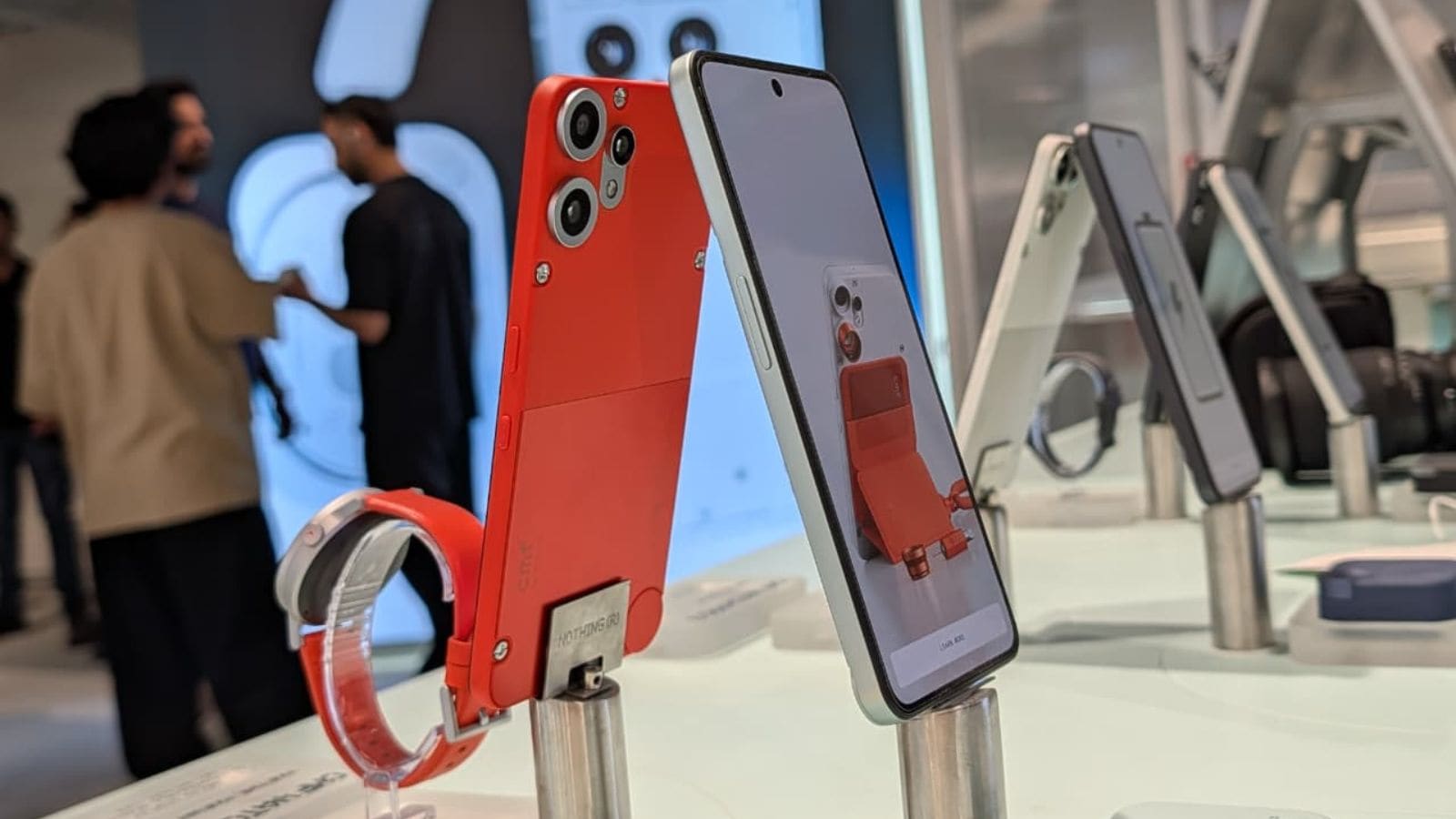
Newly launched smartphones are all coming in at higher prices, putting a dent in consumers’ pockets. (Image: The Indian Express/ Anuj Bhatia)
What tech companies are saying
As tech companies spend billions of dollars on AI data centres and build the infrastructure needed to power AI tools for both consumers and enterprises, the rising cost of computer memory is also a factor driving tech giants’ spending.
Although Apple is not building AI data centres like Google and Meta, it still needs memory chips as much as other tech giants, not for data centres, but for its iPhones, Macs and iPads. “We believe memory costs will have an increasing impact on our business,” Apple CEO Tim Cook said during the Q&A portion of his company’s earnings call last week.
Cook acknowledged that the impact of increasingly expensive RAM on the company’s products is real. A company as large and powerful as Apple has long-term deals with suppliers and usually has first dibs on RAM, screens, and other components, but these deals have to be realigned, and prices renegotiated. Eventually, Apple’s RAM supply will run dry, and the company will be forced to charge more for certain products. Admit it or not, Apple would never take a hit on its profits, and the added cost will be borne by consumers after all.
Samsung, the world’s biggest memory chip maker by sales, reported record quarterly profits last week, driven by a 49-fold jump in chip income. The company said it expects a severe supply shortage to deepen next year as its customers spend on AI, driving up the prices of its memory chips.
Story continues below this ad
“Our supply falls far short of customer demand,” said Kim Jaejune, a Samsung memory chip business executive. “Based solely on the demand currently received for 2027, the supply-to-demand gap for 2027 is set to widen even further than in 2026.”
S K Hynix, Samsung’s main competitor in memory chips, also reported strong earnings in the same week, tripling its revenue and quintupling its operating profit compared to the same period last year. Texas Instruments (TI), a semiconductor company based in Dallas, Texas, also reported its strongest earnings in decades, driven by a 90 per cent increase in data centre revenue.
Data centres are expected to account for about 70 per cent of memory chips produced in 2026, according to the International Data Corporation. It is clear (and obvious) that memory companies are prioritising the high-growth, higher-margin data centre business, allocating fewer components to consumer-focused tech products.
RAM shortages have not suddenly appeared. Since October last year, analysts and some tech companies have warned of a RAM crisis. Earlier this year, Samsung, Dell, Nothing, HP, Asus, Xiaomi, Acer, and others also publicly warned about price hikes. IDC and others expect the RAM shortage to persist for some time and could continue into 2028.
Story continues below this ad
Like smartphones, laptops too are getting expensive in India. (Image credit: Anuj Bhatia/Indian Express)
No relief in sight
As companies see their costs rise, they pass those burdens on to consumers. In Apple’s case, the company has adjusted the prices of certain products in India. For example, older iPhone models such as the iPhone 16 and 15 are costlier by Rs 5,000, as Apple has withdrawn its demand generation (DG) support to retailers and channel partners.
Also Read | The Tim Cook era: How Apple became a $4 trillion empire through several hits and a few misses
Meanwhile, the new iPhone 17e, which was launched in March, is priced at Rs 64,990, Rs 5,000 more than the previous model. Apple has also increased the prices of newer Macs, notably the M5 MacBook Air and MacBook Pro. This week, Apple stopped offering a 256GB storage option for the Mac mini worldwide, including India, and raised the desktop computer’s starting price.
Samsung has been following Apple and others by raising the prices of its smartphones. The company’s flagship Galaxy S26 series, including the highest-end Galaxy S26 Ultra, has a higher price tag than last year’s models. In the past few days, Samsung has adjusted the prices of several Galaxy phone models across its A, F, and M series in India.
Smartphone brands are no longer absorbing the costs and are passing them on to consumers. (Image credit: Anuj Bhatia/indian Express)
Several smartphone brands have recently increased prices across their lineups in India. Nothing, OnePlus, Xiaomi, Realme, and Motorola have all raised prices by Rs 1,000 to Rs 6,000, depending on the model and variant. Flagship devices like the OnePlus 15 have seen the biggest hikes, while mid-range and budget phones from brands such as Moto G and Redmi Note have also become more expensive.
Story continues below this ad
Newly launched laptops from brands such as Dell and Asus have seen higher price hikes in India, which suggests that tighter memory supply is driving up costs.
Internationally, Sony has raised the PS5’s price in major markets, and India could see a price increase as well. Higher memory chip costs have also fueled fears of price increases for the Nintendo Switch 2.
