

Post Content
You probably know that your phone and laptop run on chips that power their core functions. What many people may not realise, however, is that the headphones and earbuds they use every day also contain chips.
In many ways, modern headphones are beginning to resemble miniature computers: always present, highly connected, and increasingly driven by voice as the primary interface, rather than a screen behind a metal slab.
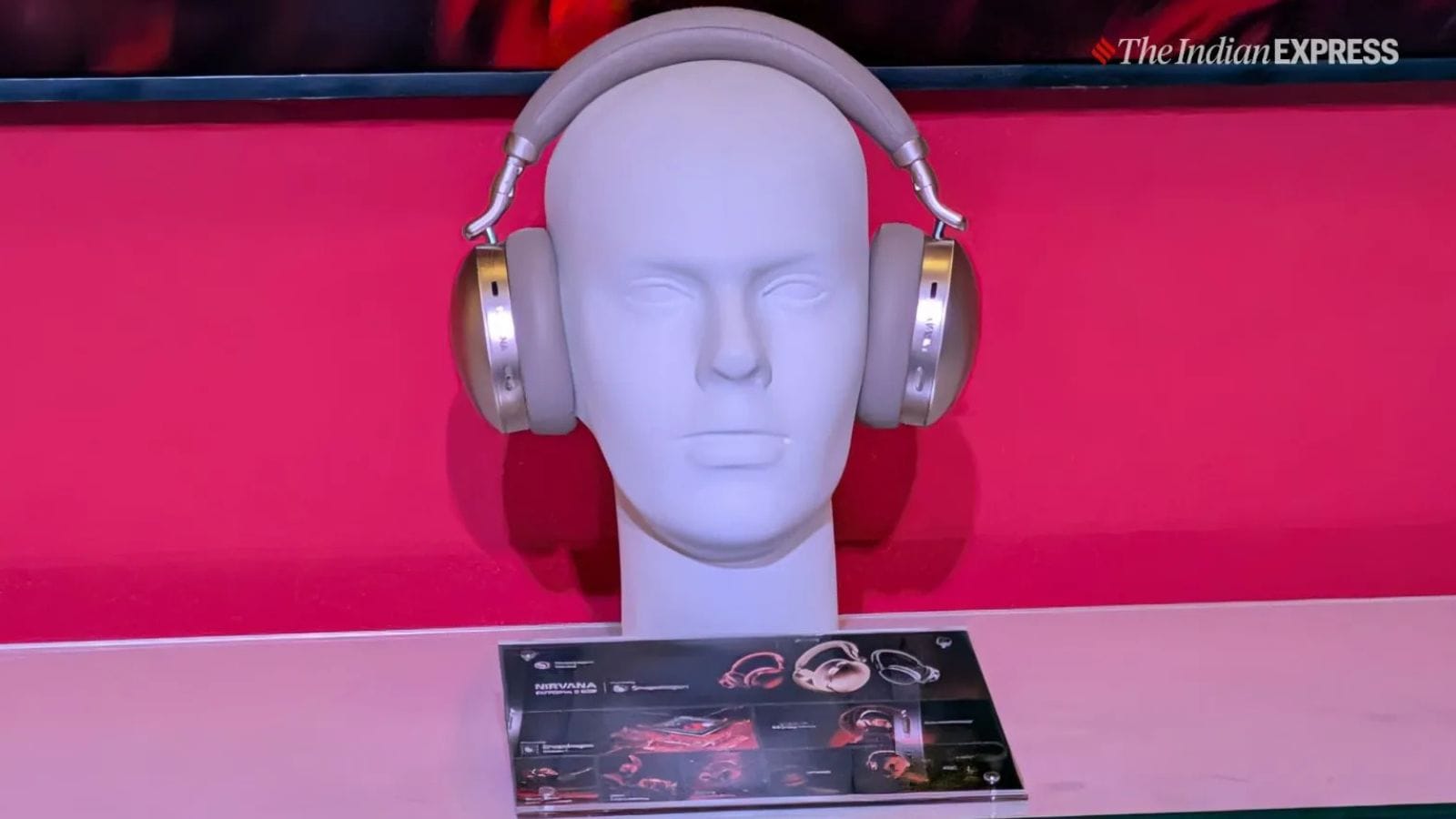
Much of this custom audio hardware is powered by Qualcomm. The company’s technology is used in products such as the latest boAt Nirvana Eutopia 2 Pro headphones, which run on the Snapdragon S3 Gen 1 platform, a compact wireless audio chip designed for advanced sound processing and connectivity.
Qualcomm and boAt are pitching a reimagined audio experience that is always ready to take or make high-quality voice calls, hear the latest news, listen to podcasts or audiobooks, or instantly stream music, whether you are at the gym or attending a morning running club.
For audio products such as headphones, the fundamentals remain unchanged: effective noise cancellation, immersive sound, and the ability to hear exactly what you want. These features continue to form the foundation on which such devices are built.
Snapdragon Sound delivers crisper, clearer sound
However, Qualcomm’s Dino Bekis says the company is focused on three technological pillars: improving quality, integrating into low-power environments, and adapting to regional and consumer differences.
“We are always thinking about how to integrate speed into the lowest-power environment possible. A lot of that comes down to hardware offloading, the choice of process technology, and architecture. What we want is to enable these experiences while delivering the same or ideally better battery life, because these devices are becoming more and more a part of everyday usage,” Bekis, Senior Vice President and General Manager, Wearable AI, Qualcomm, told indianexpress.com in an interview.
Story continues below this ad
Qualcomm’s Senior VP and GM for the Personal and Wearable AI Business Unit, Dino Bekis (left), with Shyam Vedantam, Chief Product Officer at boAt, at the Snapdragon For India event in New Delhi. (Image: Express Image/ Anuj Bhatia)
The new boAt Nirvana Eutopia 2 Pro supports Snapdragon Sound, Qualcomm’s dedicated audio technology that leverages both hardware and software to deliver high-quality audio on connected devices. Snapdragon Sound enables features such as lossless audio over Bluetooth, head-tracking spatial audio, and Auracast broadcast audio across multiple transmitter sets.
While sound is highly subjective, technical measurements are available, similar to how active noise cancellation (ANC) on headphones is evaluated.
Also Read | Qualcomm launches Snapdragon 6 Gen 5 and Snapdragon 4 Gen 5 with faster gaming, AI features
“I think sound quality can be measured, so you can do the same thing for echo cancellation on microphones – very foundational, data-driven analysis and measurements are done when you talk about sound quality. There is certainly a subjective element there as well. But I will tell you, I have been very surprised because, you know, when you talk to professionals, whether they are producers or artists, they can immediately hear the difference between very good sound quality and not-so-good sound quality. It’s not even a five-second judgment,” Bekis said.
“I think it’s about how true it is to the source, the original source, and how well it is actually reproduced,” Shyam Vedantam, Chief Product Officer, boAt, chipped in.
Story continues below this ad
“We have seen audio fidelity and support for bit rates improve over time, where Snapdragon Sound, as a platform, has an inherent advantage. It supports truly bit-perfect, lossless audio on a Bluetooth device, which is not very easy to achieve,” he added.
Improved ANC performance
Bekis said the technical challenge lies in handling sudden or loud, intermittent noises without introducing issues like howling or instability in the audio. He adds that ANC performance can be evaluated using measurable technical metrics such as decibels (dB) of noise reduction or isolation, which help quantify how effectively a system suppresses unwanted ambient sound.
The upcoming boAt Nirvana Eutopia 2 Pro headphones, powered by Qualcomm’s Snapdragon S3 Gen 1 platform, on display at the event. (Image: Express Image/ Anuj Bhatia)
However, getting ANC effective in Indian conditions while listening to music has always been a challenge, said Vedantam.
“What works in less noisy conditions might not work in very noisy traffic conditions like those in India. So how does the platform adapt and work across different types of ambient noise, whether on the road in traffic or even at home, where Indian households have different ambient noise profiles? The question is how it works in real-world conditions and effectively solves these problems,” he added.
Story continues below this ad
Keeping Indian users in mind
Vedantam said boAt worked closely with Qualcomm on the boAt Nirvana Eutopia 2 Pro. He not only cited strong collaboration with Qualcomm but also highlighted how the company tests the headphones in real-world conditions and iteratively fine-tunes products based on user feedback.
“While there is a strong foundation provided by the Snapdragon SoC, the application layers built on top of it are equally important. The question is how you fine-tune and calibrate them to work well in real-world conditions. The hardware also extends to other components, such as microphones, which are critical, as well as proper driver selection. The acoustic chamber design also plays an important role in ensuring a high-quality audio experience,” he said, describing the end-to-end audio design process.
Qualcomm showcased Snapdragon Sound technology and its growing audio ecosystem at the Snapdragon For India event in NewDelhi. (Image: Express Image/ Anuj Bhatia)
Vedantam said calibration and testing happen at multiple stages of the product lifecycle, which begins at the concept stage with prototyping and lab testing, then continues through development with repeated real-world testing. The company also conducts extensive alpha and beta testing with users, including a dedicated community that tries early prototypes and provides ongoing feedback on real-world performance. Finally, the product is iteratively refined in collaboration with partners until it reaches full maturity and is ready for launch.
boAT also relies on “expert hearing”, the so-called specialists with highly sensitive hearing who can distinguish between good and great sound. These experts also understand regional customer preferences, allowing them to fine-tune audio performance for specific markets. The company also has internal audio experts and “golden ears,” and occasionally collaborates with musicians, artists, and professionals from the audio industry.
Story continues below this ad
Increasing use of software and AI
“I would say you certainly need the hardware capability, which really comes down to having the ability to provide granularity of tuning – the ability to turn filters on and off, dynamically adjust them, and have a lot of flexibility. So the hardware must offer tremendous flexibility. I think software and increasingly machine learning algorithms are what drive the ability for ANC and other audio performance features to really stand out. Without that software and those algorithms, the system just doesn’t really execute,” Bekis said.
A live demo at the Snapdragon For India event highlighted low-latency audio and immersive wireless listening experiences powered by Snapdragon Sound. (Image: Express Image/ Anuj Bhatia)
“When we do testing, more and more of what we do in terms of test cases involves leveraging AI to build those test cases and adapt as we find new areas we want to optimise for. We use that as part of how we develop our testing methodology. The second thing we do is that algorithms for ANC, echo cancellation, and microphone noise suppression are increasingly shifting toward more complex models. They run constantly, and the way you maintain battery life is by using dedicated hardware or embedded NPUs that can run them as efficiently as possible.”
Enhancing premium headphone experience
Even though wired headphones are making a comeback, this resurgence has not gone unnoticed by consumers.
While Dino Bekis agrees that wired headphones are still popular in gaming due to latency concerns, he said Qualcomm is working on reducing latency with technologies like XPAN and micro power Wi-Fi.
Story continues below this ad
Also read | ‘India’s semiconductor ecosystem expanding rapidly, talent pipeline to drive growth’: Union Minister Ashwini Vaishnaw
“There is a lot of differentiation that we can offer when it comes to premium wireless experiences, both in terms of audio fidelity, calling experience, and longevity of playback, such that the experience is almost as good as a wired device, even in very, very constrained environments. I think today, as I said, it boils down to user preferences,” Vedantam said.
But premiumisation isn’t limited to smartphones and laptops; more consumers are choosing premium headphones for a high-quality audio experience.
“Consumers no longer just want good audio. They want immersive audio. They are not just looking for a feature set; they are looking for a solid user experience. With this transition, we see that even our customers are increasingly willing to pay a premium for a more holistic, compelling user experience. I think it depends on the type of product, but across these price bands, we are seeing users increasingly willing to pay a premium for a better audio experience,” Vedantam said.
