

Curtailment of renewable energy has emerged as a critical challenge for India’s clean energy transition, amid growing instances of solar power being backed down due to transmission constraints and excess daytime generation.
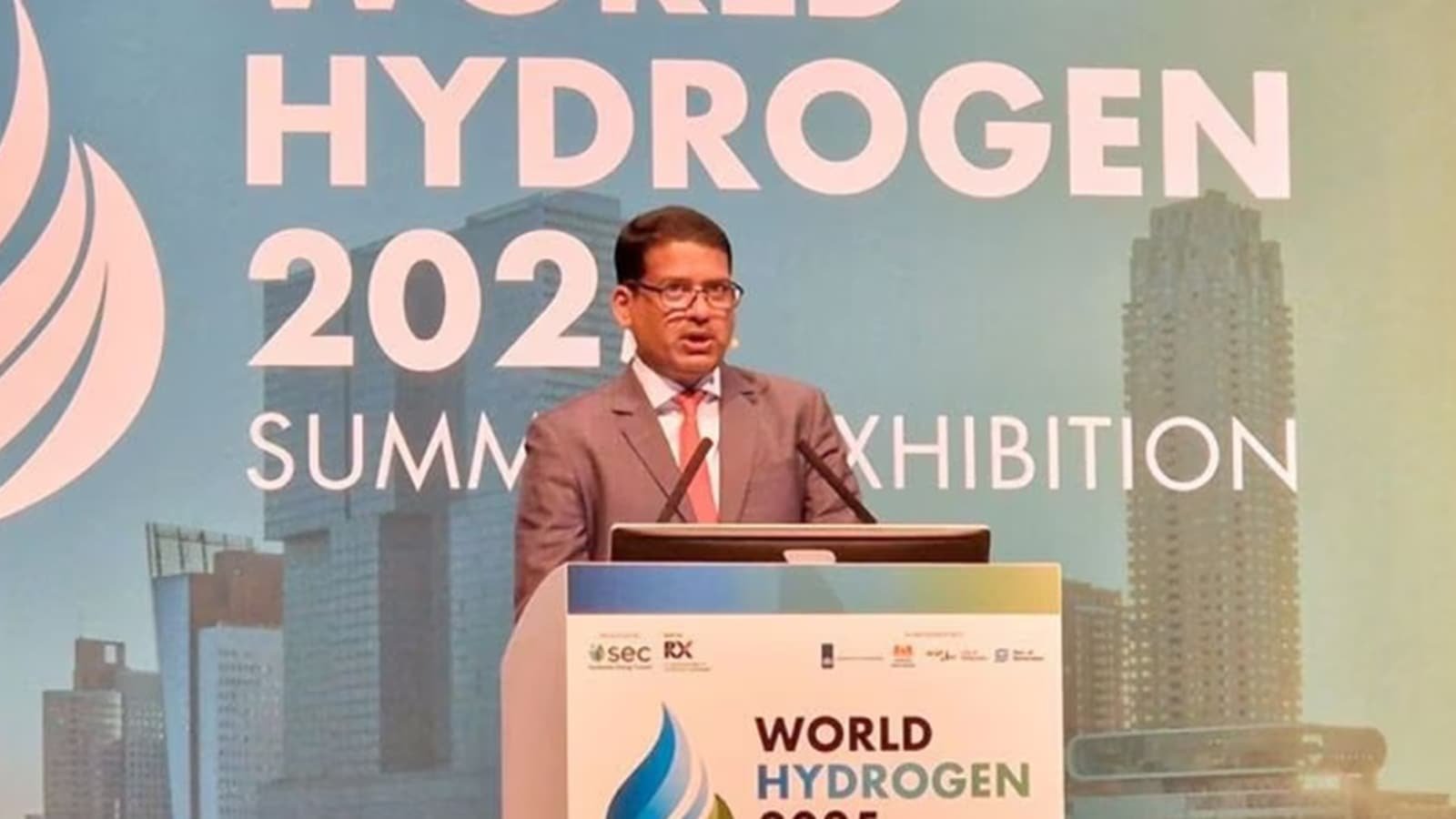
Speaking at the Confederation of Indian Industry Annual Business Summit 2026, Santosh Kumar Sarangi, Secretary at the Ministry of New and Renewable Energy, said the issue needs to be addressed on a very urgent and priority basis, stressing that the grid’s ability to absorb the renewable energy being injected into the system is “extremely crucial.”
His remarks come at a time when the country is witnessing large-scale curtailment of solar power as the grid struggles to absorb excess supply during the daytime. In April, on average 23 gigawatt-hours (GWh) of solar power were curtailed every day — enough to serve one-fourth of Delhi for a day, The Indian Express has earlier reported.
An analysis of data from Grid India showed that solar curtailment in April was 74% higher than the combined curtailment recorded in January, February and March, signalling growing stress in the power system even as daytime demand surged.
“More deployment of battery energy storage systems, more of grid forming inverters, more of synchronous condensers will actually provide that pathway for better integration of RE into our grid system,” he said.
“And to that extent, grid modernization and ensuring that it is able to absorb more RE and dispatch more RE is extremely critical to India’s RE growth story. We have been working with the Ministry of Power, Chairman of Central Electricity Authority (CEA) and the Central Transmission Utility (CTU) to address the issue,” he added.
Sarangi further said the ministry is proposing a substantially bigger outlay for the Green Energy Corridor scheme to ensure that states have the right kind of equipment, storage system and evacuation infrastructure under the intrastate network to handle RE evacuation.
Incentive for agri-photovoltaic and floating solar
Story continues below this ad
As renewable energy deployment is increasingly concentrated in states such as Rajasthan and Gujarat, Sarangi said the ministry is considering incentive mechanisms for agri-photovoltaic and floating solar projects to encourage more geographically diversified clean energy development.
“We are also planning to bring in a demand creation mechanism to promote ingot-wafer in our country. And some degree of incentive mechanism to promote polysilicon manufacturing in our country. So that the entire value chain in solar has its presence in India,” he said.
Notably, the government in March extended its domestic sourcing mandate for solar equipment to include wafers and ingots, with implementation beginning from June 2028.
So far, the domestic sourcing mandate largely covers solar PV modules while components like cells, wafers, ingots and polysilicon could be imported. Meanwhile, the mandate to use domestically manufactured solar cells in clean energy projects will come into force from June this year.
Story continues below this ad
The government aims to reduce heavy import dependence on these critical components and boost domestic manufacturing. While India has witnessed considerable growth in solar module and cell manufacturing capacity, upstream segments such as polysilicon refining as well as ingot and wafer manufacturing continue to face challenges.
It has 172 gigawatts of solar modules and 27.2 GW of cell manufacturing capacity. However, the installed ingot and wafer manufacturing capacity in the country is very limited and stands at around 2 GW.
Infra like China’s model, R&D investment
According to Sarangi, India would eventually require a large-scale transmission network similar to the “super grid” model being developed by China.
Highlighting how China plans to invest around 574 billion dollars by 2030 in such infrastructure, he said India will also require a similar planning if it sticks to NITI Aayog’s projection of 1,800 GW of renewable energy capacity by 2050.
Story continues below this ad
“How do we do it, where the financing is going to be structured, in what way it is going to be arranged is an issue which should confront all of us, both policymakers, the industry, the general consumers, electricity regulatory commissions who are concerned with the cost of the consumer, but eventually it will have to be done,” he added.
He also emphasised the need for stronger investment in research and innovation to reduce renewable energy and storage costs further. He said advances in battery technologies such as sodium-ion batteries, flow batteries and other long-duration energy storage systems could significantly lower the cost of supplying electricity in the future.
Sarangi further stressed the importance of maintaining a flexible and stable policy environment for investors, developers and manufacturers. He said both the Centre and states would need to work together to ensure policy certainty and avoid sudden measures that create uncertainty in the renewable energy sector.
