

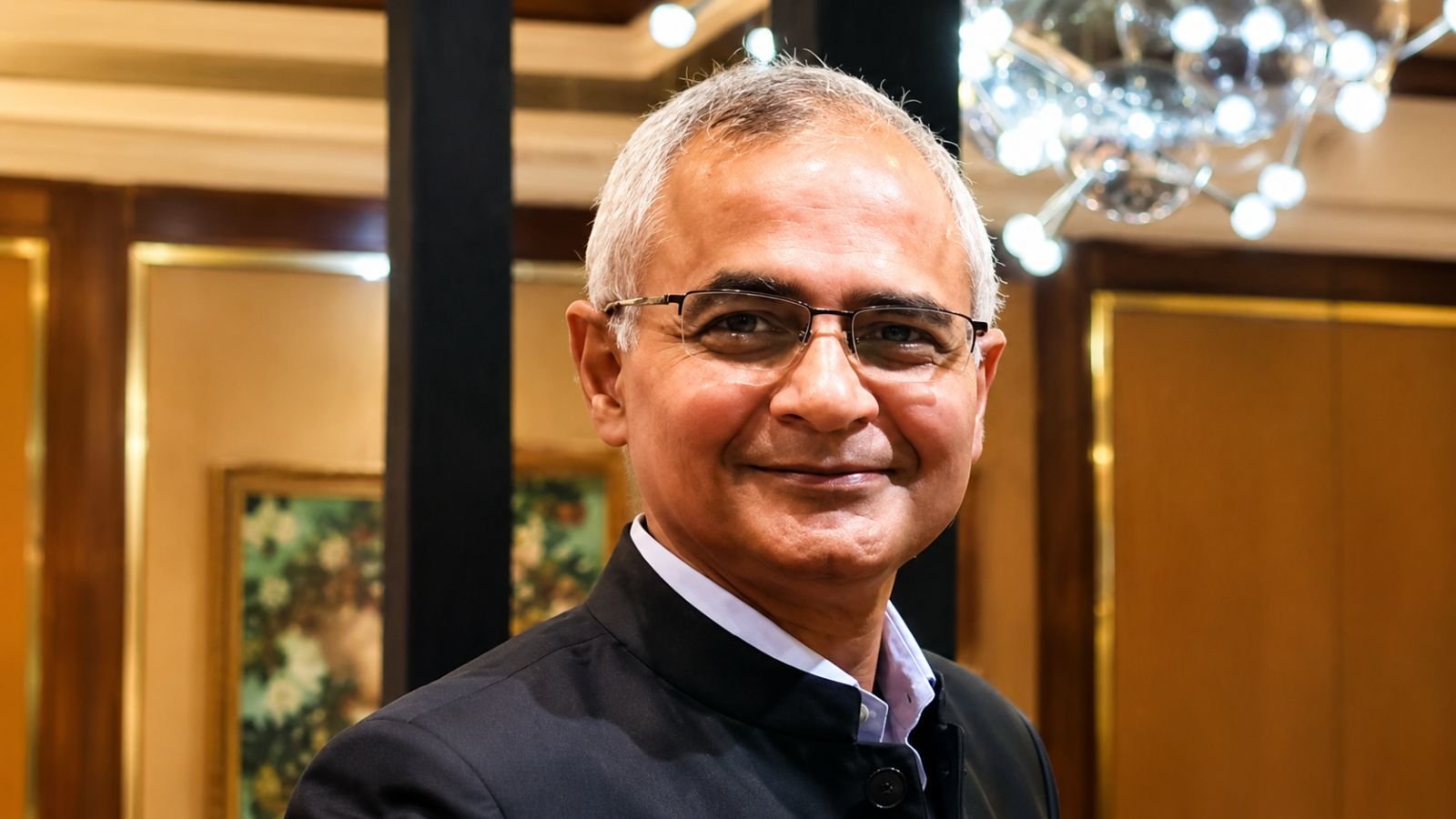
”There is no need to panic. There are sufficient supplies. There is no rationing in place,” Petroleum Secretary Neeraj Mittal said on Monday. (Credits: X/ Neeraj Mittal IAS/ Image enhanced using ChatGPT)
Despite the global oil and fuel supply disruption due to the West Asia war, the country has more than adequate stocks of major fuels like petrol and diesel to ensure stable supplies for the foreseeable future and there is no plan to ration supplies, Petroleum Secretary Neeraj Mittal said Monday. According to Mittal, petrol and diesel stocks worth 60 days and liquefied petroleum gas (LPG) stocks for households worth about 45 days are being maintained on an ongoing basis since the beginning of the West Asia war.
“Many countries have done rationing, they have done different kind of things. India has been a kind of an oasis of comfort. No rationing has been done. Albeit, the government has appealed to citizens not to panic, and we are doing the same today. There is no need to panic. There are sufficient supplies. There is no rationing in place. It’s not going to happen. We have 60 days of stocks (of petrol and diesel),” Mittal said that at the Confederation of Indian Industry’s (CII) Annual Business Summit 2026 in the capital.
Mittal’s comments came a day after Prime Minister Narendra Modi appealed for conservation of petroleum products among other measures aimed at conserving the country’s valuable foreign exchange reserves amid the ongoing West Asia crisis. India depends on imports to meet close to 90% of its crude oil requirement, making the economy and forex reserves vulnerable to oil price shocks. The PM’s appeal had been interpreted by some as an indication of fuel rationing.
Also Read | How much did LPG imports fall due to Hormuz closure, and why demand may fall too
“You heard the honourable Prime Minister yesterday…Everybody is asking why did he speak yesterday. He is reminding us, we have forgotten that we need to be fuel conscious, we need to do fuel conservation. It is at times of crisis that we need to remind ourselves that these fuels are expensive. They come from abroad. We have import dependence. If we can save them, then that dollar saved, that money saved can go into some development programme…So I think that is the spirit in which this reminder by the honourable Prime Minister should be seen,” Mittal said.
The Petroleum Secretary also said that India has secured additional energy cargoes, increased procurement from its existing suppliers, and even absorbed part of the price shock through measures like excise duty reduction on petrol and diesel, which is estimated to lead to a revenue loss of about Rs 1.6 lakh crore on an annualised basis.
With the effective halt in vessel movements through the Strait of Hormuz—from where one-fifth of global oil and natural gas flows usually transited—global energy supplies have been hit and prices have skyrocketed. India depends heavily on oil and gas imports to meet its energy needs.
The crisis has led to retail fuel price surges in a number of countries, with some even forced to ration fuel supplies. There has been no rationing of petrol and diesel in India, although it was done for commercial and industrial LPG in order to prioritise cooking gas supplies to households. Mittal described it as a demand-management measure.
Story continues below this ad
Unlike petrol and diesel, in which India is self-sufficient and is also a net exporter, the country depends on imports to meet 60% of its LPG requirement, 90% of which depended on the Strait of Hormuz. In the case of crude oil, India’s import dependency is much higher at about 88%, with about 40% of the imports coming via the Strait of Hormuz.
Domestic refineries have been maximising domestic LPG production to partly offset the loss in imports, and refiners are scrambling for LPG cargoes from alternative geographies like the US, Australia, and Russia, among others. Through diplomatic efforts, India has also managed to get a number of its LPG tankers stuck in the Persian Gulf.
Efforts by refiners to maximise domestic LPG output have led to an increase of about 40% in India’s LPG production vis-à-vis pre-West Asia conflict levels, which means that the country’s own LPG production is now meeting roughly 55% of the demand versus 40% earlier.
