

The Sensex ended 0.1% higher at 75,315.04, while the Nifty closed at 23,649.95, up 0.03% from Friday. The market recovery was largely driven by gains in IT services stocks.
The Indian rupee weakened for the seventh day in a row on Monday on its way to hitting another all-time low as concerns over the West Asia war continued. Government bond yields, meanwhile, surged to the highest levels in around one-and-a-half months tracking rising interest rates across the world as investors dumped debt instruments.
Indian stock indices, however, ended little changed on Monday, although they had slumped 1.4% intraday.
The Sensex ended 0.1% higher at 75,315.04, while the Nifty closed at 23,649.95, up 0.03% from Friday. The market recovery was largely driven by gains in IT services stocks.
“Among the sectoral indices, Nifty IT emerged as the top outperformer, rallying 2.43% amid strong buying interest in technology stocks. Pharma and Private Banking stocks also provided mild positive support to the benchmark indices,” Bajaj Broking Research said in a note. “On the other hand, broader selling pressure persisted across several sectors, with Nifty Media, Auto, PSU Banks, and Consumer Durables ending as the major laggards of the session. The broader market remained under pressure, as the Nifty Midcap 100 declined marginally by 0.15%, while the Nifty Smallcap 100 slipped 1.26%.”
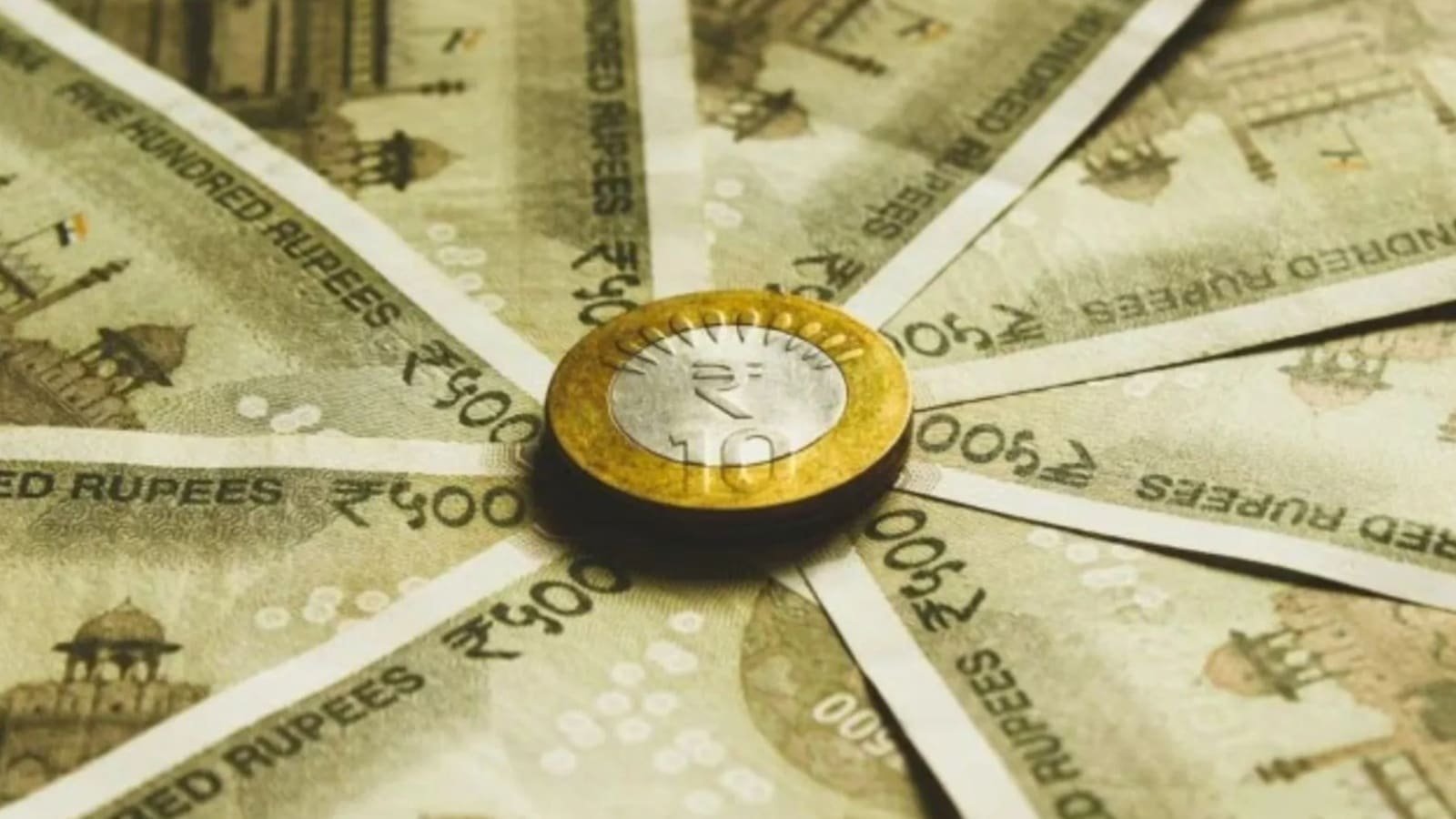
Although stocks were little changed on the whole, the rupee continued to trend lower, falling as low as 96.4-per-dollar before closing the day at 96.36. The rupee is now down 5.6% since the war in West Asia began on February 27 and 6.7% in 2026. It is the worst-performing Asian currency this year.
Monday’s weakness in the currency market came as worries continued over the West Asia crisis, with a drone attack setting fire to a nuclear power plant in the United Arab Emirates on Sunday, sending crude oil prices above the $110-per-barrel mark. Foreign Portfolio Investors (FPIs) have sold $22.4 billion of Indian shares and bonds so far in 2026 on a net basis, per latest data, as fears mount over the size of India’s Balance of Payments deficit in 2026-27, which would be the third year in a row that the metric has been in negative territory. And with the deterioration of the BoP – which was $64 billion in surplus as recently as 2023-24 – predating the ongoing war, economists warn that addressing this situation is an important challenge.
“So, in a sense, we are addressing: (1) a short-term problem of elevated energy prices, which threaten to widen the current account deficit, and (2) a medium-term problem of capital inflows slowing, which pushed the BoP into deficit even before the energy shock struck” HSBC economists said in a note on Monday. They expect the BoP to clock a deficit of $65 billion this fiscal.
Story continues below this ad
With fears of a sustained increase in inflation rising due to the prolonged nature of the war, bond yields surged globally, including in the US and Japan. Higher bond yields are considered a negative for the equity and currency markets.
In India, the benchmark 10-year government bond ended at 7.13% on Monday, up from 7.06% on Friday. This is the highest level since early April.
Bond yields move in the opposite direction to prices. Earlier this month on May 8, the RBI issued the new 10-year government bond at a coupon of 6.94%. On Monday, it closed at 7.08% and is already trading at a discount of almost one rupee. A higher yield is indicative of a higher cost of borrowing for the government.
The RBI has held the policy repo rate unchanged at 5.25% so far in 2026, with headline retail inflation having stayed below its 4% target. However, wholesale inflation in April skyrocketed to 8.3% — the highest in 42 months.
