

Post Content
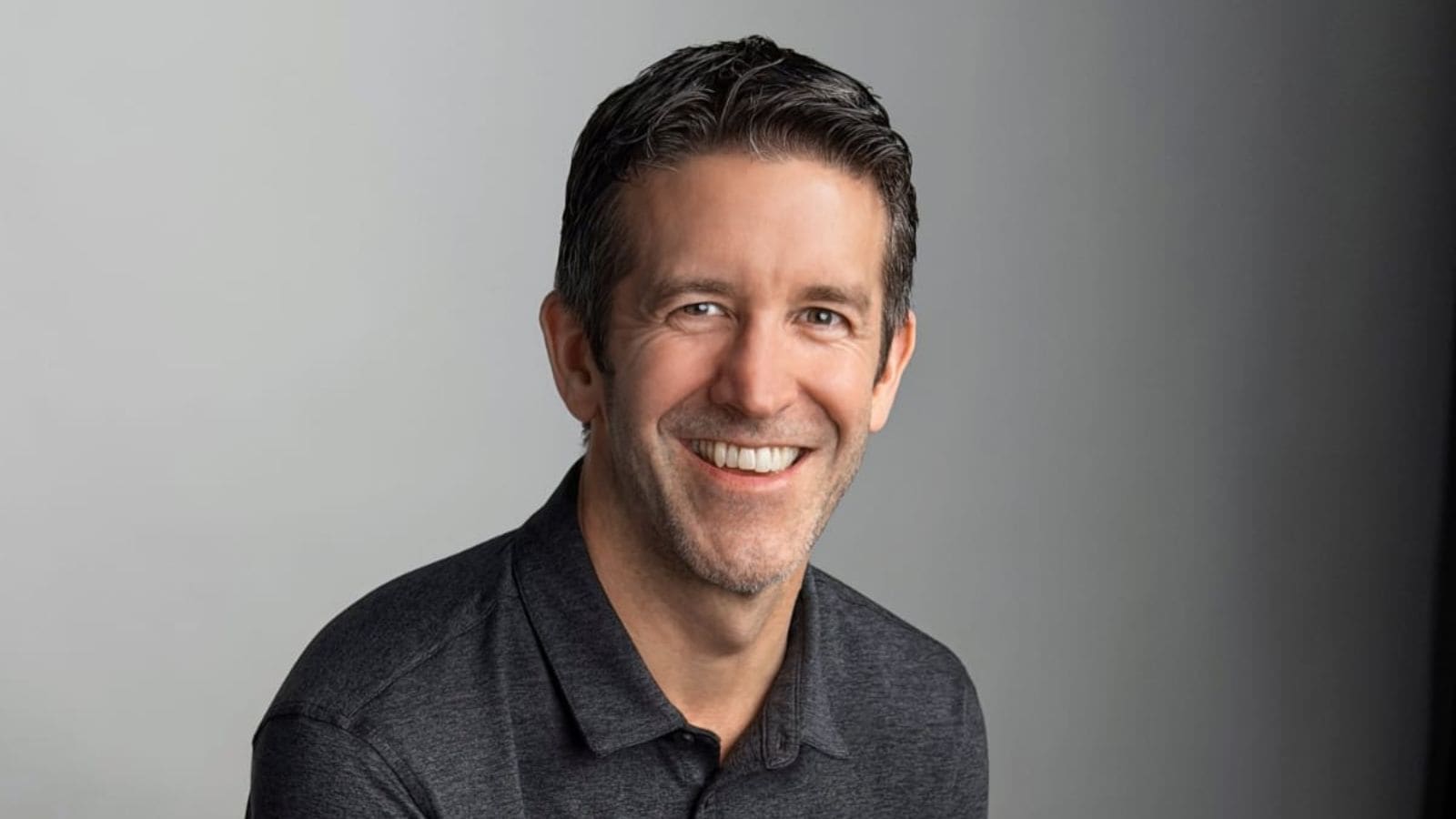
Tim Cook’s chapter is over, and the baton has been passed to John Ternus, a senior vice-president of hardware engineering, to take charge as Apple’s CEO, effective September 1. As most Indians were in deep sleep around 3 am Tuesday, Apple issued a press release announcing the executive shake-up, with Cook stepping down as CEO of one of the world’s most valuable tech companies and handing over day-to-day operations to Ternus.
For those of us in the tech media who cover Apple and big tech closely, the change had been in the works for years, and Ternus was the chosen one to lead a $4 trillion company behind some of the most groundbreaking tech products of all time.
It didn’t come as a shock, although Cook had denied that he would be going anywhere and had said he would remain Apple’s CEO for the next five years. That was, well, a classic PR move.
An ideal résumé
Apple replacing Cook, who became CEO in 2011 after Steve Jobs passed away and held the role for 15 years, with Ternus, also an Apple veteran, goes on to prove how the company prefers to choose top leadership from within the organisation. It is a known fact that, for outsiders, breaking into Apple’s top leadership is nearly impossible, and it prefers insiders who are culturally aligned.
Known as a product innovator and being an “insider,” Ternus, 51, has the ideal CV to lead Apple. He joined Apple’s product design team in 2001, three years after Steve Jobs had returned, when the company had already experienced a hit product in the form of the iMac G3, and the iPod had just been announced. Back then, Ternus joined Apple as a junior member of the product design team and initially worked on external Mac monitors.
Apple has become more than a tech company under the Tim Cook era. (Image credit: Anuj Bhatia/Indian Express)
By 2013, under Cook, Ternus had been promoted to vice-president of hardware engineering, overseeing the development of AirPods, Mac, and iPad. In 2020, he took charge of iPhone hardware engineering, previously overseen directly by Dan Riccio. When Riccio stepped down in January 2021 to focus on the Apple Vision Pro project, Ternus was promoted to senior vice president of hardware engineering, making him a member of Apple’s executive team.
Also Read | ‘Stepped into world’s biggest shoes’: Tech industry reacts to Tim Cook’s exit as Apple CEO
At a product-based company with a storied history like Apple, replacing a CEO is not a one- or two-year process. It takes years to find a replacement, and both the CEO and the board have to be on the same page to narrow down the next CEO. Ternus has the résumé to replace Cook, especially at a time when Apple needs a technical leader who understands products and is ready to pivot Cupertino into the next era.
Story continues below this ad
The Cook era
Cook has had a long-lasting impact as CEO. He was handpicked by Jobs when Apple already had a strong product lineup but needed a leader who could expand into untapped markets like China and India, well beyond Western markets.
In his tenure, Cook didn’t try to “reinvent” the already successful products that made Apple a household name. Instead, he cashed in on the ecosystem and made “premium” products more mainstream, a strategy similar to how LVMH made Louis Vuitton bags popular among “aspirational” consumers. Apple also ventured into services while he was in charge, including Apple Pay, Apple TV, and Apple Music, bringing together a closed network of devices running its proprietary operating systems, including macOS and iOS.
Cook helped Apple to become the world’s most valuable tech company. (Image credit: Anuj Bhatia/Indian Express)
Perhaps Cook’s biggest achievement as an operations leader (the industry calls him the “master of logistics,” given the work he has done in China) is that he methodically built the company’s market share, focused on profitability, and successfully navigated Donald Trump’s tariffs. No wonder, under Cook, Apple became the first publicly traded company to reach a valuation of $1 trillion, growing from $350 billion in 2011 to $4 trillion as of today.
As Cook becomes executive chairman of the board, while he will remain CEO through the summer to work on the transition, Apple may be the most powerful and profitable company in the world. But, insiders say Apple is not the same company it was when Jobs was alive. Cook’s obsession with profits has taken a toll on the company’s innovative culture, leading to a series of high-profile departures over the past few years, including industrial designer Jony Ive’s departure from Cupertino.
Story continues below this ad
Apple desperately needs fresh ideas and must look beyond the iPhone. (Image credit: Anuj Bhatia/Indian Express)
While Apple has performed strongly financially under Cook and the iPhone has become a symbol of American innovation, the over-reliance on the same line of products and the lack of new hit products (Apple Silicon is an exception, though) are seen as some missteps under Cook. That includes the pivot to artificial intelligence and its integration into key products, the failure of the Apple Vision Pro, a $3,500 mixed-reality headset, the now-defunct self-driving car project, and the promise that the Apple Watch would become a health tool.
Here’s looking at you, Ternus
By the time Cook became CEO in the early 2010s, Apple was a very different company, as it needed someone with operational stewardship, and it worked for the next decade or so. However, Apple is now in a position where a CEO who understands the technical side and is hands-on with products may be better suited to run a company competing not only with old-guard tech companies but also with new-age players such as OpenAI, Anthropic, and others.
Although Apple is still the gold standard in hardware, Ternus’s job will not be simple. Cook is stepping down as CEO at a time when Apple is lagging in the era of artificial intelligence, and investors are growing impatient. They will eventually look to the new CEO, Ternus, for answers.
The MacBook Neo is a great example of Apple’s prowess in hardware. (Image credit: Anuj Bhatia/Indian Express)
He will also face additional challenges, including the global RAM shortage, which is directly impacting Apple’s core hardware products, and a complex supply chain affected by geopolitical tensions. For Ternus, the task will be to address Apple’s shortcomings and decide whether to develop a foundational AI model or continue relying on external partners like Google’s Gemini to power its AI features, including a major Siri upgrade expected later this year following a delay.
Story continues below this ad
Ternus moving into the CEO role means he will take on broader responsibilities beyond hardware engineering, including product roadmaps, features, and strategic decisions. At 51, similar to Cook’s age when he became CEO, Ternus brings stability, cultural nuance, and an engineering background (he graduated in 1997 with a Bachelor of Science in Engineering, majoring in mechanical engineering from the University of Pennsylvania), which aligns with what Apple needs most at the moment: a strong command of technical aspects and a hardcore product focus.
It remains to be seen how Apple can win in AI, where it has lagged compared to its megacap peers. (Image credit: Anuj Bhatia/Indian Express)
Ternus has it all. The long-term challenge is to fix Apple’s growing software issues, and hardware reliability alone isn’t the solution, as it isn’t often discussed in the mainstream media. And then comes the elephant in the room: the iPhone. Under Cook’s leadership, Apple has relied heavily on the iPhone, and the company’s subscription strategy has also affected the user experience, leading to interface clutter and aggressive self-marketing.
Also Read | iPod, Under Armour shoes, and the joy of running
As the new CEO, Ternus’s impact may not be visible in the next few years. As a product company, decisions are made well in advance (Apple and others follow a 3-year pipeline), so the next products to come to market may not yet carry a Ternus imprint. But it would be foolish not to assume that Ternus has played a key role in Apple’s latest product launches and events, serving as a regular presenter at the company’s keynotes. He was, in fact, also responsible for unveiling Apple Silicon to the world, as well as the new iPhone Air.
Under Cook, Apple’s product line looks convoluted and confused, with the iPad and Mac as prime examples. Does it make sense to have so many iPad and Mac models in the lineup? Apple also needs to seriously think about its product portfolio and revise the strategy Jobs applied. Apple is very close to launching a foldable phone. Does it make sense simply because others are doing it? Jobs stayed away from entering many product categories, but Cook expanded into them.
