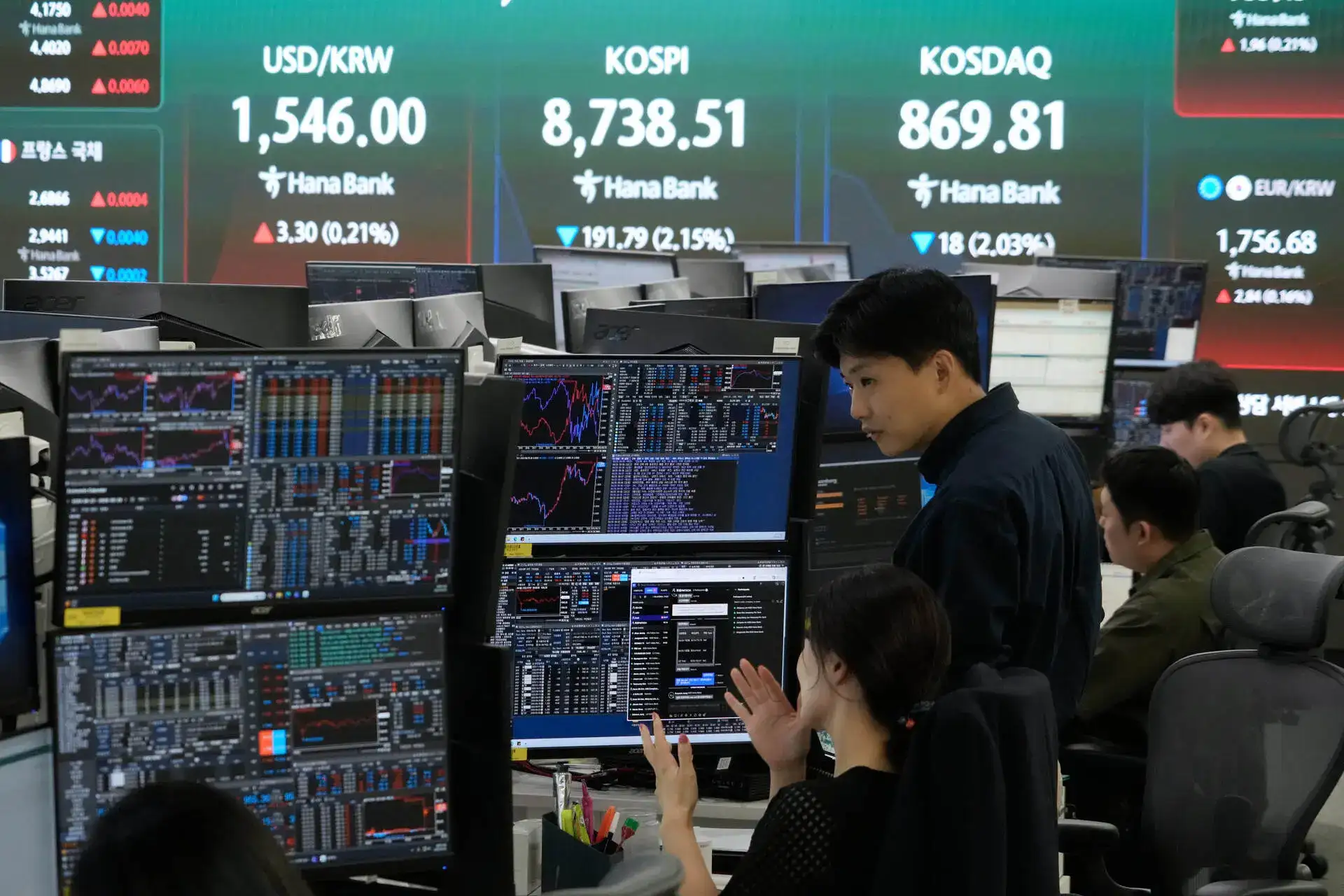

Asian authorities are stepping up efforts to stem a deepening stock-market rout, with China easing margin requirements, and Taiwan and South Korea rolling out intervention measures following Friday's plunge in US equities.
In China, the minimum margin requirement for investors buying securities with borrowed funds will fall to 80% from 100% on Nov 30, according to notices issued on Sunday by the Shanghai, Shenzhen and Beijing stock exchanges with approval from the China Securities Regulatory Commission. The exchanges had raised the ratio to 100% from 80% in January to curb leverage risks.
Read more: Anthropic's post-debut stumble delivers reality check for AI trade
Regulators said the latest adjustment is related to a marked decline in margin-financing activity and relatively low overall leverage. Brokerages can apply the revised rules to outstanding financing contracts when calculating available margin balances, while investors engaged in abnormal trading may face stricter requirements and other risk controls. The change could unleash nearly 400 billion yuan ($60 billion) in additional funds, the Xinhua News Agency reported Sunday, citing the regulator.
Read more: Global Market Today: Asian shares cautious as AI selloff fears persist despite US futures rebound
The moves add to a series of efforts by Beijing to restore confidence after a months-long rout pushed the benchmark CSI 300 Index into a bear market.
The gauge tumbled over 8% in October, its worst performance in more than a decade, as weakness in the economy and a sharp reversal in tech shares weighed on sentiment. Also, on Sunday, South Korea announced phased measures to calm markets amid rising volatility.