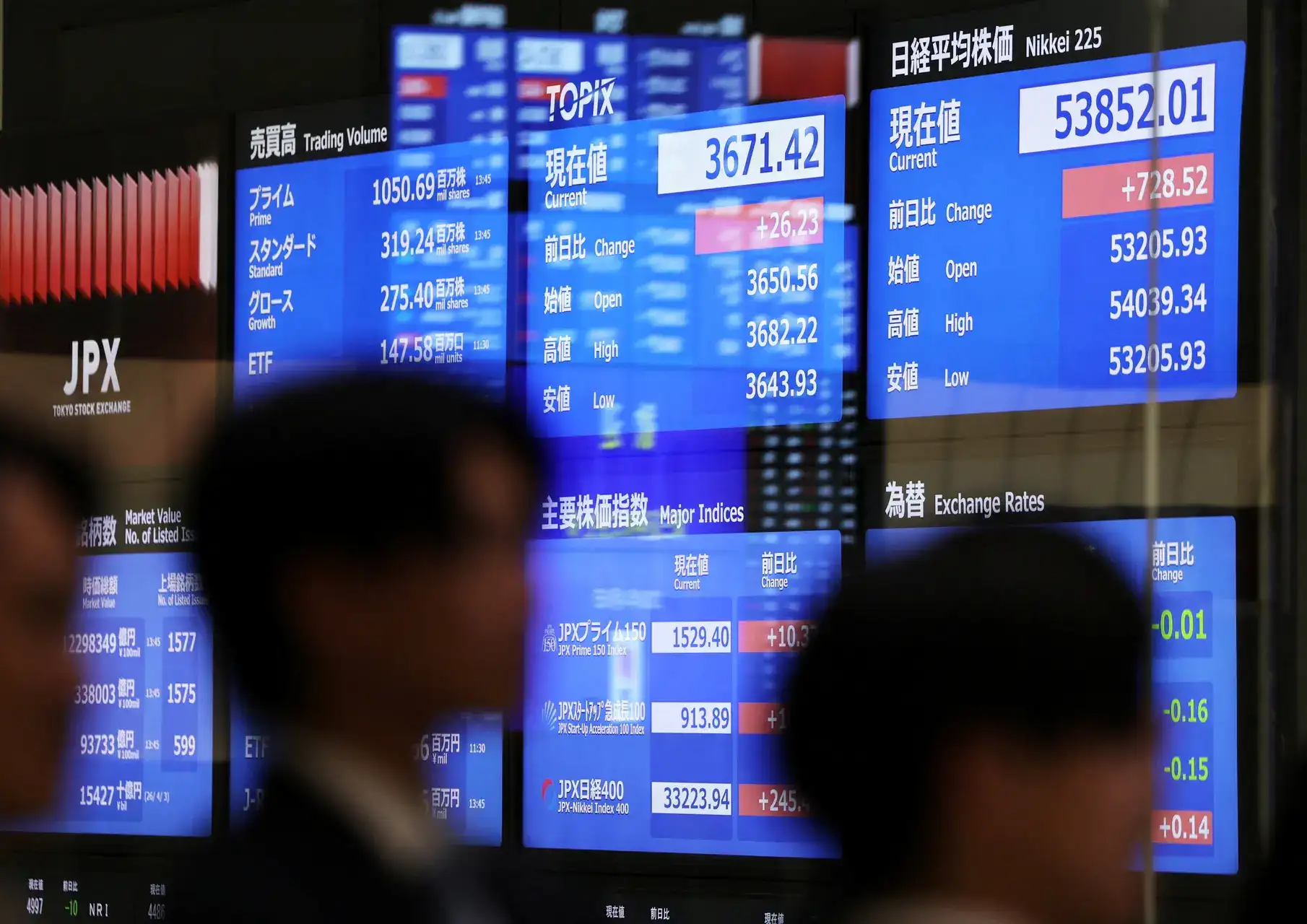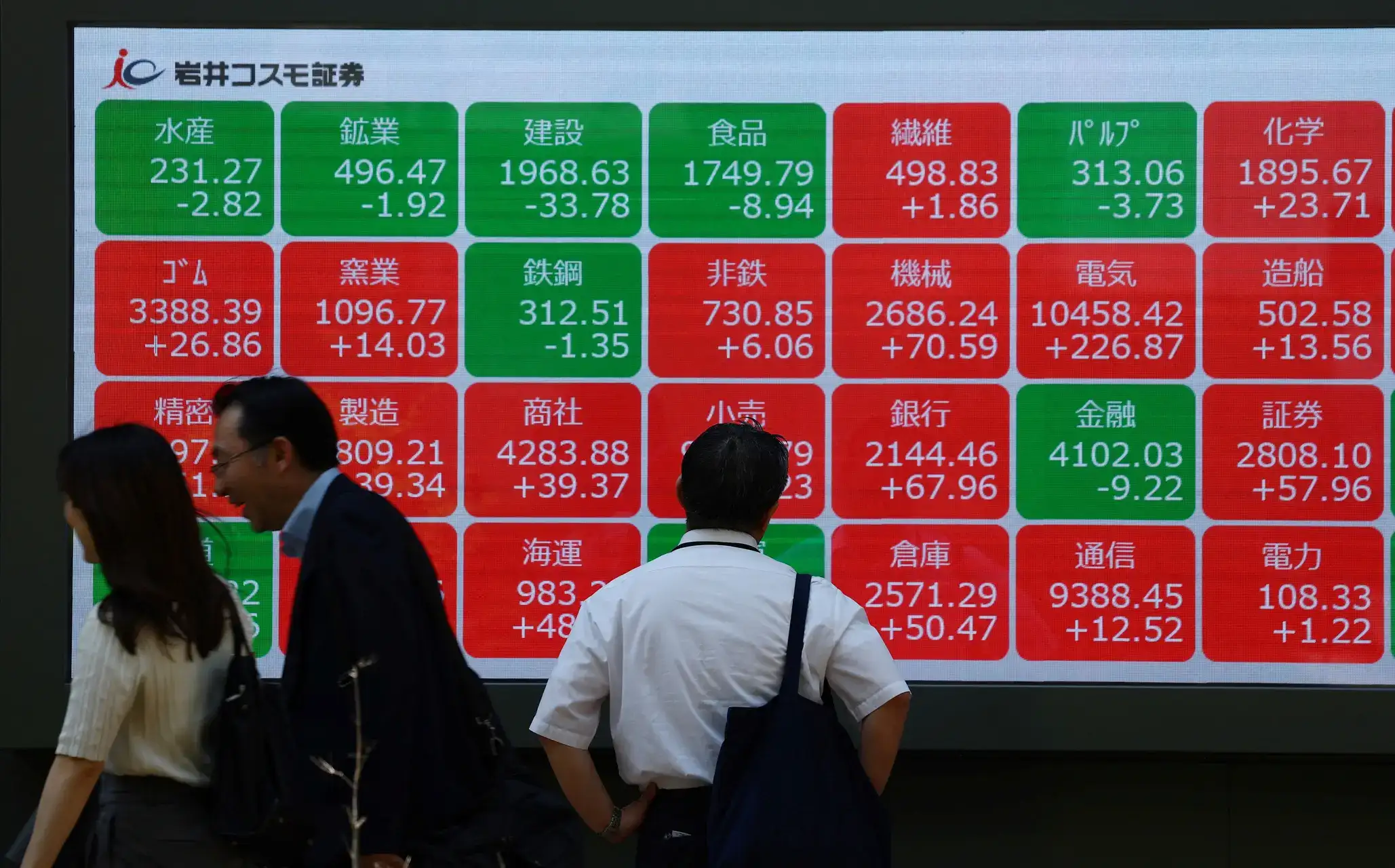

Asian markets turned red this week, and the pain was sharpest where the gains had been greatest. Korean and Taiwanese tech giants, the engines of Asia's semiconductor and AI rally, took the hardest hit. But veteran investor Manishi Raychaudhuri is not panicking. In fact, he sees an opportunity.
"I would rather treat this correction as a buying opportunity," Raychaudhuri told ET Now.
Global markets: Europe's STOXX 600 hits two-week low on Mideast escalation, AI jitters
Why Asia's tech stocks sold off
Three things converged over a single weekend to trigger the rout, and Raychaudhuri explains each crisply.
Tech stocks dive as Fed bets rattle AI rally
First, Broadcom's chip revenue guidance, while objectively strong at nearly $16 billion with 200% growth, fell marginally short of the inflated expectations markets had already priced in. Second, a stronger-than-expected US non-farm payrolls report reignited fears of a rate hike as early as the next Fed meeting. Third, renewed military tensions between Israel and Iran sent oil prices spiking again, adding another layer of macro anxiety.
Put these together and the result is a classic risk-off move; investors booking profits in precisely the stocks where they have made the most money. Hence, the tech-heavy Korean and Taiwanese markets bore the brunt.
But here is what has not changed: AI capital expenditure demand remains intact. Semiconductor and memory prices show no signs of coming under sustained pressure. Earnings estimates for Asia's chip sector are still pointing strongly upward. In Raychaudhuri's assessment, the fundamentals have not shifted, only the sentiment has, temporarily.
India's bigger problem: Earnings growth is falling, not rising
While North Asia's correction looks like a buying dip, India's situation is more structurally complicated, and Raychaudhuri is blunt about it.
Nifty and Sensex are currently trading around 19 to 20 times one-year forward earnings, a premium of roughly 30% over broader Asia ex-Japan markets. In absolute terms, that premium has now come down to its long-term historical average, having peaked at an extraordinary 87% over Asia at India's September 2024 highs.
But historical valuation parity alone will not bring foreign institutional investors back, he argues. The real problem is earnings. India's corporate earnings growth for FY27 is now estimated at just 9% to 9.3%, a single-digit number that Raychaudhuri calls "pedestrian." Crucially, that same estimate stood at 16% just nine months ago. Analysts have been cutting it steadily, the exact opposite of what is happening in China, Taiwan, and Korea, where earnings estimates are being revised upward.
For FII flows to return meaningfully, Raychaudhuri says two things need to happen: earnings growth must get back into double digits, and markets need to gain confidence that those estimates will hold rather than continue to erode.
Adding to the challenge is a subdued domestic consumption environment, driven by what he describes as a "tepid and uninspiring" employment situation. The earnings growth premium that India once reliably commanded over Asian peers can no longer be taken for granted.
The one Indian bet he still backs: Private sector banks
Despite the macro headwinds, Raychaudhuri remains constructive on one corner of the Indian market — large private sector banks — though with a clear time horizon attached.
His logic is straightforward. Any meaningful economic growth in India, whether driven by consumption or investment, has to be financed by banks. Within banking, private sector players hold only 30–35% market share but are consistently gaining ground over public sector rivals through superior technology and customer acquisition. HDFC Bank, once trading at four times price-to-book, now trades around two times — a far more reasonable entry point.
The near-term risk is real: banks make up roughly 30% of the Indian market, which means they absorb a disproportionate share of any FII selling. But for investors willing to look three to five years out, Raychaudhuri is staying positive.
India's story is not broken. It just needs better numbers to tell.