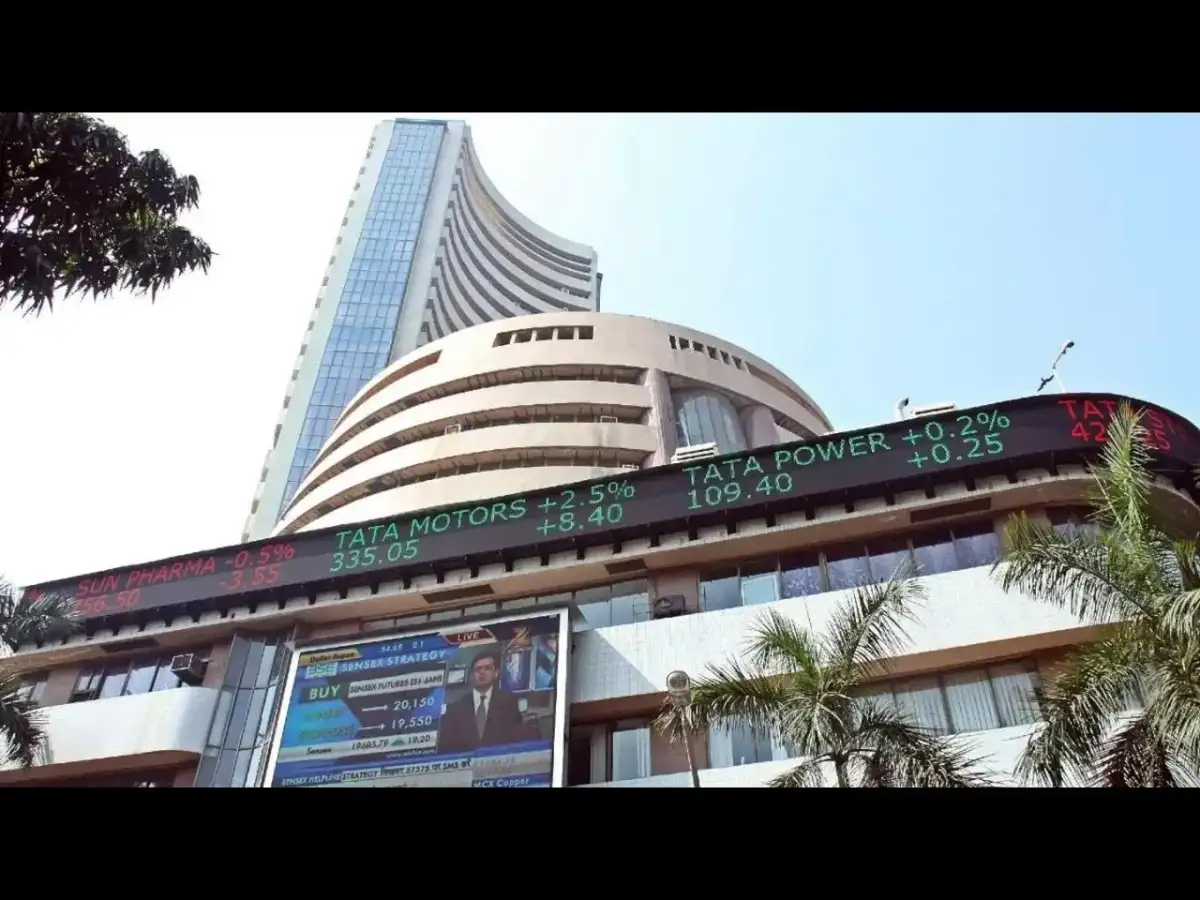
The Indian stock market wiped off all morning gains to close in the red on Tuesday, with Sensex and Nifty falling sharply during the closing auction session (CAS) even as oil prices and bond yields cooled down.
Sensex fell 330 points to close at 74,529. On its weekly futures and options expiry day, Nifty saw its indicative price tumble around 1% in 30 seconds from 23,349.5 to 23,133, before recovering some of the losses to close at 23,329.
Bajaj Finserv shares fell nearly 2% to lead losses on Sensex, while Trent, Bajaj Finance, Sun Pharma, TCS and UltraTech Cement shares dropped over 1% each. SBI, Infosys, L&T, ITC, HCL Tech, Hindustan Unilever, Bharti Airtel, Axis Bank, Kotak Mahindra Bank and Tech Mahindra shares fell nearly 1% each. Bucking the trend, Eternal and IndiGo shares gained nearly 2% each.
Broader markets also closed in the red, with Nifty Smallcap 100 and Nifty Midcap 100 indices dropping up to 0.4%. Among the sectors, Nifty IT fell nearly 0.9% while Nifty Realty gained 0.9%. The overall market breadth turned negative, with NSE seeing 1,868 declines against 1,679 advances.
What lies ahead for Dalal Street?
Indian equities turned volatile today after an early recovery attempt, with the Sensex and Nifty giving up gains as selling intensified at higher levels, said Vikram Kasat, Chief Business Officer of Advisory and Dealing at PL Capital. He noted that the Nifty is trading around 23,300–23,350, while the Sensex remains around 74,500–74,700, with IT stocks under pressure amid concerns over the demand outlook. Brent crude has rebounded to around $99-100 a barrel after four consecutive sessions of declines, while foreign outflows and geopolitical uncertainty continue to weigh on sentiment and keep inflation and import-cost concerns in focus.
The rupee remains around Rs 95.8 per dollar, while gold and silver continue to see volatility amid shifting global rate expectations. With the Nifty testing the 23,300–23,350 zone, investors should avoid chasing short-term rallies, stagger investments, focus on fundamentally strong companies with earnings visibility, maintain diversification and keep adequate liquidity to capitalise on meaningful market corrections, according to the analyst.