

As the government Tuesday shared the texts of three Bills it proposes to introduce in Parliament — during the extended three-day Budget Session starting Thursday — on the delimitation of constituencies for early implementation of women’s reservation in Parliament and state Assemblies, differences among southern states came to the fore.
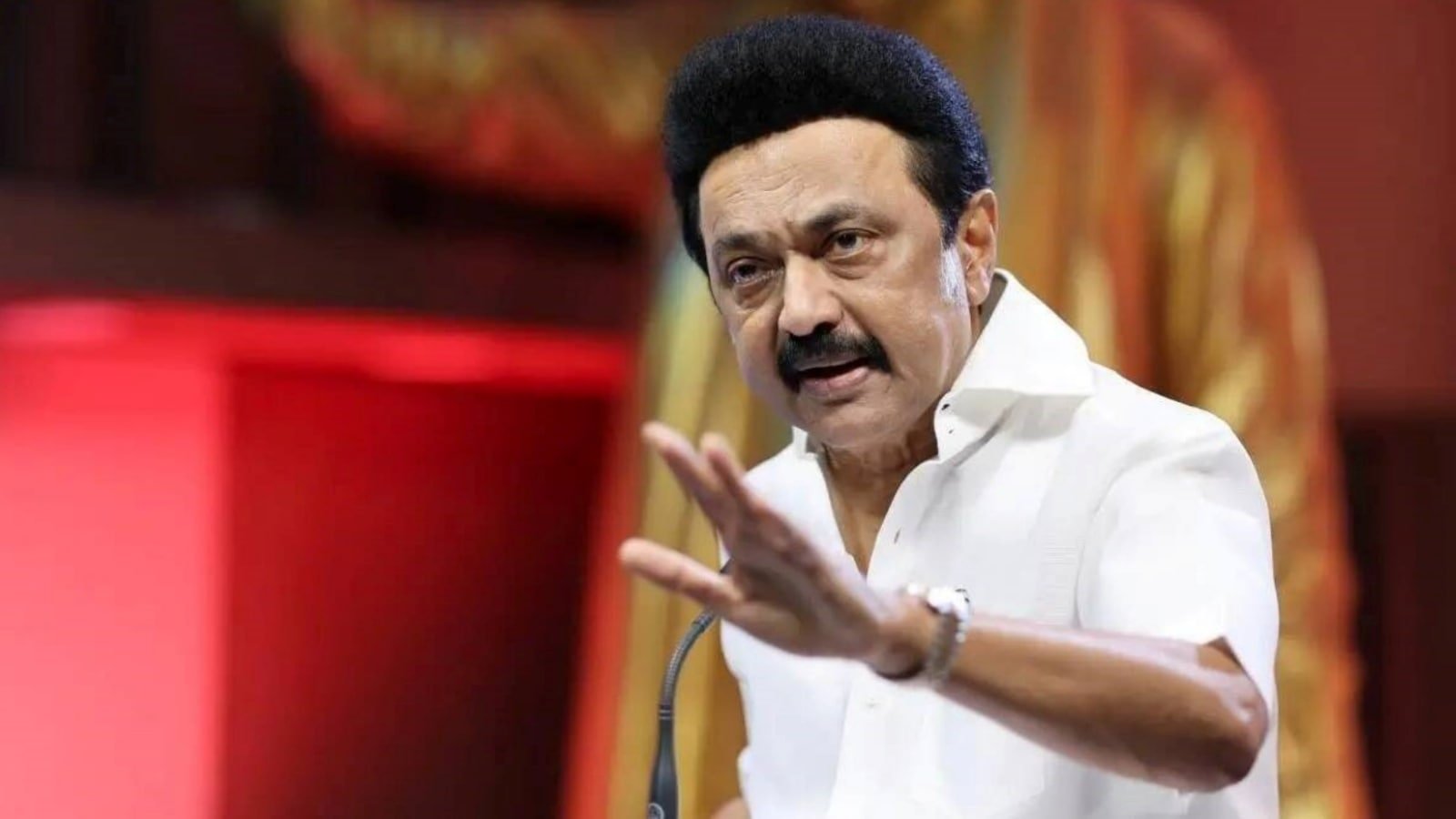
While Tamil Nadu Chief Minister M K Stalin warned the BJP-led Centre against bulldozing “through a Constitutional amendment” in the midst of Assembly elections and said his state would protest if the “political power of northern states” goes up disproportionately, his Telangana counterpart Revanth Reddy pushed for “broad-based consultations and consensus building”. BJP ally TDP, which is in power in Andhra Pradesh, however, said the government’s moves were along the lines discussed with Opposition floor leaders and that seats across states would be increased by 50% on a pro rata basis.
“Women’s reservation law will be implemented and the delimitation process will be completed before 2029. The seats will be increased by 50% pro rata basis across the states,” TDP MP Lavu Krishna Devarayalu told The Indian Express. While sources in the NDA said the Lok Sabha was expected to pass the Constitution (One Hundred and Thirty-First Amendment) Bill, 2026, on fast-tracking the implementation of the women’s reservation law on April 17, a senior BJP leader said the government was open to sending the Delimitation Bill, 2026, to a Joint Commitee of Parliament that would then come back with a time-bound report.
Sources said top leaders in the government had multiple rounds of discussions with Andhra Pradesh Chief Minister and TDP president N Chandrababu Naidu over both the changes to the Nari Shakti Vandan Adhiniyam — as the women’s reservation law is known — and the Delimitation Bill. However, some TDP leaders expressed apprehension about the way the Delimitation Bill had been prepared. “Too much has been left to the executive to decide. The assurance that delimitation will not affect the southern states, as it will be done on a pro-rata basis, could have been part of the Bill. Now it is going to be cleared in framing of the rules or terms of reference,” said a TDP leader.
Also Read | Delimitation, women’s reservation, balancing North-South divide: Key takeaways from govt’s proposed Bills
Earlier in the day, in a video message with English subtitles posted on X, Stalin said, “In this session, the Union government intends to bulldoze through a Constitutional amendment on delimitation. From the beginning, we have cautioned against this … When the Union government urged us to control population growth, to have smaller families, and to follow family planning measures, we complied. Is this now the punishment for having done what was asked of us with discipline? We demanded that the Honourable Prime Minister provide a clear assurance in Parliament that southern states would not be affected. There has been no response.”
Stalin accused the NDA of moving ahead with the move “unilaterally” and termed the “hurried attempt” to push through legislative business related to delimitation a “blatant assault on democracy by the BJP government” as well as a direct assault on states. “… our Members of Parliament will participate. But if anything is done which harms Tamil Nadu or that disproportionately enhances the political power of northern states, we in Tamil Nadu will not remain silent … Every family will take to the streets… this is a warning,” the Tamil Nadu CM said.
Revanth Reddy sought national and political consensus on increasing seats in the Lok Sabha and an immediate implementation of women’s reservation without linking it to the increase in seats. “Regarding the Women’s Reservation Bill, I state in unequivocal terms that the Congress fully supports it. Kindly immediately implement it for the Lok Sabha, as is, with current 543 seats, and even for all Assemblies. The political empowerment of women is not merely a legislative reform but a moral imperative of our polity,” he wrote in an open letter to PM Narendra Modi, urging him to convene an all-party meeting on the issue at the earliest.
Story continues below this ad
Also Read | Bills on delimitation, expanded Lok Sabha, women’s quota rollout revealed: What they say
“Regarding delimitation, there have been delimitations before without changing the number of seats. The country can undertake such an exercise. The real contentious issue is the proposal to increase Lok Sabha seats to 850 seats and this is to be done on a pro rata basis … An increase in seats based on pro rata, without considering economic contribution and socio and human developmental outcomes, will lead to a severe and irreversible distortion in the federal balance of our country. Fair regional representation and role in national matters is crucial to building a strong Viksit Bharat,” Reddy said.
Accusing the Centre of not having fully and carefully analysed or assessed the consequences of its proposals, especially for the southern states, Reddy sought to emphasise that Telangana, Tamil Nadu, Karnataka, Andhra Pradesh, Puducherry, and Kerala, over the past several decades, had consciously adopted population stabilisation and improved public health.
“The Bills received late on April 14 are bristling with contradictions, errors and unsustainable illegalities. Absence of states’ respective proportions is only one of these glaring omissions. All the bloopers shall be pointed out while fully endorsing and asking for women’s reservation on the basis of the 2010 and 2023 initiatives and Bills,” senior Congress MP Abhishek Manu Singhvi told The Indian Express.
RJD MP Manoj Jha said the documents placed before MPs “offer little clarity”. “Even widely discussed indications from within and around Parliament find no reflection in the text. This opacity raises a reasonable apprehension that the government is withholding its full intent, making the urgency around the amendment appear more façade than reform. In effect, the proposal opens the door to early delimitation and a substantial expansion of the Lok Sabha,” he said.
Story continues below this ad
Trinamool Congress’s (TMC) Deputy leader in the Rajya Sabha, Sagarika Ghose, linked the move to the West Bengal and Tamil Nadu Assembly polls. “The attempt to bulldoze a delimitation exercise under the guise of women’s representation assaults federalism and will result in the BJP getting wiped out from Bengal and Tamil Nadu after the elections,” she told The Indian Express.
CPI(M) Rajya Sabha MP John Brittas said the Bills were a “death warrant for federal India”. “The unity of this country rests on three pillars: democracy, secularism, and federalism. This government is a threat to all three, and it’s amply demonstrated in these Bills.”
Some BJP leaders pointed to the conundrum that the Opposition would face. “If they agree with every point, the Centre will get the credit. Otherwise, we can criticise the Opposition for taking shelter behind delimitation to stall immediate reservation for women,” said a leader.
Some party leaders said the government’s “determination” to implement women’s quota could help the BJP win the confidence of women voters in West Bengal, where women are a major support base of TMC chairperson Mamata Banerjee. A senior BJP MP said the passage of the women’s reservation law in September 2023 “definitely reflected in the BJP’s stunning performance in the state elections in Rajasthan, Madhya Pradesh and Chhattisgarh”.
Story continues below this ad
“The setback in the Lok Sabha election was for various other reasons … Now that Muslims and women continue to be the biggest strength of Mamata Banerjee in West Bengal, this move could benefit us electorally,” he said.
