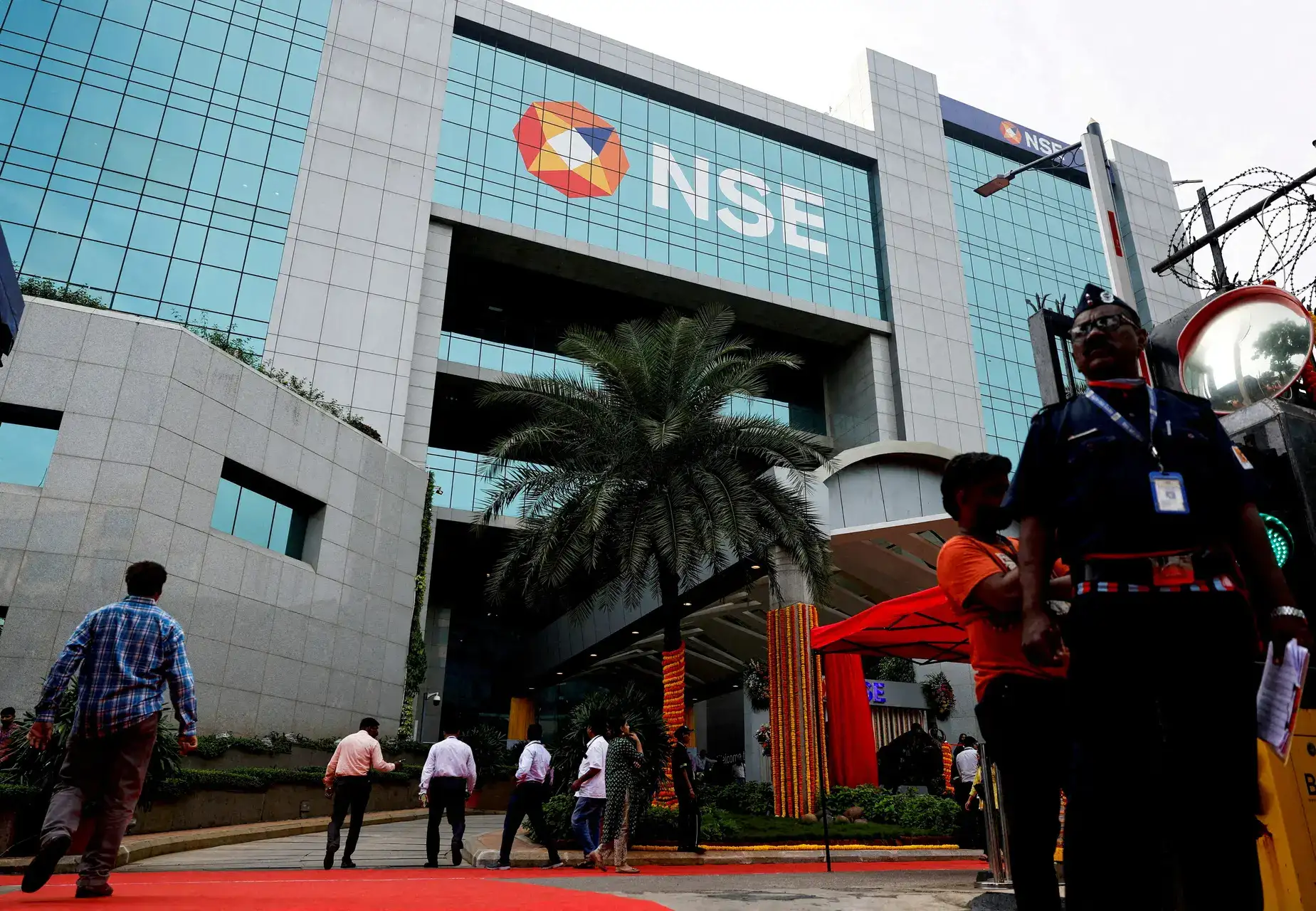

Mumbai: The National Stock Exchange (NSE), the world’s biggest bourse by equity-derivative trading volumes, has got regulatory approval for listing its shares, putting the spotlight on public trading in the stock of financial-exchange operators that are central to efficient capital flows.
The NSE initial public offering (IPO), likely raising up to Rs 31,500 crore in India’s second-biggest announced share sale, could make the institution-owned bourse among the top exchange operators globally by market value when its stock begins trading on the erstwhile broker-led Bombay Stock Exchange (BSE). The BSE, Asia’s oldest bourse, was the first Indian exchange to list its stock early 2017.
Quest for efficiency, the very reason for the existence of trading floors, quickened public listing by stock-exchange operators that otherwise ran as exclusive, member-led ‘mutual’ associations for centuries in Europe and the US. Three decades ago, a phased introduction of electronic trading platforms, which replaced physical trading floors and made state frontiers redundant, forced a capital restructuring exercise described formally as ‘demutualisation’ of stock exchanges.
Demutualisation was the first step in broadbasing ownership of broker-led financial exchanges through the formation of common-stock companies. An eventual listing followed of these stock-exchange owners – from Tokyo to New York – over the first two decades of this millennium. The NSE is perhaps the only major institution-owned exchange operator that remains unlisted to date. Others that remain so are generally state owned.
The Australian exchange owner remains the first company in the world to list its own stock for trading on October 14, 1998.
What's demutualisation?
It’s a process that replaces the ownership of an entity – in this case a financial exchange operator - from a ‘mutually agreed upon’ association to a company structure with a specified equity share capital.
Demutualisation, its backers said, builds an efficient structure that immediately creates liquidity – if the securities are listed – and provides the much-needed currency that allows merger, acquisitions, carveouts, spin-offs, and other corporate outcomes considered difficult for a ‘mutual’ association to achieve.
Read more: MCX electricity futures clock record Rs 245 crore turnover as OI touches all-time high
Where did 'demutualisation' begin?
Curiously, Wall Street was a relative straggler because technology alone couldn't pose an immediate credible threat to its vast, captive domestic market. By contrast, smaller Nordic markets - Sweden, Denmark, Finland, for instance - faced an immediate existential threat as automation moved a large part of regional stock trade to London as early as late 1980s.
By 1993, the 'demutualisation' wave gripped Scandinavia, with the Stockholm exchange replacing its member-driven ownership with a company structure. Physical 'seats', or privileged broker representation on trading floors, lost their appeal in the electronic-trading era in Nordic nations. By contrast, the value of a 'seat' exceeded $3 million before the New York Stock Exchange (NYSE) eventually listed after a complex three-way merger more than a decade later - one year after its current parent had listed its stock in 2005.
Which exchanges were among the first to list globally?
The Australian exchange - or ASX - was the first to list in the world. It listed its own stock on its own trading board in 1998.
In the US, the CME Group, which owns the Chicago Board of Trade (CBOT), Chicago Mercantile Exchange, Nymex, and Comex, was the first to list - on the NYSE - on December 6, 2002. The Singapore and Hong Kong Exchanges were among the first in Asia to list.
The current parent company of NYSE, the Intercontinental Exchange (ICE), listed on November 16, 2005. The NYSE group listed a year later, but was in turn acquired by ICE by 2013.