

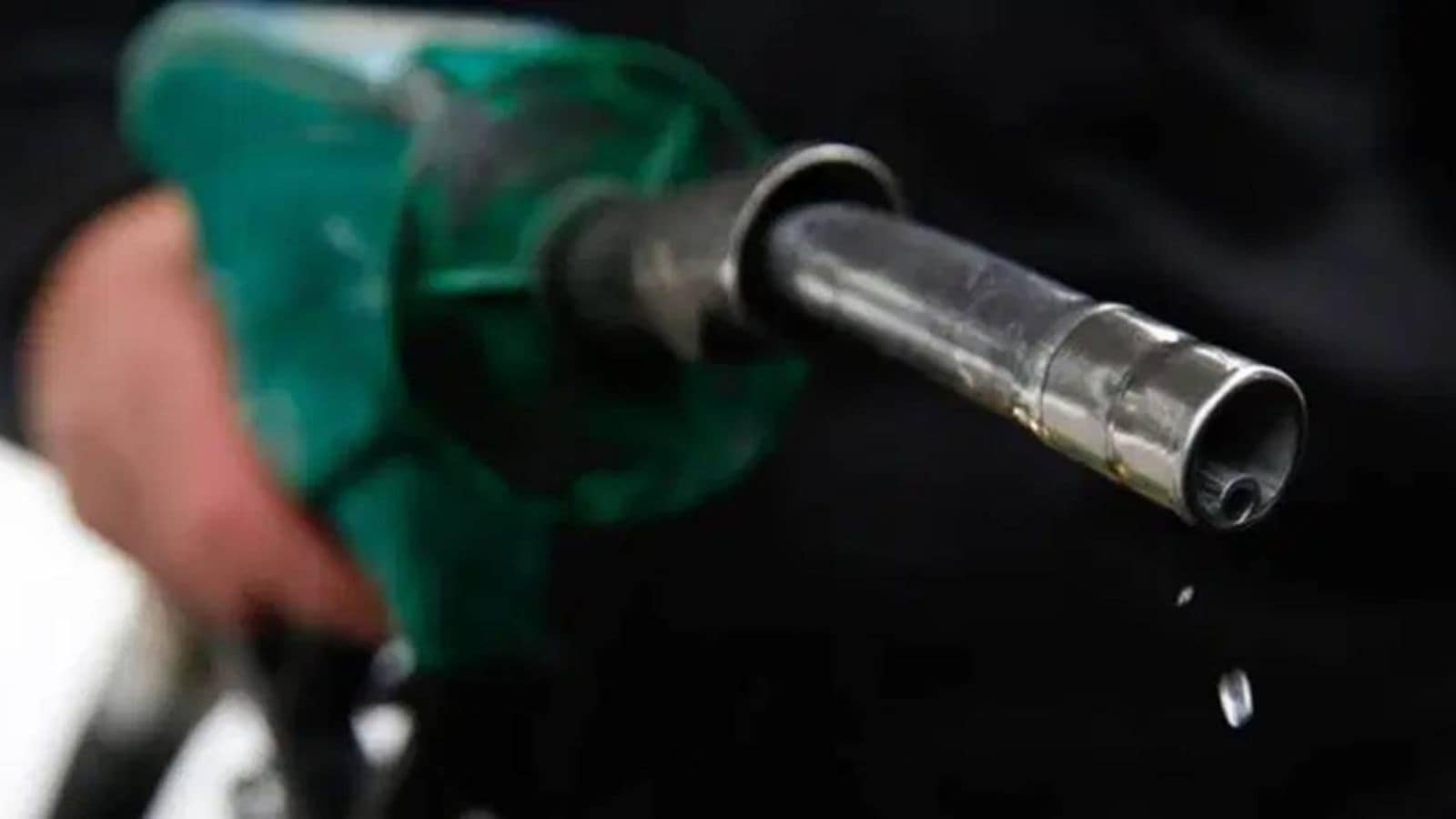
Public sector oil marketing companies (OMCs) are incurring heavy losses on fuel sales amid the global price surge due to the West Asia war, but the government’s endeavour continues to be to keep prices stable for the common consumer, according to a top government source. The government is also not considering any proposal to ration fuels like petrol and diesel as there is no shortage of these fuels in the country, the source added.
Notably, the OMCs’ combined losses in April-June quarter could wipe out their cumulative profits for the full financial year 2025-26 (FY26) if the global prices continue to remain high, the source said.
“We have not increased prices in four years. Everyone wants prices to be stable. The government by default doesn’t want the prices to change,” said the source, but declined to comment for how long the OMCs can continue holding prices as there is no end in sight to the Strait of Hormuz crisis.
“A primary function of the OMCs is to maintain price and supply stability. It is a sovereign function that they perform,” said the source, who didn’t wish to be identified.
On whether fuel rationing may be considered, the source said that there is “no rationing in the play” as rationing is done when there is shortage of fuel, which is not the case in India as the country is a net exporter of major fuels like diesel and petrol. The crisis has led to retail fuel price surges in a number of countries, with some even forced to ration fuel supplies. There has been no rationing of petrol and diesel in India, although it was done for commercial and industrial liquefied petroleum gas (LPG) in order to prioritise cooking gas supplies to households.
On Sunday, Prime Minister Narendra Modi had appealed for conservation of petroleum products among other measures aimed at conserving the country’s valuable foreign exchange reserves amid the ongoing West Asia crisis. India depends on imports to meet close to 90% of its crude oil requirement, making the economy and forex reserves vulnerable to oil price shocks.
Also Read | Why PM Modi has asked Indians to reduce spending on gold, petrol, edible oils
The three OMCs—Indian Oil, Bharat Petroleum, and Hindustan Petroleum—have not hiked regular petrol and diesel prices despite the global oil and fuel price surge due to the West Asia war. In fact, prices of the two automobile fuels have not been hiked for over four years now—since April 2022. As for LPG sold to households as a cooking fuel, the last price hike was in early March, and was only a fraction of the actual price escalation in the international market.
Story continues below this ad
The OMCs are estimated to be incurring daily losses worth about Rs 1,000-Rs 1,200 crore, the source said, which means that if the status quo on prices persists, they could be staring at combined losses of over Rs 90,000 crore for the first quarter of FY27. While the OMCs have not announced their FY26 earnings yet, the source said that their cumulative profit for the year could be about Rs 76,000 crore.
According to industry sources, the OMCs are currently losing Rs 14 per litre on sale of petrol, Rs 42 per litre on diesel, and Rs 674 per 14.2-kg cylinder on LPG. The OMCs are also incurring losses on sale of jet fuel for domestic flights as only a partial pass-through of international prices was effected.
Deliberations around potential fuel price hikes have picked up pace within the government in recent days, it is learnt. Moreover, the government currently has no plan to compensate the OMCs for their losses on sale of petrol, diesel, and jet fuel below market prices, which was being seen as an indication that a price hike could be on the cards. In the case of LPG, the government had in the past stepped in to cushion the impact, and such an intervention can’t be ruled out even this time around, sources indicated.
With the effective halt in vessel movements through the Strait of Hormuz—from where one-fifth of global oil and natural gas flows usually transited—global energy supplies have been hit and prices have skyrocketed. India depends heavily on oil and gas imports to meet its energy needs, and fuel prices in the country are linked to global oil and fuel price benchmarks.
Story continues below this ad
While the government had slashed excise duty by Rs 10 per litre on petrol and diesel late March to blunt the impact of high international prices on the OMCs, the retailers continue to bleed heavily on fuel sales. The excise duty cut has resulted in the government foregoing revenue of about Rs 14,000 crore a month, Petroleum Ministry Joint Secretary Sujata Sharma had said on Friday. Had the government not intervened with the excise duty reduction, this loss would also have been borne by the three OMCs.
The timing of the current global surge in prices, which clashed with assembly elections in some states, made it politically fraught for the prices to be hiked. With the elections now over, a hike in prices of fuels like petrol, diesel, and the domestic LPG could be in the offing in the coming days or weeks, highly placed sources in the government had earlier said. Throughout March and April, the Petroleum Ministry assured consumers that there was no proposal to hike fuel prices.
Petrol is currently priced at Rs 94.77 per litre in Delhi, and diesel at Rs 87.67 per litre. Domestic LPG is priced at Rs 913 per 14.2-kg cylinder in the capital. Fuel prices vary across states due to differences in state levies.
Oil prices have been extremely volatile since the West Asia war began, but the petrol and diesel prices have not been hiked to protect the domestic consumer from this volatility. The Indian crude oil basket, which averaged $70 per barrel last year, averaged over $113 in April. Furthermore, Indian refiners incurred high additional costs due to emergency crude sourcing and a surge in shipping and insurance rates, among others.
Story continues below this ad
While the retail prices of petrol and diesel are deregulated, in practice, the government-owned OMCs—with 90% market share in fuel retail—have kept prices stable in consultation with the government. They incur heavy losses when international oil prices surge, and earn hefty profits when the prices slump.
