Foreign investors pulled nearly $5 billion from India-focused offshore funds and ETFs during the March 2026 quarter, raising concerns about whether global investors are reassessing their outlook on one of the world's fastest-growing major economies.
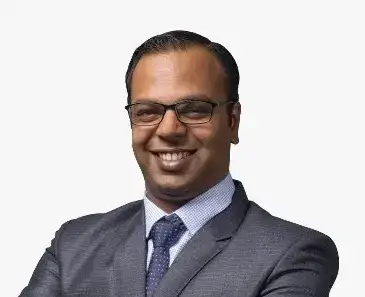
However, Himanshu Srivastava, Principal Analyst at Morningstar India, believes the outflows should not be interpreted as a loss of confidence in India's long-term growth story.
In this edition of ETMarkets Smart Talk, Srivastava explains that the selloff was driven largely by a combination of global risk aversion, elevated US yields, geopolitical uncertainties and stretched valuations in certain pockets of the Indian market.
He argues that foreign investors are becoming more valuation-conscious rather than structurally bearish on India, while highlighting the resilience shown by domestic investors during the correction.
Srivastava also shares his views on the growing role of passive investing, the future of India's weight in global emerging market portfolios, the impact of currency movements on foreign flows, and why the country's structural growth narrative remains firmly intact despite near-term volatility. Edited Excerpts –
Kshitij Anand: In your report, you suggested that India-focused offshore funds and ETFs saw net outflows of nearly $5 billion in the March 2026 quarter. How much of this is India-specific, and how much is simply global risk aversion at play?
Himanshu Srivastava: I would say the outflows were driven by a combination of both global and India-specific factors, though global risk aversion was probably the larger driver during the quarter.
Globally, the investment environment turned extremely challenging for emerging markets. We had heightened geopolitical tensions in the Middle East involving the US, Israel, and Iran. We had a stronger dollar, elevated US bond yields, and uncertainty around the timing of Fed rate cuts. All these factors reduced global risk appetite among investors and led them to move towards safer assets such as US Treasuries and the dollar.
At the same time, India-specific factors also contributed. Indian equities were trading at relatively premium valuations compared with several other emerging markets, especially in the mid- and small-cap segments. After the strong rally over the years, many foreign investors chose to book profits as earnings growth expectations moderated.
If you look at these flows, they were not a reflection of a loss of confidence in India's long-term structural story. Rather, it was a phase where global risk-off sentiment coincided with a valuation recalibration in Indian markets.
One of the most important factors we observed was that, during this correction and challenging market environment, domestic investors remained very resilient. They cushioned the markets from a deeper correction and prevented sharper dislocations. That, in itself, reflects confidence in India's long-term fundamentals.
Kshitij Anand: Despite strong domestic fundamentals, FIIs remain aggressive sellers. Can we say that foreign investors have become more valuation-sensitive when it comes to India?
Himanshu Srivastava: Well, that is increasingly becoming more visible now.
Historically, foreign investors were willing to pay a premium for India because of its stronger growth outlook, relatively stable macroeconomic environment, and better earnings visibility compared with many other emerging markets. However, valuations in certain pockets, as we discussed earlier, especially in the mid- and small-cap segments, had become quite stretched.
As a result, FIIs are now becoming more selective and valuation-conscious. They are not just evaluating India's growth story; they are also looking at the price they are willing to pay for that growth and that story.
During periods of global uncertainty and tight liquidity, investors naturally compare opportunities across markets, and premium valuations can lead to some profit-booking. That is what we have seen.
That said, this does not mean foreign investors are turning negative on India from a structural perspective. The long-term India story remains intact, but investors are now more sensitive to valuations and earnings visibility.
Kshitij Anand: In the report, you also suggested that ETFs were relatively more resilient than actively managed offshore funds. Does this indicate a structural shift towards passive investing in India globally?
Himanshu Srivastava: I would avoid calling it a complete structural shift at this stage, but there is definitely a gradual increase in the role of passive investing within India allocations globally. Yes, these could be early signs, but the growth has been quite gradual in nature.
Globally, ETFs have been gaining traction because they are cost-efficient, liquid, and operationally flexible. During volatile periods, investors often prefer ETFs because they allow quicker tactical allocation changes and offer an easier entry and exit mechanism compared to traditional active funds.
That is exactly what we observed during the quarter as well. While both segments witnessed outflows, ETFs were relatively more resilient than actively managed offshore funds.
However, it is important to note that actively managed India-focused offshore funds still account for nearly 70% of the category's assets. That suggests many foreign investors still believe active management can add value in a market like India, where stock dispersion, sector rotation, and alpha opportunities remain significant.
So, rather than a complete shift away from active investing, I would describe it as a broadening of investor preferences, where passive vehicles are increasingly being used for tactical and flexible allocations, while active funds continue to remain relevant for long-term India allocations.
Kshitij Anand: The sharp correction in mid- and small-cap stocks triggered profit-booking globally. Do you think foreign investors are becoming more cautious about the India growth story? The reason I ask is that mid- and small-cap stocks are often seen as carrying much of the India growth narrative.
Himanshu Srivastava: I would differentiate between caution on valuations and caution on the India growth story. I think they are two very different aspects altogether.
I do not think foreign investors are losing confidence in India's long-term potential. India continues to benefit from strong domestic demand, infrastructure spending, and relatively healthy economic growth.
What changed was that valuations in the segments we discussed had become quite expensive. During a phase of global uncertainty, investors naturally become more selective and cautious. In that sense, the outflows and the correction were more of a valuation reset or recalibration rather than a rejection of the India growth story.
This is just one quarter in which we have seen significant outflows. To get a much clearer picture, we need to wait for more time, more data, and more information to emerge before calling it something structural in nature.
If conditions improve from here, these trends can easily reverse. We have seen similar situations in the past, and reversals have occurred when the environment became more supportive.
Kshitij Anand: Looking at the bigger picture, do you think India's weight in global emerging market portfolios can continue rising over, let's say, the next five years despite near-term volatility?
Himanshu Srivastava: India's weight in global emerging market portfolios has increased meaningfully over the years and is now an important part of the emerging market universe. Its representation in global indices is already significant. I think it is only behind Taiwan, China, and South Korea, at around 11% to 11.5%. I do not recall the exact figure, but it is somewhere around that level.
This has largely been supported by India's relatively stronger economic growth, expanding market capitalisation, improving corporate earnings profile, and increasing participation from global investors.
While we have seen outflows in recent times, we have also seen global investors return to India whenever they identify compelling opportunities and believe valuations offer better value than what we are seeing at present. Again, this could be a temporary phase.
At the same time, flows and allocations can fluctuate in the short term because of factors such as global risk sentiment, valuations, currency movements, and liquidity conditions. So, near-term volatility may impact flows intermittently.
India continues to remain a very significant market within the broader emerging market landscape, and one simply cannot ignore India. Therefore, India's weight can rise further going ahead, although the path may not be linear. If the fundamentals remain intact and the global environment remains supportive, I do not see a reason why India's allocation will not increase over time.
Kshitij Anand: What role do currency expectations play in global investors' decisions on India allocations?
Himanshu Srivastava: Currency plays a very important role because foreign investors ultimately measure returns in dollar terms.
Even if Indian equities deliver positive returns in local currency terms, rupee depreciation can reduce or even wipe out those returns when measured in dollars. Therefore, when the rupee is under pressure—for example, due to higher crude oil prices, a stronger dollar, or widening external imbalances—FIIs tend to become more cautious. Recent rupee depreciation is a good example of this.
That said, it is important to understand that currency weakness does not automatically make India unattractive. If investors believe that earnings growth and market returns can more than compensate for currency depreciation, they will continue to allocate capital to India.
However, a stable rupee, or one that depreciates gradually, is generally more comfortable for long-term foreign investors than a currency experiencing sharp volatility.
Kshitij Anand: Lastly, passive products such as ETFs are gaining market share globally. Could India eventually see a much larger ETF-driven foreign ownership structure?
Himanshu Srivastava: I do not think active management will lose relevance in India anytime soon. However, I do believe that foreign investor participation in Indian markets through ETFs could see a gradual increase.
Globally, ETFs are gaining market share because they are cheaper, more liquid, transparent, and easy to use for tactical allocations. For foreign investors, India-focused ETFs provide a quick way to increase or reduce exposure without taking on individual stock-selection or manager-selection risk. That is one reason why ETFs tend to remain relatively resilient and are often used for short-term allocation decisions.
However, India remains a market where active managers can potentially add value because of wide sector dispersion, stock-specific inefficiencies, and the breadth of opportunities across the large-, mid-, and small-cap universe.
Therefore, the likely outcome is not passive investing replacing active investing, but rather passive investing acting as a co-pilot to active investing in foreign investors' portfolios, particularly for tactical and benchmark-linked allocations.
(Disclaimer: Recommendations, suggestions, views, and opinions given by experts are their own. These do not represent the views of the Economic Times)