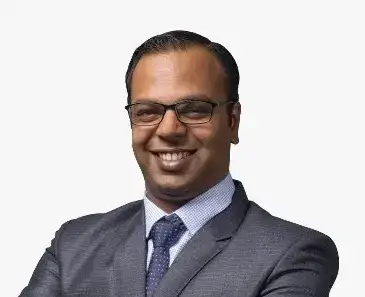

For months, a puzzling divergence has played out on Indian exchanges: even as marquee Nifty 50 constituents have struggled, the mid and smallcap universe has quietly — and then loudly — raced ahead. Rajesh Kothari, Chief Investment Officer at AlfAccurate Advisors, which manages over ₹3,500 crore in PMS, has a clear explanation, and it comes down to one word: earnings.
"The earnings delivery is what is basically the driving factor, be it a megacap, be it largecap, be it midcap or smallcap," Kothari told ET Now. The difference, he argues, is that the headwinds buffeting India's biggest companies — commodity volatility, muted IT services demand, oil marketing swings — simply do not apply to a large swath of the mid and smallcap universe. "Moment you look at 50-plus companies up to 1000 companies, there are so many opportunities."
Also Read
These companies are no longer the fragile bets they once were
Perhaps Kothari's most striking argument is structural. The Indian midcap universe, he says, has undergone a fundamental transformation over the past five years, one that the market still underappreciates. Debt-heavy, cyclically vulnerable companies have been replaced by profitable, cash-generative businesses with fortress balance sheets.
Largecap funds lag mid and smallcaps across time horizons. Should investors still allocate for stability?
"With a ₹400-crore profit size, with a ₹1,000-crore profit size, actually they are no more small, they are no more mid — they are actually big," Kothari said. The significance extends beyond semantics. When companies carry zero debt, they survive economic downturns rather than collapse under them. And when cycles turn upward, they participate with full force. "That is what right now the status of most mid and smallcap companies."
"Earlier, whenever there was an economic storm, mid and smallcap companies used to go down much because they were highly leveraged. But in the last two, three, four, five years many of these companies have become debt-free — and when you become debt-free you survive the downturn," says Kothari.
Sectors to watch: 6 themes AlfAccurate is betting on
Kothari manages the India Opportunity Plan, AlfAccurate's flagship PMS product with over ₹2,000 crore in assets. He outlined the key sector bets shaping the portfolio right now:
Electronic Manufacturing Services (EMS)
Make in India + PLI + China+1 driving capacity build. Entering aerospace, defence, high-margin segments.
Capital Goods & HVDC
Data centres, nuclear power, smart grid electrification. "Primary beneficiary of HVDC capex."
Auto Ancillaries
Content per vehicle rising; premiumisation accelerating. Platform-agnostic plays cover both ICE and EV.
Consumer Discretionary
GST cuts + aspiration-meets-affordability retail. Watches, security cameras, building materials.
Banking & Finance (BFSI)
Credit growth reviving from single digits to 13%. NIM pressure easing; asset quality healthy.
Defence & Aerospace
EMS players diversifying into this segment. Base-building for aerospace offers long runway.
IT services: A long time correction could be just beginning
While Kothari is broadly bullish, AlfAccurate is nearly fully invested with only 3–5% cash, he is unambiguously cautious on one major sector: traditional IT services. And his reasoning is unusually precise.
"There is a price drop that has happened, but there is a corresponding earnings growth reduction," he explained. On a price-to-earnings-growth (PEG) basis, most IT services names still trade at roughly three times — far richer than mid and smallcap growth companies available at 1 to 1.7x PEG. "The valuations have not yet corrected. The headwinds are not moving out."
Caution: Kothari flags IT services could see a prolonged 12–24 month period of sideways movement, as earnings remain under pressure from a weak global ER&D cycle and tepid demand recovery. "We are not yet positive on IT services sector in general." Software product companies, however, have already revived, and — he holds positions there.
The big picture: "200 companies grew earnings 15%-plus even when the market was flat"
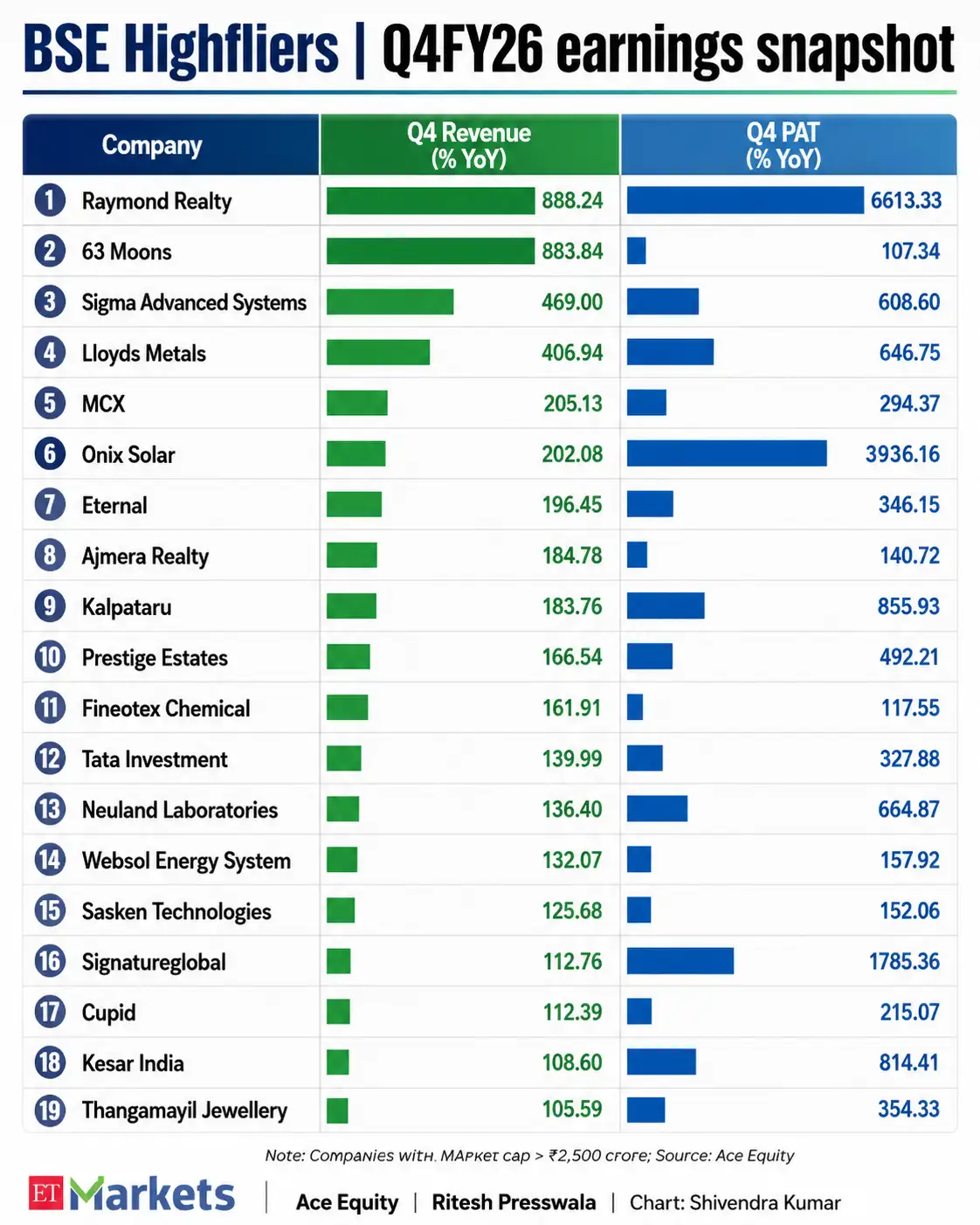
Kothari's parting message was a reframe of how investors should think about Indian equities altogether. Even in a tough FY26, where many smallcap and midcap stocks were flat or down for stretches, bottom-up stock-picking still worked: 200-plus companies delivered earnings growth above 15%, and over 200 delivered stock returns exceeding 18%. With nominal GDP growing at roughly 10–11%, the task is not to bet on the index — it is to find the companies growing structurally faster than the economy.
"I always believe that in every sector there are winners and losers. What we need to focus on is how we can select the winners within each sector." For Kothari, the current market — with valuations now in what he calls a "comfortable zone" after the correction — is precisely the kind of environment where that discipline pays off.