

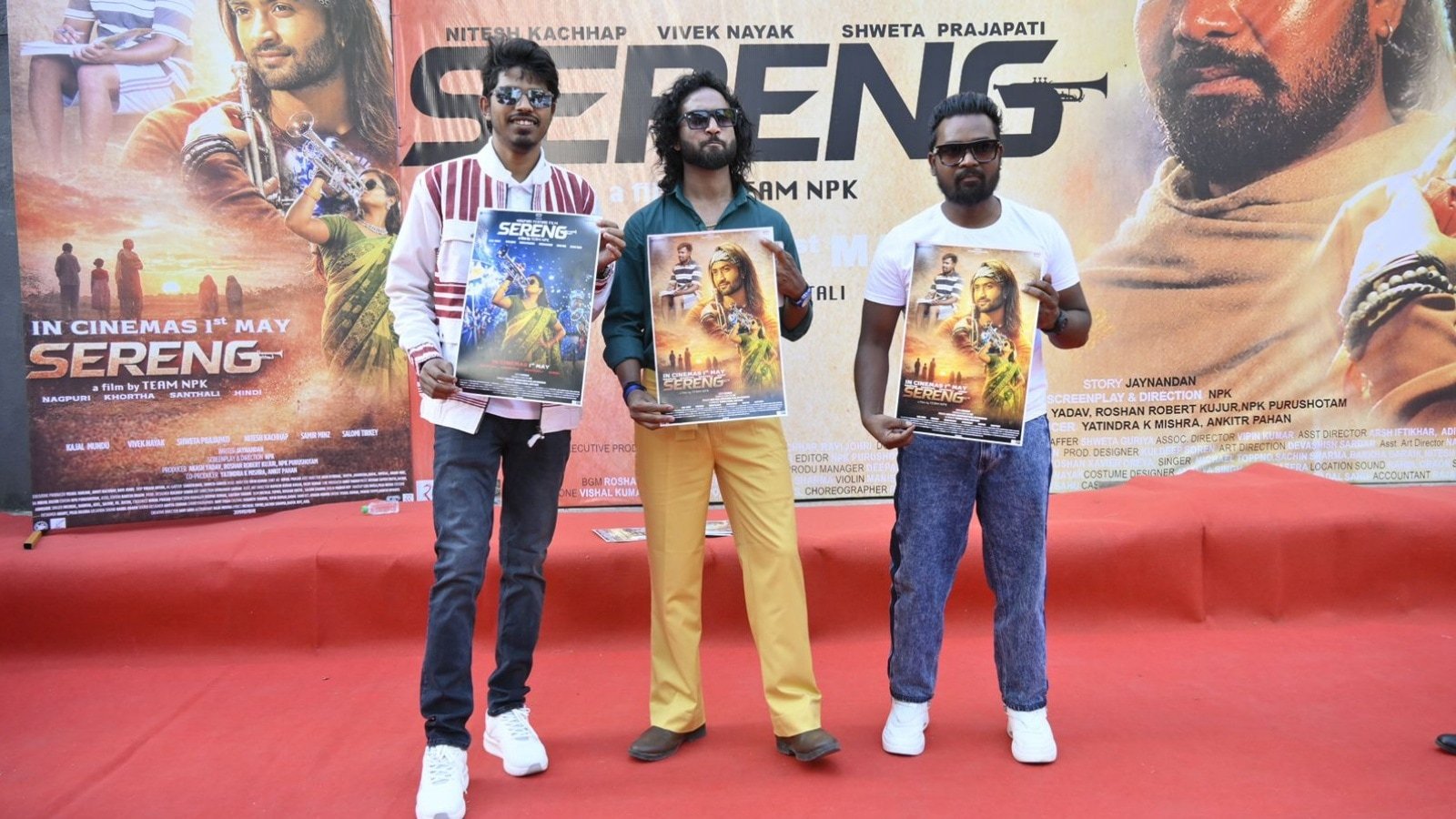
After the family of Maaghi Munda, a tribal woman from a remote Jharkhand village, was attacked under mysterious circumstances, she migrates to the city, where she meets Siraj Ansari, a musician who helps her survive and rebuild her life — this is the central theme of a Jhollywood (as the Jharkhand film industry is known) film that has led to packed theatres on the one hand, and a raging controversy on the other.
The film, Sereng, explores themes of migration, women’s agency, caste and religious prejudice, Maoist conflict, corruption, unemployment and human trafficking; but it is the depiction of a relationship between a Muslim man and a tribal woman that has led to criticism that it promotes “love jihad” and even a boycott call from right-wing groups and some tribal leaders.
At the same time, the Nagpuri-language film has been such a hit for the local film industry that it is set to be screened in more parts of Jharkhand, and is even slated to be released in West Bengal, Chhattisgarh, Odisha, the Andaman and Nicobar Islands, and also metro cities like New Delhi and Mumbai.
In the movie, it is the depiction of a relationship between a Muslim man and a tribal woman that has led to criticism that it promotes “love jihad” and even a boycott call from right-wing groups and some tribal leaders.
The film was first released on May 8 in Ranchi and nearby areas. Since then, it has become one of the most widely discussed Nagpuri-language films. According to the film’s makers, it has grossed over Rs 10 lakh in the week since its release, which is the highest first-week collection of a film from the Jharkhand film industry.
The debate around the film has unfolded amid an already polarised political atmosphere in Jharkhand, where issues such as an alleged demographic change, “infiltration”, land rights, and interfaith relationships have increasingly become part of mainstream political discourse in recent years.
According to the film’s makers, it has grossed over Rs 10 lakh in the week since its release, which is the highest first-week collection of a film from the Jharkhand film industry.
I am not a propagandist: Director
The film was directed by NPK Purushottam, who says it was conceived as a deeply human story rooted in Jharkhand’s social fabric rather than religious politics. Born in a remote village in Simdega district, Purushottam said his cinema has always been shaped by the socio-political realities he witnessed while growing up in the region, including migration, Maoist influence, unemployment, exploitation and the everyday struggles of Adivasi communities.
Story continues below this ad
According to the director, the idea for Sereng originated from a two-page Hindi story titled Seraj Band Baja, written by noted author Jayanandan. Purushottam said he first came across the story in 2018 while studying at the Central University of Jharkhand and remained deeply affected by its themes of identity and survival. After years of attempting to adapt it, he eventually secured permission from the original writer and expanded the short story into a full-length screenplay over nearly two years.
The film was first released on May 8 in Ranchi and nearby areas. Since then, it has become one of the most widely discussed Nagpuri-language films.
The title, Sereng, he said, itself reflects the layered nature of the film. In Mundari, the word refers to a rock or stone, while in Santali, it means song.
Purushottam argued that critics focusing only on the Muslim identity of the male protagonist were ignoring the larger social commentary embedded in the film. He said it portrays a Pasmanda Muslim character with tribal roots, while simultaneously questioning patriarchy influenced by caste society and exploitation within tribal society.
He said the film attempts to reflect contemporary realities in Jharkhand through its characters. One of the antagonists in the film, he said, is an Adivasi leader who publicly speaks about “jal, jungle, zameen”, while secretly exploiting tribal communities and enabling trafficking. “People in Jharkhand know such realities exist,” he said, adding that another character represents frustrated tribal youth drawn towards the Maoist movement amid paper leaks, unemployment and collapsing opportunities.
Story continues below this ad
“I wanted to create the secular and harmonious image of Jharkhand, which I have seen since my birth. I am not a propagandist; I am a storyteller,” he said.
He further said that in the film, Siraj is not portrayed through the stereotypical lens often associated with polarising narratives around Muslims. “He is equally Jharkhandi, like others,” Purushottam said, adding that the character respects Adivasi traditions and encourages Maaghi to continue practising Sarhul, jatras, and other festivals according to her wishes.
“If they have a problem with Siraj, why don’t they have a problem with Suraj?” he asked.
The film was directed by NPK Purushottam, who says it was conceived as a deeply human story rooted in Jharkhand’s social fabric rather than religious politics.
Claims of ‘love jihad’
Story continues below this ad
The controversy erupted after several Hindutva and tribal organisations alleged that the film encourages “love jihad”. Some groups also called for a boycott of the movie.
Bhairav Singh, a prominent leader of the Hindutvawadi Sangathan in Jharkhand, questioned why the film, while it may show social realities, had to portray a tribal woman getting emotionally attached to a Muslim man after arriving in the city. “Is there only a Muslim man who can support a tribal woman?” he asked, alleging that the film indirectly encourages “love jihad”. Singh further claimed that Jharkhand’s demography was changing due to “Bangladeshi infiltrators”.
Ashok Baraik, a tribal leader from the BJP, said that while the film was important for the growth of the Nagpuri film industry and tribal cultural representation, he believed the inclusion of the Siraj Ansari character was unnecessary and socially problematic.
Baraik told The Indian Express that regional Nagpuri cinema in Jharkhand has become an important cultural medium connecting tribal communities across different states. However, he argued that tribal youth and women from rural areas could be influenced by what is portrayed in films. “The movie is good, and the attempt is good. But there was no need to insert the Siraj character in that way. It could have been another tribal character as well,” he argued. Baraik further claimed that tribal communities were becoming a “soft target” for “love jihad” and that regional cinema should avoid such narratives.
Story continues below this ad
However, he also maintained that he supported the development of Jharkhand’s film industry and appreciated the growing popularity of Nagpuri cinema.
