
Global bonds sold off sharply on Wednesday, extending a rout that is raising borrowing costs to multi-decade highs as the Middle East conflict pushes up energy prices, playing into investor fears about inflation and ballooning government debt.
Sovereign yields are a reference point for asset prices across financial markets and the higher price of money means higher mortgage rates for consumers and tough choices for government spending as funding costs climb.
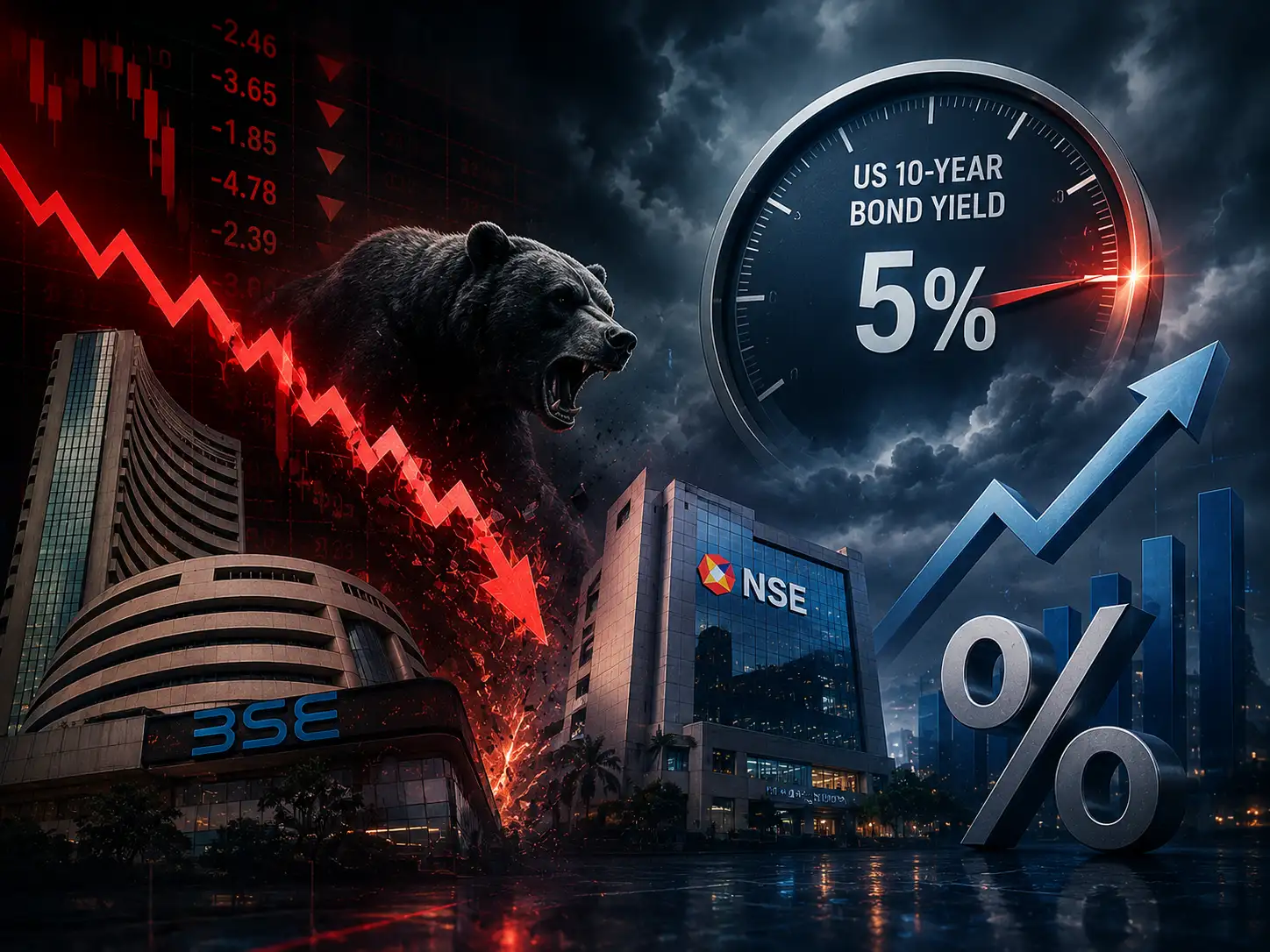
The yield on 10-year U.S. Treasury notes rose to a near three-year high of 4.81%, and a further climb toward 5% is likely to unsettle already jittery stock markets.
Japan's 10-year yield was perched above 3%, a 30-year high. Australia's 10-year government bond yields rose to 5.198%, their highest level in over 15 years.
Germany's bund futures slipped 0.35% to their lowest since 2011, while French OAT futures fell 0.37% to a record low.
Charu Chanana, chief investment strategist at Saxo, said bond investors are increasingly demanding a higher premium for inflation, fiscal risks and the sheer amount of debt coming to market.
"That means the selloff can overshoot, with 5% on the U.S. 10-year looking increasingly plausible before yields become sufficiently attractive to bring buyers back," Chanana said.
A spree of bond sales from big tech companies aggressively raising money to fund the AI boom has added pressure on the sovereign bond market.
Naka Matsuzawa, chief macro strategist at Nomura Securities in Tokyo, said hyperscalers' willingness to pay reasonably high rates was pulling up yields across the board, with the focus now on whether growth can rise along with them.
"The (AI-driven) productivity leap needs to translate into higher wages," he said. If that materialises, he said, then the economy can live with higher rates.
BOND VIGILANTES ASSEMBLE?
Global bond routs have become increasingly common in the past few months as the energy shock due to the Middle East war rattles investor nerves about rising debt loads across major economies and inflation risks.
These pressures have raised the spectre of "bond vigilantes," a reference to debt investors who seek to impose fiscal discipline on governments they perceive as profligate by demanding higher compensation to hold their bonds.
"The fear is that the Bond Vigilantes are on the loose and driving yields higher in protest over large government deficits, mounting government debt, and rapidly rising government interest costs," said Ed Yardeni, president of Yardeni Research.
"We share the Bond Vigilantes' concerns, but we aren't convinced bond yields are, or will soon be, prohibitively high," said Yardeni, who coined the term Bond Vigilantes in the 1980s.
"If it (U.S. 10-year yield) hits 5%, we expect strong demand for the bond, including from Treasury Secretary Scott Bessent. He'll issue more Treasury bills to buy back bonds if necessary to avert a selling panic," Yardeni said.
The U.S. Treasury stepped into markets last month to cap a rise in long-end bond yields, although the impact of the move was short-lived with the yield on 30-year Treasuries back near its highest in 19 years.
Nick Ferres, CIO of Vantage Point Asset Management in Singapore, said rates have reached a level where they will start to pressure public and private sector debt service, with higher yields also weighing on valuations, particularly in long-duration growth sectors.
"If the policy answer becomes some form of financial repression (like yield curve control or QE) that would likely be incredibly bullish for gold," Ferres said.
FISCAL FOCUS
Investor focus has also been on what the Federal Reserve may do to contend with inflation that has remained above the central bank's 2% target, with hawkish comments from Fed Chair Kevin Warsh last week leading traders to ramp up rate-hike bets.
Energy cost pressures continue to dog policymakers. Brent crude futures rose 1% to $95.61 per barrel on Wednesday, after gaining nearly 6% in the previous session.
The 2-year U.S. Treasury yield, which typically moves in step with interest rate expectations for the Fed, rose to 4.41%, its highest level since January 2025.
Traders have priced in a rate hike in Europe next week and about a 68% chance of a U.S. rate hike the week after that.
The scale of the structural shift in markets is highlighted by the rise in Japanese government bond yields, once the lowest in the world, to lift the 10-year rate above 3% for the first time in 30 years on Tuesday.
It was last at 3.01% on Wednesday.
"Rising JGB yields not only reflect investor concerns over Japan's fiscal outlook, with ambitious spending plans signalled for the coming years, but also global pressure on long-term funding costs," said Fred Neumann, chief Asia economist at HSBC.
The rising yields have put the spotlight on Japanese Prime Minister Sanae Takaichi and her aggressive investment plan, along with Britain, France and Germany where big-spending governments are being given a reality-check by their creditors.
"Japan and the UK look closest to the front line because rising yields are colliding with fiscal pressures and changing monetary regimes, while France also remains vulnerable given its debt trajectory," said Saxo's Chanana.
British yields hit their highest since 2008 on Tuesday.