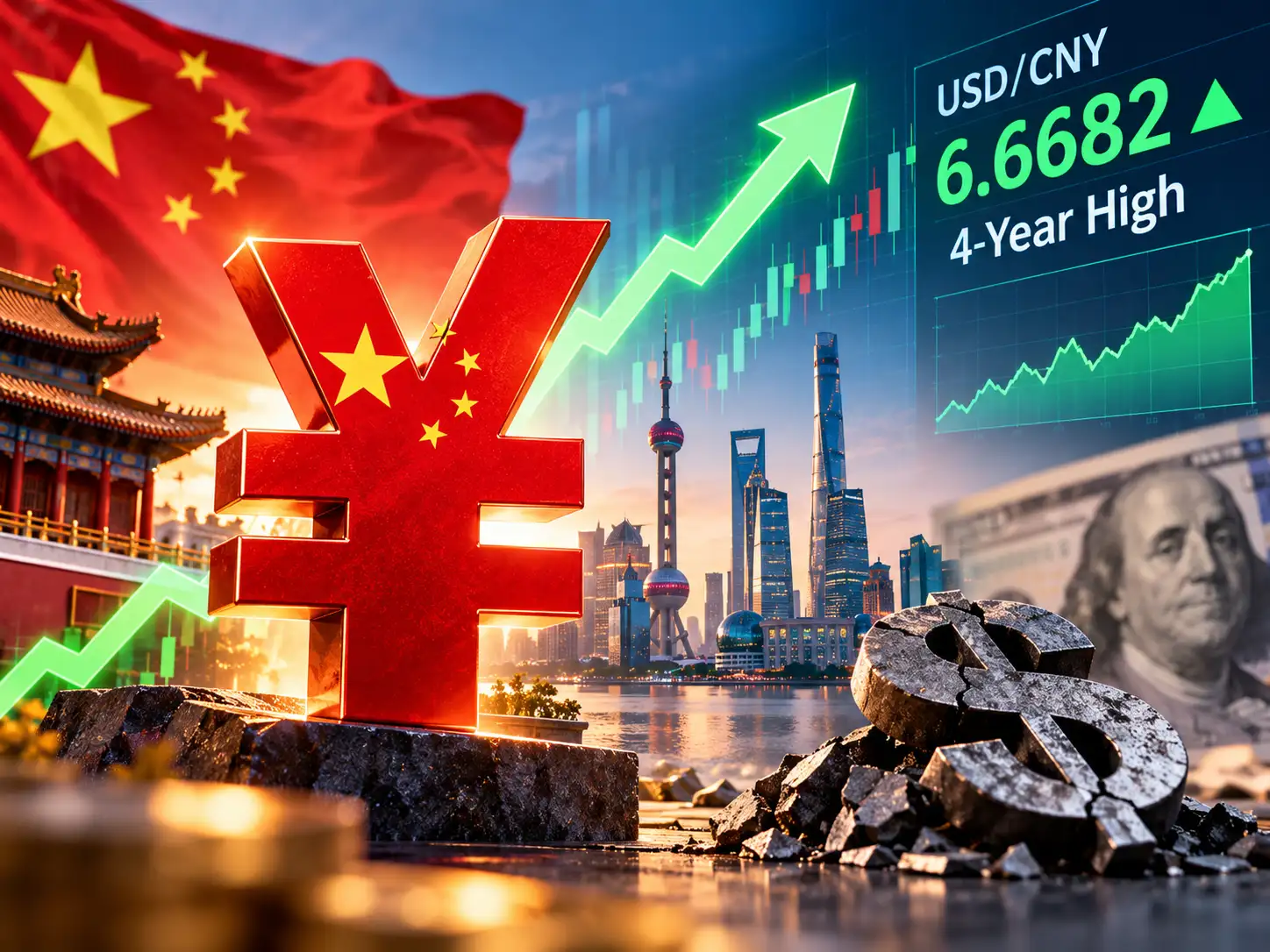
China's yuan climbed to a fresh four-year high against the US dollar on Monday, extending its longest winning streak since May, as softer oil prices and lower US Treasury yields weighed on the greenback. Investors also remained cautious ahead of key central bank meetings and China's upcoming policy discussions.
The onshore yuan strengthened to 6.6682 per dollar during the session, its highest level since June 2022, before trading at 6.6691 as of 0252 GMT. If the currency holds its gains through the late-night close, it would mark an eighth consecutive session of appreciation, its longest winning streak since May.
Read more: Fed expected to pause rate hikes ahead of US midterms
The offshore yuan was last trading at 6.6688 per dollar, up around 0.01% in Asian trade.
Before the market opened, the People's Bank of China (PBOC) set the yuan's daily midpoint at 6.7162 per dollar, its strongest level since February 2, 2023. The midpoint was 471 pips weaker than a Reuters estimate of 6.6691, marking the largest deviation towards the weaker side since September 23.
China allows the onshore yuan to trade within a 2% range on either side of the daily midpoint. The central bank has gradually strengthened its official guidance this year, but the fixings have remained weaker than market expectations, indicating efforts to manage the pace of the currency's appreciation, Reuters reported.
Read more: Global Market Today: Asian shares slip as AI jitters deepen ahead of big tech earnings
Analysts at Barclays said the PBOC's approach suggested it was seeking to prevent excessive weakness while using its daily fixing to limit the speed of the yuan's gains as the trade-weighted currency strengthens.
Market participants are also assessing the outlook for global monetary policy, with the US Federal Reserve, Bank of Japan and European Central Bank widely expected to leave interest rates unchanged at their meetings later this week. Investors will look for signals on the future policy path, particularly as central banks balance inflation risks against slowing economic growth.
In China, attention is turning to the fifth plenum for fresh signals on economic policy and the government's approach to supporting growth and domestic demand.
Goldman Sachs analysts expect the yuan's appreciation to continue gradually, arguing that the currency's starting point of undervaluation could allow for further gains beyond current market expectations. The brokerage maintained its 12-month forecast for the yuan at 6.40 per dollar.
However, analysts cautioned that currency appreciation alone would not resolve China's economic challenges, highlighting the need for stronger domestic demand alongside a firmer exchange rate.
The yuan's recent strength reflects a mix of dollar weakness, shifting expectations about global monetary policy, and domestic currency guidance. Investors will closely monitor the PBOC's daily fixings and signals from upcoming policy meetings for clues on whether the currency's rally can be sustained.
(Disclaimer: This article is based on inputs from agencies. These do not represent the views of The Economic Times.)