
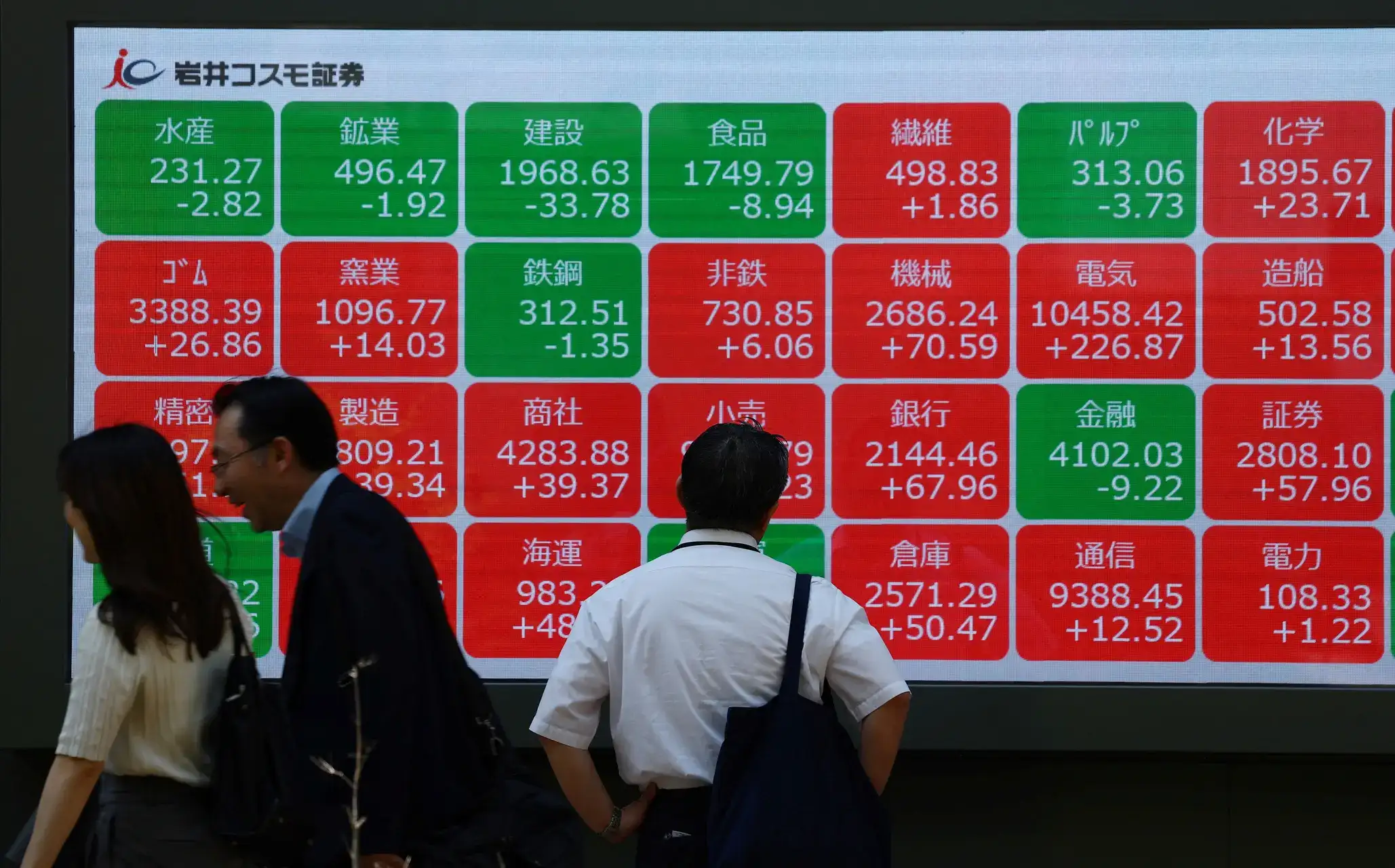
Japan’s Nikkei share average climbed to a more than six-week high on Thursday, supported by gains in heavily weighted chip-related stocks after strong earnings guidance from Micron Technology boosted optimism over continued investment in artificial intelligence, Reuters reported.
The Nikkei 225 rose 2.28% to 68,276.92, its highest level since August 18. The broader Topix was largely unchanged, edging 0.03% higher at 4,109.40.
According to Reuters, Micron’s upbeat outlook strengthened investor sentiment toward AI-linked stocks. The US memory-chip maker forecast quarterly revenue above market expectations on Wednesday and said customer commitments under its long-term supply agreements had increased to $32 billion, pointing to sustained demand for memory chips used in AI applications.
Read more: US stocks: Nasdaq rises while S&P, Dow dip as softer inflation cools Fed hike bets
Japanese chip-related shares responded strongly. Chip-testing equipment maker Advantest jumped 7%, while electronic components maker Murata Manufacturing gained 6%. Memory-chip maker Kioxia advanced 4%.
However, the broader market remained under pressure, with 157 Nikkei constituents declining compared with 68 gainers. Reuters reported that analysts cautioned that the sharp gains in AI-related stocks could be closely linked to Micron’s earnings update and may not necessarily signal a broader market trend.
Financial stocks were among the biggest decliners. Insurer Tokio Marine Holdings fell 4.11%, while T&D Holdings dropped 3.18%. Regional lender Fukuoka Financial Group declined 3.02%.
Read more: Global Market Today: Asian shares mixed as bond yields, oil keep investors on edge
Meanwhile, Japan’s monetary policy outlook remained in focus. A summary of opinions from the Bank of Japan’s September policy meeting, released on Thursday, showed that some policymakers believed the central bank should accelerate the pace of interest-rate increases or bring rates closer to its target level sooner.
Reuters reported that the policy discussion reinforced expectations that the BOJ could continue tightening monetary policy, adding another layer of uncertainty for Japanese equities even as the technology sector benefited from optimism surrounding AI spending.
The market was also keeping an eye on inflation risks amid continued uncertainty in the Middle East, with elevated energy prices potentially complicating the outlook for Japanese monetary policy and corporate earnings.
(Disclaimer: This article is based on inputs from agencies. These do not represent the views of The Economic Times)