
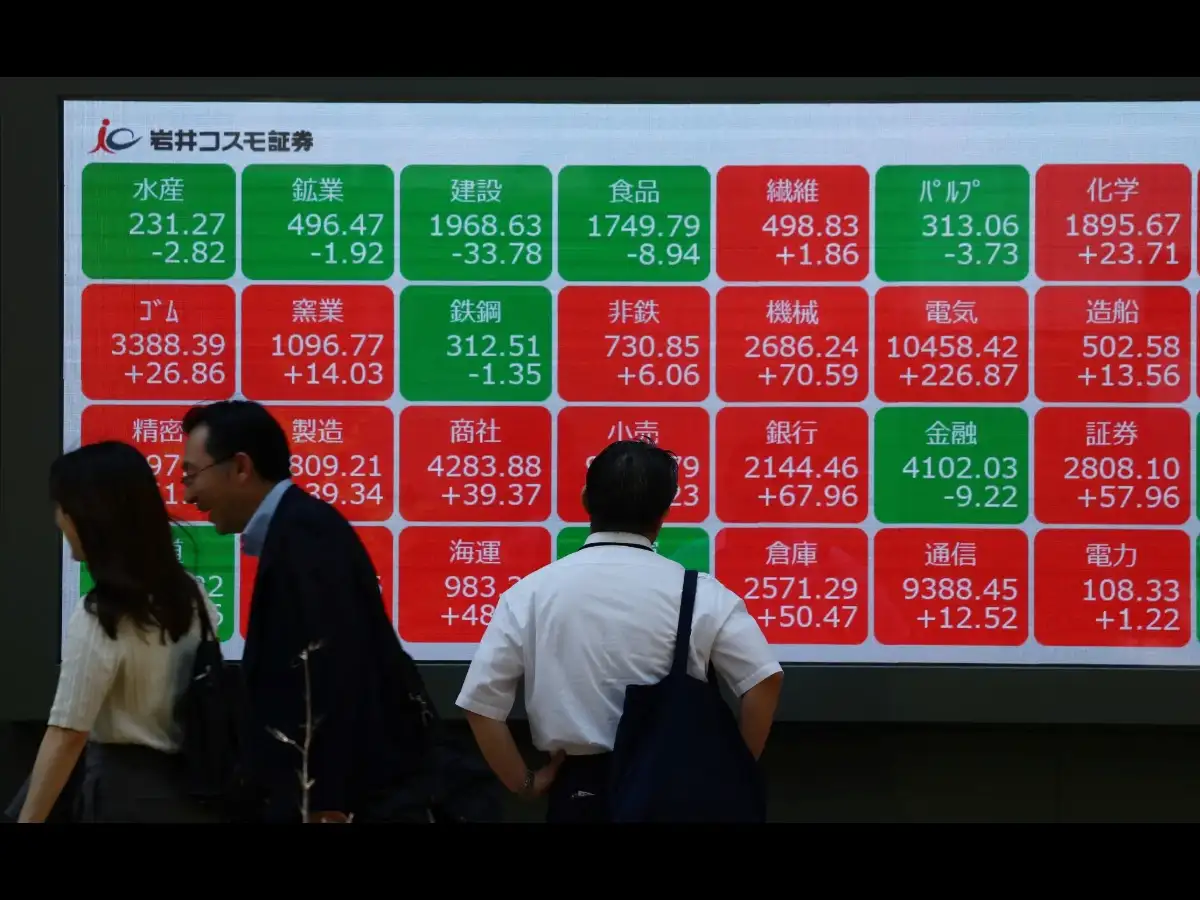
Japan's Nikkei share average surged more than 3% on Wednesday, driven by strong gains in artificial intelligence-related stocks that tracked an overnight rally on Wall Street, while a series of upbeat corporate earnings and forecast upgrades further boosted investor sentiment, Reuters reported.
The Nikkei advanced 3.16% to 65,979.02 as of 0101 GMT, while the broader Topix index gained 1.52% to 4,022.18.
According to Reuters, U.S. equities ended at record highs on Tuesday, with the S&P 500 and the Dow Jones Industrial Average rising after earnings from AI-linked companies, including Caterpillar and Palantir, eased concerns about demand. Softer crude oil prices and lower U.S. Treasury yields, amid hopes for a deal related to the Iran conflict, also supported market sentiment.
Japanese semiconductor-related stocks led the gains, mirroring a sharp overnight rally in the Philadelphia Semiconductor Index, which climbed 6.6%.
Chip-testing equipment maker Advantest jumped 8%, while chip equipment manufacturer Tokyo Electron gained 4%. The U.S. chip index extended its rebound for a fourth consecutive session after suffering a steep decline in July.
Murata Manufacturing, a major supplier of multi-layer ceramic capacitors used in AI servers, rose 8.33% after raising its full-year net profit forecast, reflecting growing optimism over AI-driven demand.
Reuters reported that analysts attributed the improving outlook to companies issuing more optimistic annual guidance after initially taking a cautious stance due to uncertainty surrounding the Middle East conflict.
Investor sentiment also received support from Fanuc, which gained 3.67% after the industrial robot maker raised its annual net profit forecast.
Financial stocks traded higher as well, with Mitsubishi UFJ Financial Group and Mizuho Financial Group each rising more than 1%.
However, not all stocks participated in the rally. Fast Retailing, the owner of the Uniqlo brand, declined 1.82%, making it the biggest drag on the Nikkei. Air-conditioning manufacturer Daikin Industries dropped 8%, marking the sharpest percentage loss among Nikkei constituents.
Market breadth remained firmly positive. Of the more than 1,500 stocks listed on the Tokyo Stock Exchange's Prime Market, 67% advanced, 29% declined and 3% were unchanged, according to Reuters.