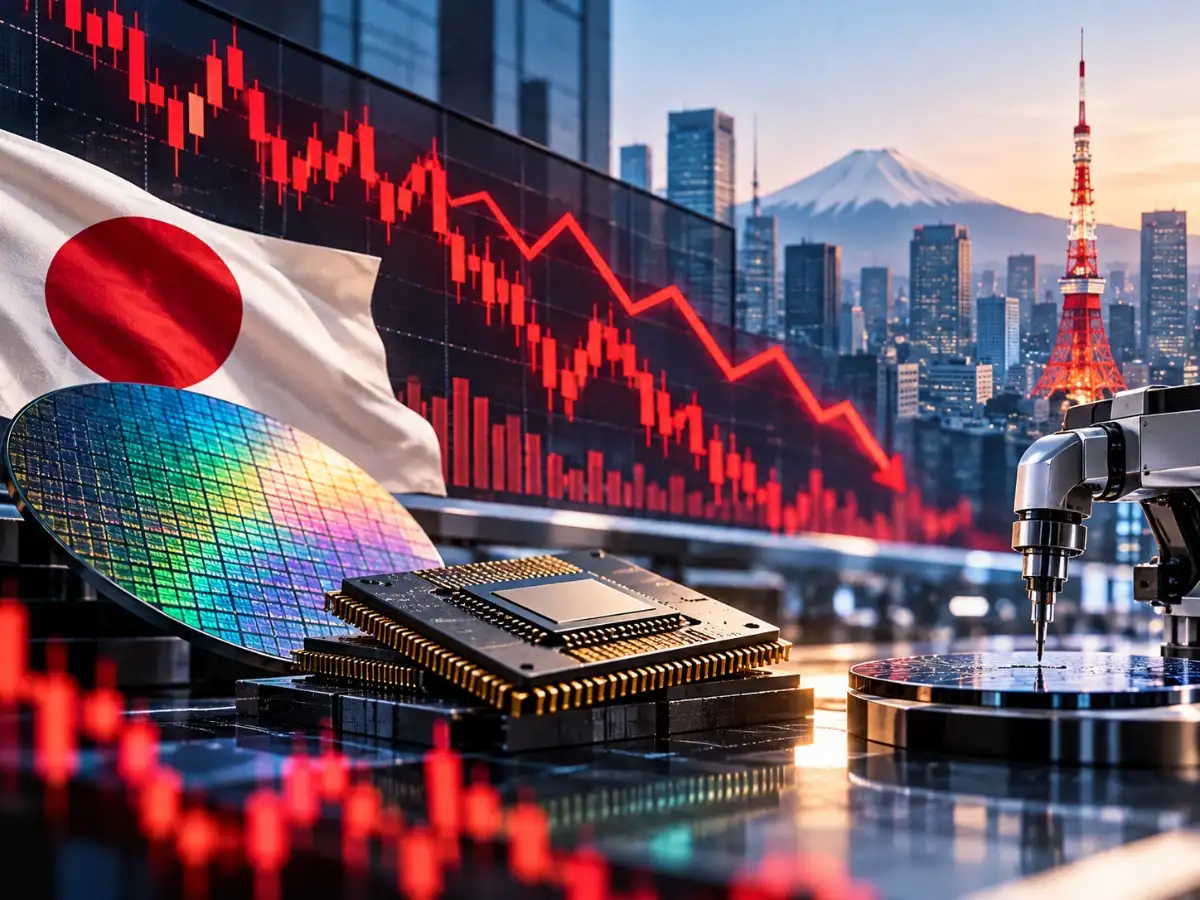
Japanese shares fell on Wednesday, led by declines in AI-related stocks as investors moved to lock in profits following a strong recent rally.
The Nikkei fell 0.86% to 70,074.13 by the midday break, while the broader Topix slipped 0.59% to 4,158.89. The Nikkei had crossed the 70,000 mark earlier this week for the first time in three months and has gained nearly 5% so far this month.
According to Reuters, the pullback came as investors took profits at the start of Japan's new fiscal half after the market's sharp recent gains. The retreat was particularly pronounced among technology and semiconductor-related stocks.
Read more: Global Market Today: Asian stocks hold near record highs, oil climbs
Chip-testing equipment maker Advantest fell 1.7% after hitting a record high on Monday. Tokyo Electron declined 2.81%, while memory-chip maker Kioxia Holdings dropped 4.06%.
Overnight gains on Wall Street provided limited support to Japanese equities. Reuters reported that U.S. stocks closed higher as crude oil prices stabilised and Treasury yields eased, giving investors some relief from recent concerns and shifting attention towards the upcoming third-quarter earnings season.
In Asian trading, Nasdaq futures fell 0.15%, while S&P 500 futures were broadly flat, adding to the cautious mood in Tokyo.
Read more: US stocks: S&P 500, Nasdaq reach record closing highs as focus pivots to earnings
Some stocks bucked the broader decline. Technology investor SoftBank Group gained 0.38%, while Fast Retailing, the owner of the Uniqlo brand, rose 0.2%.
Beer maker Kirin Holdings fell 2.31% after a report said Japan's Fair Trade Commission had raided four major beer makers over suspected violations of antitrust laws. Assai Group Holdings declined 1.54%.
Market breadth remained weak, with about 67% of more than 1,500 stocks traded on the Tokyo Stock Exchange's Prime Market declining. Around 29% advanced, while 3% were unchanged.
(Disclaimer: This article is based on inputs from agencies. These do not represent the views of The Economic Times.)