
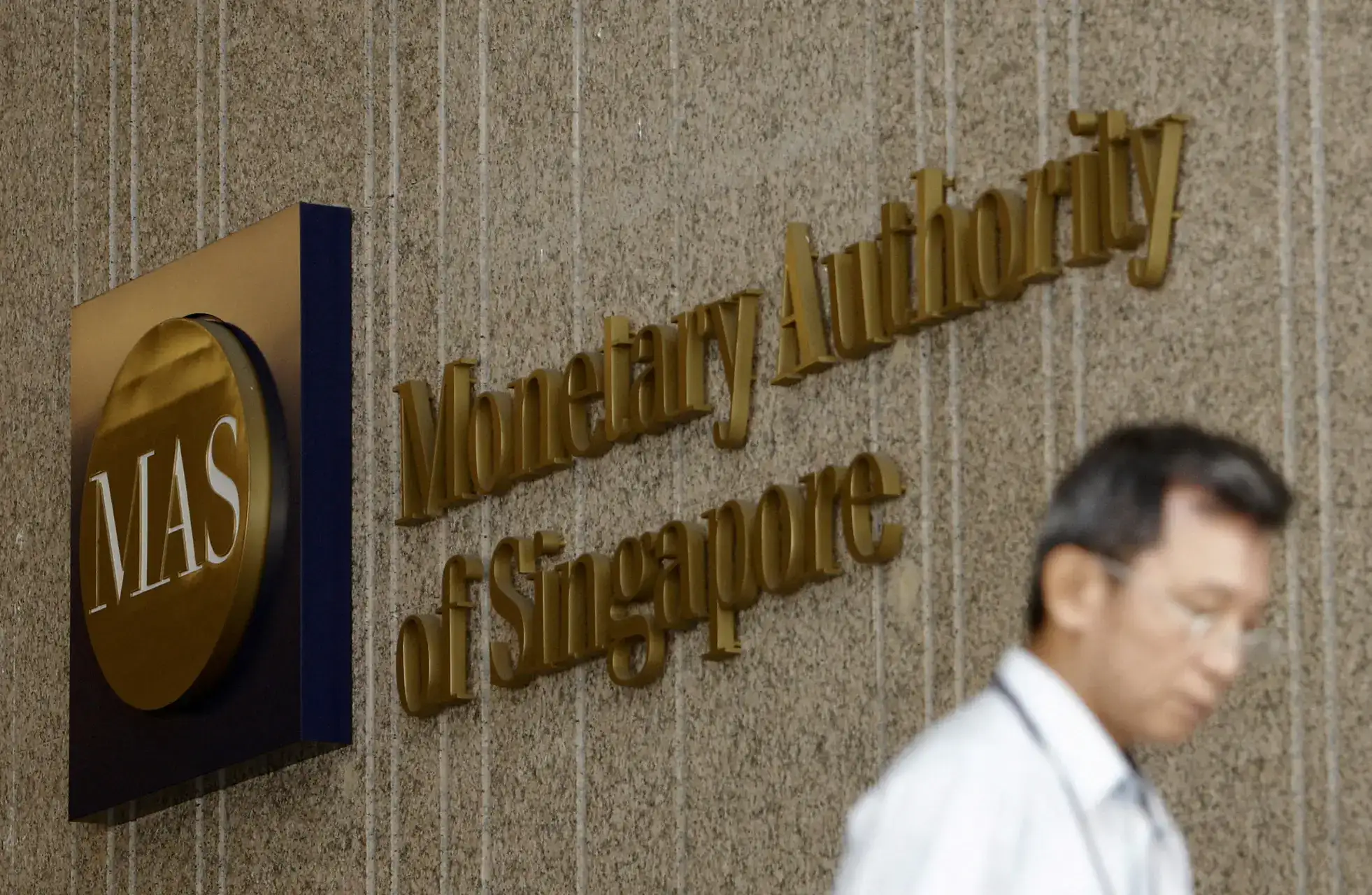
Singapore's central bank unexpectedly tightened its monetary policy on Monday, citing persistent inflation risks stemming from elevated energy costs linked to the ongoing Middle East conflict. According to Reuters, the move caught most economists off guard, as the majority had expected policymakers to leave settings unchanged.
The Monetary Authority of Singapore (MAS) said it would slightly increase the rate of appreciation of its exchange rate-based policy band, known as the Singapore dollar nominal effective exchange rate (S$NEER). The adjustment is smaller than the tightening announced in April. The central bank left the width of the policy band and its midpoint unchanged. As is customary, the MAS did not disclose the exact magnitude of the policy adjustment.
The surprise decision boosted the Singapore dollar, which strengthened modestly to 1.2888 against the U.S. dollar following the announcement.
According to Reuters, 12 of the 16 analysts surveyed ahead of the policy review had expected the MAS to maintain its existing policy stance, while only four had anticipated a tightening.
The MAS said core inflation is expected to rise from July and remain elevated for some time before easing more noticeably from around the middle of 2027.
The central bank highlighted significant uncertainty surrounding the economic outlook, warning that inflation could accelerate further if energy prices surge again. It noted that global fuel reserves have been substantially depleted and renewed supply disruptions in the Middle East could trigger sharp increases in oil prices.
The MAS also warned that stronger global investment activity could generate higher demand and sustain inflationary pressures in Singapore. At the same time, it acknowledged downside risks to growth, including tighter global financial conditions and a slowdown in artificial intelligence-related investment, both of which could weaken economic activity and reduce inflation.
Adding to inflationary concerns, Singapore's electricity tariffs increased by 17% this month due to higher imported natural gas prices.
Economy Continues to Show Strength
Singapore's economy has remained resilient despite global uncertainties. Preliminary government data showed gross domestic product expanded 5.7% year-on-year in the second quarter, exceeding expectations and supported by robust demand linked to artificial intelligence investments.
The Ministry of Trade and Industry continues to forecast economic growth of between 2% and 4% for the year.
Despite the strong growth momentum, inflation has remained relatively subdued. Core inflation stood at 1.6% year-on-year in June, below market expectations.
Economists See Preventive Policy Move
According to Reuters, economists viewed the MAS decision as a precautionary step to prevent future inflationary pressures rather than a response to current price trends.
Analysts noted that the central bank's latest action suggests policymakers are seeking to balance strong economic growth with rising risks from higher energy costs and geopolitical uncertainty. Some also observed that the introduction of quarterly policy reviews since January 2024 provides the MAS with greater flexibility to make smaller, incremental adjustments instead of larger policy shifts.
Several economists expect both headline and core inflation to move higher over the coming months before easing below 2% during the second half of 2027.
Singapore's Unique Monetary Policy Framework
Unlike most central banks that adjust benchmark interest rates, the MAS conducts monetary policy by managing the Singapore dollar against a basket of currencies representing its major trading partners.
The authority allows the Singapore dollar to appreciate or depreciate within an undisclosed policy band, using the exchange rate as its primary tool to control imported inflation while supporting sustainable economic growth.